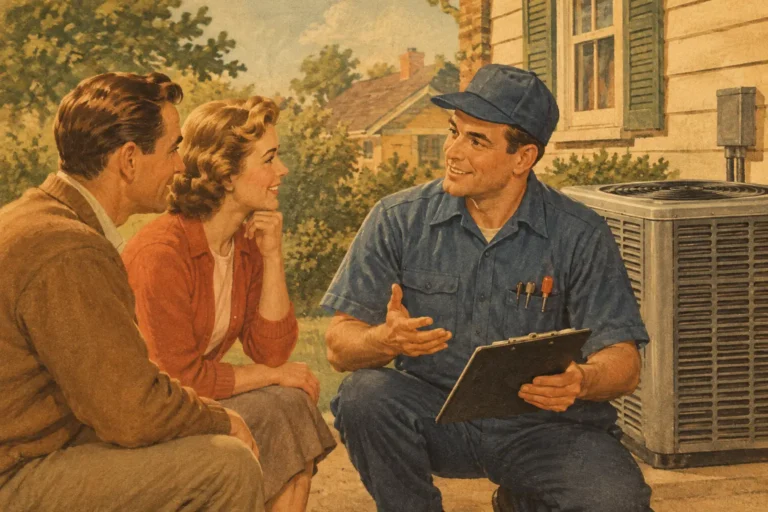
How to Choose an HVAC Contractor Confidently
A furnace quits on a subzero Illinois night. An air conditioner fails just before a humid weekend. In either situation, it is tempting to hire the first company that answers the phone. But when you choose an HVAC contractor, you are choosing more than a repair visit. You are trusting someone with your safety, energy costs, indoor air, and comfort for years to come.
The right contractor should respond when the need is urgent while also giving you clear information, sound recommendations, and work you can stand behind. Whether you are managing a commercial property or replacing a system in your home, a little careful evaluation helps you avoid short-term fixes that create expensive problems later.
Start With Credentials You Can Verify
An HVAC system is not a plug-and-play appliance. It involves electrical connections, combustion equipment, refrigerant, drainage, airflow, and controls. A contractor should have the training and qualifications to work safely across those systems.
Ask whether technicians are NATE-certified and receive ongoing factory training. NATE certification is a meaningful indicator that a technician has demonstrated knowledge in heating, air conditioning, heat pumps, and related specialties. Manufacturer training also matters, particularly when you are installing high-efficiency or variable-speed equipment with advanced controls.
For any work involving refrigerant, confirm that the technician holds the required EPA Section 608 certification. The company should also carry appropriate liability and workers' compensation insurance. Local licensing and permit requirements vary by community, so ask how the contractor handles permits and inspections for a replacement or major installation. A reputable company will explain the process directly rather than treating permits as an inconvenience.
Manufacturer authorization is another useful signal, though it should not be the only factor. A factory-authorized dealer generally meets manufacturer standards for training, service, and customer care. It can also make warranty registration and future support easier.
Choose an HVAC Contractor Based on the Evaluation
A trustworthy contractor does not select a new furnace or air conditioner based only on the square footage of your building. Square footage is a starting point, not a system design.
For a replacement, expect a conversation about the age and condition of the existing equipment, comfort concerns, utility bills, insulation, windows, ductwork, thermostat settings, and the number of people using the space. In many homes, rooms that run too hot or too cold point to airflow or duct issues, not simply an undersized unit. In commercial spaces, operating hours, occupancy, server rooms, ventilation needs, and zoning can change the recommendation significantly.
A detailed load calculation is especially valuable when installing a new system, making substantial building changes, or correcting persistent comfort problems. Oversizing equipment can be just as troublesome as undersizing it. An oversized air conditioner may cool quickly but fail to remove enough humidity. An improperly matched furnace, coil, and condenser can reduce efficiency and affect equipment life.
The best recommendation may not be the highest-efficiency model available. It depends on your budget, how long you plan to own the property, your existing ductwork, and your comfort priorities. A contractor should explain those trade-offs in plain language and offer options, not pressure you toward one answer.
Read Estimates for Scope, Not Just Price
Two quotes can look similar at first glance while covering very different work. A low initial price may exclude electrical upgrades, thermostat replacement, permit fees, duct modifications, haul-away, startup testing, or warranty registration. That can make comparisons misleading.
Ask for a written estimate that identifies the proposed equipment by model, the efficiency ratings, warranty terms, labor coverage, and the complete scope of installation. For a furnace, that may include venting, gas connections, filtration, condensate drainage, and combustion testing. For air conditioning or heat pump equipment, it should address refrigerant line work, the indoor coil, electrical disconnects, drainage, and commissioning.
A quality installation includes more than setting equipment in place. The contractor should verify airflow, refrigerant charge, static pressure, temperature rise, safety controls, and thermostat operation. These details affect comfort and performance every day after the installers leave.
Do not assume the most expensive estimate is automatically better, either. Higher pricing may reflect premium equipment, added ductwork, extended labor coverage, or a more complete installation process. Ask what accounts for the difference. A good company welcomes that question.
Look for a Repair-First Mindset
Not every service call requires replacement. If a contractor recommends new equipment immediately, ask what was found, what repair options exist, and why repair may no longer be practical. You deserve a clear explanation of the diagnosis, anticipated repair cost, expected remaining service life, and risks of continued operation.
Replacement can be the sensible choice when equipment is near the end of its life, uses obsolete refrigerant, needs repeated major repairs, or cannot provide safe and reliable performance. It may also make financial sense when a new heat pump, furnace, or air conditioner would substantially improve efficiency and comfort. The key is that the recommendation should be tied to your system's condition, not a sales quota.
For commercial decision-makers, ask about repair timelines, availability of parts, temporary comfort strategies, and how work can be scheduled to limit disruption to employees, customers, or tenants. A contractor who understands business operations will plan beyond the mechanical repair itself.
Check Reputation Where It Counts
Online reviews are helpful when you read beyond the star rating. Look for specific comments about punctuality, cleanliness, communication, problem-solving, respect for the property, and whether the company stood behind the work after installation. A long history of consistently strong reviews often says more than a handful of recent comments.
You can also ask for references when considering a major project, especially a commercial replacement, boiler work, duct redesign, or multi-system installation. Ask references whether the final cost matched the proposal, whether the crew kept the work area orderly, and how the contractor handled questions after the job was complete.
Longevity in the local market matters, too. A company that has served an area for decades is more likely to be available for warranty service, maintenance, and future system needs. That continuity is valuable when you need records of previous work or help with equipment installed years earlier.
Make Service Availability Part of the Decision
Emergency availability should not be your only selection criterion, but it matters. Heating failures, water leaks, and cooling issues in vulnerable households or occupied commercial spaces rarely occur on a convenient schedule. Find out whether the company offers genuine 24/7 emergency service, how after-hours calls are handled, and what response expectations are reasonable during severe weather.
For planned maintenance, ask what the program includes. A useful maintenance agreement should involve more than a reminder call. It should provide scheduled inspections, cleaning, safety checks, performance testing, and a clear understanding of any member benefits such as priority scheduling or repair discounts.
Regular maintenance cannot prevent every breakdown, but it can catch worn components, drainage problems, dirty coils, combustion concerns, and airflow restrictions before they become an emergency. It also gives your contractor a baseline for how your equipment is performing.
Pay Attention to Communication and Respect
Technical skill is essential, but the service experience matters as well. From the first phone call, notice whether the company listens to the problem, provides arrival updates, and answers questions without talking over you. Technicians should protect floors and work areas, explain findings before proceeding, and leave the site clean.
For homeowners, this creates peace of mind during an often stressful repair or replacement. For property managers and business owners, it reduces the burden of coordinating access, tenants, staff, and schedules. Clear communication becomes especially important when a project involves multiple visits or unexpected discoveries.
Before authorizing work, make sure you understand payment timing, financing options if needed, warranties, and what to do if an issue arises after installation. The right contractor will make these details straightforward.
Comfort is personal, and HVAC decisions are rarely one-size-fits-all. In Elgin and across Northeast Illinois, Lea Heating & Air Conditioning brings factory-trained, NATE-certified expertise and more than 48 years of local service to help customers make informed choices. The best next step is a conversation with a contractor who evaluates the whole situation, explains the options honestly, and remains available long after the system is running.
A second-floor bedroom that never cools down, a sunroom added years after the original HVAC system, or an aging air conditioner facing replacement can all lead to the same question: central AC versus mini split. Both can provide dependable cooling in Northeast Illinois, but they solve comfort problems in very different ways. The right choice depends less on which system is “better” and more on your building, existing ductwork, room-by-room needs, and long-term plans.
Central AC Versus Mini Split: The Core Difference
Central air conditioning cools your entire home or commercial space through a network of ducts. An outdoor condenser works with an indoor evaporator coil, usually installed near the furnace or air handler. Conditioned air travels through supply vents, while return ducts bring air back to the system for another cycle.
A ductless mini split uses an outdoor unit connected to one or more indoor air handlers by small refrigerant lines and electrical wiring. Each indoor unit serves a particular room or zone. Instead of pushing cooled air through ducts, the wall-mounted, ceiling-mounted, or floor-mounted unit delivers it directly into the space.
That design difference shapes nearly every decision that follows. Central AC is often the natural choice for whole-home cooling where ducts are already in good condition. Mini splits excel when a particular area needs more control or when adding ductwork would be difficult, disruptive, or expensive.
When Central Air Is the Stronger Choice
For many homes in Elgin and the surrounding suburbs, central air is the most practical replacement option. If you already have a furnace and usable ductwork, replacing an older AC system can improve efficiency and reliability without changing how your home looks or how occupants use it.
Central air provides a consistent whole-home experience. One thermostat can manage the temperature across the home, and properly designed ductwork distributes air to bedrooms, living areas, hallways, and other connected spaces. This is particularly useful for households that prefer a simple system with equipment largely out of sight.
It can also work well with indoor-air-quality upgrades. A central system can support whole-home filtration, humidity control, UV air purification, and smart thermostat controls. In Illinois summers, humidity removal matters as much as temperature. A properly sized central AC system helps make indoor air feel less sticky while cooling the home.
Central equipment is not automatically less efficient than a mini split. High-efficiency central systems with variable-speed components can deliver excellent performance, especially when paired with sealed, insulated ductwork and professional installation. The problem is that ducts can become a source of energy loss when they are poorly designed, leaking, uninsulated, or located in very hot attic areas.
Central AC may be the better fit when you need to cool an entire home, have a functional duct system, value a clean visual appearance, and want one system that integrates with whole-home comfort and air-quality equipment.
Where a Mini Split Has the Advantage
Mini splits are especially valuable when central ductwork is unavailable or when one part of a building is consistently uncomfortable. They are common solutions for home additions, converted garages, finished basements, sunrooms, attic bedrooms, workshops, and older homes with boiler heat but no forced-air ducts.
The major advantage is zoning. A multi-zone system allows occupants to set different temperatures in different areas, while a single-zone unit can target one stubborn room without affecting the rest of the building. If one family member likes a cooler bedroom while another prefers a warmer living area, separate zones can reduce the thermostat disagreements that central systems cannot always resolve.
Because mini splits do not use long duct runs, they avoid duct leakage losses. Many models also use inverter-driven compressors that adjust output rather than cycling fully on and off. That can support steady temperatures, efficient operation, and quieter performance during lower-demand periods.
The trade-off is visibility. Indoor mini-split heads are more noticeable than supply vents, though there are several mounting options. A professional consultation should consider where an indoor unit can deliver effective airflow without becoming an unwelcome feature in the room.
Mini splits also require regular attention. Their washable filters need cleaning, and each indoor head needs clear airflow. For a whole-house, multi-zone system, maintenance may involve several indoor units rather than one central air handler. That is manageable, but it is a different ownership experience.
Installation Cost Is Not a Simple Comparison
It is tempting to assume mini splits always cost less because they do not require ducts. That can be true for a single room. Adding a ductless unit to a new sunroom is often far less invasive than extending ductwork and increasing the capacity of an existing central system.
For whole-home cooling, however, the comparison changes. A multi-zone mini split may require multiple indoor heads, refrigerant line sets, electrical work, condensate drainage, and careful placement. Those costs can add up quickly. In a house with sound existing ducts, a central AC replacement may be the more straightforward investment.
On the other hand, installing a full central system in a home without ducts can require extensive construction. Walls, ceilings, closets, and attic spaces may need to be modified to create supply and return paths. In that scenario, ductless equipment can preserve more of the building’s original layout and finishes.
Equipment price should never be the only number considered. A proper proposal should account for system capacity, electrical requirements, duct condition, insulation, airflow, controls, warranty coverage, and the expected comfort result. The least expensive installation can become costly if it leaves rooms humid, noisy, or unevenly cooled.
Comfort Depends on Design, Not Just Equipment
Both systems can disappoint when they are oversized, undersized, or installed without understanding the building. Oversized cooling equipment can short-cycle, turning on and off too frequently. That can reduce humidity removal and create temperature swings. Undersized equipment may run for long periods without keeping up during hot weather.
A qualified HVAC professional should evaluate more than square footage. Window exposure, insulation levels, ceiling height, occupancy, room use, air leakage, and existing equipment all affect the load calculation. A west-facing room with large windows has different cooling needs than an interior bedroom of the same size.
With central AC, duct design and airflow balance are essential. A room that is warm because of a restricted return path or undersized supply duct may not be fixed by simply installing a larger air conditioner. With mini splits, indoor-unit placement matters. An air handler aimed poorly or blocked by furniture may not distribute air as intended.
For businesses, the analysis can be even more specific. A retail area, server room, office suite, restaurant dining room, and workshop may have very different heat loads and operating schedules. Zoning can be valuable, but central equipment may be more practical for larger, open commercial spaces. The best approach is based on the use of the building, not a one-size-fits-all recommendation.
Consider Heating Needs Before You Decide
Although this comparison often begins with summer cooling, modern ductless heat pumps can also provide efficient heating. That makes a mini split especially appealing for additions, garages, or spaces that need year-round conditioning without extending a furnace or boiler system.
In the Chicago-area climate, a heat pump system should be selected with winter performance in mind. Some cold-climate models provide meaningful heat at low outdoor temperatures, but a home may still need a backup heating strategy depending on the application. Existing central ductwork can also support heat pump options, including dual-fuel configurations that pair a heat pump with a gas furnace.
A conversation about central AC versus mini split should therefore include the entire comfort system. Choosing equipment solely for July can miss opportunities for better comfort and operating costs in January.
Questions That Clarify the Right Direction
Start by considering the scope of the problem. Are you replacing equipment for the entire home, or trying to correct one uncomfortable room? Is the current ductwork in good condition? Do you need whole-home filtration or humidity control? Would separate temperature zones improve daily comfort? Is the space used seasonally, all day, or only at night?
Also consider future plans. A homeowner preparing for a major remodel may choose a different system than someone who needs immediate relief in a finished basement. A property manager may prioritize equipment that is easy for tenants to operate and service. For a business owner, avoiding downtime and protecting a specific area may matter more than achieving one uniform temperature throughout the building.
Lea Heating & Air Conditioning can evaluate those details, explain clear equipment options, and design a solution around the building rather than pushing a standard answer. Factory-trained, NATE-certified guidance is especially valuable when duct condition, zoning, or heat-pump performance is part of the decision.
The best cooling system is the one that makes your space comfortable without creating new compromises. Whether that means a high-efficiency central system, a targeted mini split, or a combination of both, start with a professional assessment of how your home or business actually performs on its hottest days.
A refrigerant leak used to lead to a fairly simple question: Can the system be repaired and recharged? With current HVAC refrigerant changes, that answer now carries more weight. The refrigerant in your air conditioner or heat pump affects repair costs, equipment availability, installation requirements, and the best time to plan a replacement.
For homeowners and business owners in Northeast Illinois, the practical message is reassuring: a properly operating system does not need to be replaced just because refrigerant regulations are changing. But if an older unit develops a major leak or is nearing the end of its useful life, knowing what has changed can help you make a more confident decision.
Why HVAC Refrigerant Changes Are Happening
Refrigerants transfer heat. In cooling mode, they move unwanted heat from inside your home or building outdoors. In heating mode, a heat pump reverses that process and brings heat indoors. They are essential to comfort, but some refrigerants have a high global warming potential if released into the atmosphere.
For many years, R-22 was common in residential air conditioners and heat pumps. Its production was phased out because of its impact on the ozone layer. R-410A became the standard replacement for new equipment and remains widely used in systems installed over the last two decades.
The current transition concerns R-410A and other higher-global-warming-potential refrigerants. Federal rules are gradually reducing their production and use in newly manufactured HVAC equipment. Manufacturers are introducing systems designed for lower-impact alternatives, most commonly R-454B and, in some product lines, R-32.
This is not a sudden ban on operating existing R-410A equipment. It is a long-term market shift. Older systems can still be serviced, and recycled or reclaimed refrigerant can continue to support repairs. The larger concern is that supplies and pricing may become less predictable as the years pass.
What the Change Means for an Existing AC or Heat Pump
If your R-410A air conditioner is cooling effectively, has no known leaks, and is maintained regularly, there is usually no reason to replace it solely because newer refrigerants are entering the market. Continue with seasonal maintenance, change filters as needed, keep the outdoor unit clear, and address performance concerns early.
The decision becomes more complicated when a system needs a significant repair. Refrigerant is not consumed during normal operation. If a technician finds a low charge, the system has a leak that should be located and repaired rather than simply refilled. Repeatedly adding refrigerant without correcting the source wastes money and can shorten equipment life.
A small, accessible leak in a relatively young system may make repair the sensible choice. A major coil leak, compressor issue, or recurring refrigerant problem in a 12- to 15-year-old unit may point toward replacement instead. Age is not the only factor. Efficiency, repair history, system condition, indoor comfort, and the availability of compatible parts all matter.
A qualified technician should explain both paths clearly: what the repair involves, how long it is likely to extend the system's life, and what a replacement would provide in efficiency, warranty coverage, and refrigerant technology.
New Refrigerants Require Equipment Designed for Them
One point causes frequent confusion: new refrigerants are generally not a drop-in substitute for R-410A. An R-410A system was engineered around specific refrigerant properties, pressures, oil, metering devices, components, and safety requirements. Installing a different refrigerant in equipment not approved for it can damage the system, reduce performance, and create safety concerns.
Most new residential equipment using R-454B is classified as A2L, meaning it has a lower flammability rating than traditional refrigerants but still requires additional safeguards. The equipment, installation practices, tools, labeling, and technician training must all meet applicable codes and manufacturer instructions.
For property owners, this does not mean your mechanical room or backyard condenser has become unsafe. It means installation quality matters even more. Proper sizing, refrigerant charging, airflow testing, electrical work, drainage, and startup procedures remain central to reliable comfort. The refrigerant transition adds another reason to work with a contractor that keeps its technicians trained on current equipment and code requirements.
Should You Replace Your System Before It Fails?
There is no one answer. Replacing an aging unit before an emergency can provide more choice, but it is not always the right financial move. A well-maintained system that is still dependable may deserve continued service.
Planned replacement is often worth considering when your system is older, requires expensive repairs, struggles to keep rooms comfortable, runs loudly, or drives unusually high summer electric bills. It can also make sense if you are already considering a heat pump, zoning, duct improvements, or indoor-air-quality upgrades. Combining related work can produce a more complete comfort solution than replacing a condenser alone after a breakdown.
Waiting can be reasonable for a newer unit with a minor repair. Still, waiting until the hottest week of July or a critical business day limits your options. You may need to make a fast decision based on what is available rather than what best fits your home, building, budget, and comfort goals.
For many families, the best approach is to have the conversation during routine maintenance. Ask about the system's condition, estimated remaining life, refrigerant type, and the cost range for likely future repairs. That turns a surprise into a plan.
How Refrigerant Changes Affect New System Purchases
When replacing a central air conditioner or heat pump, buyers will increasingly see models designed around newer refrigerants. These systems may have different cabinet designs, service-port configurations, safety controls, and installation specifications than older R-410A equipment.
The choice should not rest on refrigerant alone. A high-efficiency system that is incorrectly sized or installed will not deliver the comfort or operating savings it should. A professional assessment should consider your home's layout, insulation, ductwork, windows, humidity concerns, occupancy, and thermostat preferences. For commercial properties, operating schedules, ventilation needs, load variation, and critical spaces must also be part of the discussion.
A new heat pump can be particularly appealing in the Chicago area when paired with the right backup heat strategy. It can provide efficient electric cooling and heating, though equipment selection should account for cold-weather performance and your existing furnace, boiler, or electrical capacity. The best answer depends on the building, not a one-size-fits-all recommendation.
Protect Your Investment With Preventive Care
Refrigerant problems often reveal themselves through early warning signs: weak cooling, longer run times, ice on refrigerant lines, uneven temperatures, rising utility bills, or a system that cannot maintain the thermostat setting. Those symptoms can also come from airflow restrictions, electrical issues, dirty coils, failing components, or ductwork problems. Diagnosis matters.
Annual maintenance gives a trained technician an opportunity to check system operation before a small issue becomes a disruptive one. This includes evaluating refrigerant performance, checking electrical connections, measuring airflow, cleaning components as appropriate, and identifying wear that could lead to a midseason failure.
For businesses, preventive service also protects operations. A comfort issue in an office, retail space, restaurant, or multifamily property can affect employees, customers, tenants, inventory, and daily revenue. A maintenance plan helps managers budget for equipment decisions instead of reacting to every problem as an emergency.
Questions to Ask Before Approving a Refrigerant Repair
When a technician identifies a refrigerant issue, ask where the leak is, whether it can be repaired, and whether the repair includes verification that the leak has been resolved. You should also ask how much refrigerant the system requires, whether the cost reflects current supply conditions, and what the repair means for the unit's expected remaining life.
If replacement is presented as an option, request a clear comparison. Look beyond the initial price to efficiency, warranty terms, installation scope, electrical or duct modifications, and expected comfort improvements. A trustworthy recommendation recognizes when repair is reasonable as well as when replacement offers stronger long-term value.
Lea Heating & Air Conditioning brings factory-trained, NATE-certified expertise to these conversations, helping customers weigh immediate needs against long-term comfort rather than pushing a premature replacement.
The refrigerant transition is best treated as useful planning information, not a reason to panic. Keep a dependable system maintained, repair leaks correctly, and start the replacement conversation before comfort becomes an emergency.
A midsummer AC failure is frustrating. But an air conditioner does not have to quit completely before replacement becomes the smarter financial and comfort decision. If you are asking when should AC be replaced, look beyond whether the system still turns on. Its age, repair history, efficiency, refrigerant, and ability to keep every room comfortable tell the fuller story.
For homeowners and business owners in Northeast Illinois, the right answer is rarely a simple number of years. A well-maintained system may provide dependable service longer than expected, while a neglected or undersized unit can become costly well before its time. A professional evaluation can put the condition of the equipment in context and help you choose between a targeted repair and a planned replacement.
When Should AC Be Replaced? Start With Age
Most central air conditioners last about 12 to 15 years. Some systems run longer with consistent maintenance, clean coils, proper refrigerant charge, and limited strain during hot weather. Still, once an AC reaches the 10-year mark, it makes sense to weigh larger repair costs against the value of a new system.
Age alone does not require replacement. A 12-year-old unit with a minor electrical issue may be an excellent repair candidate. On the other hand, a 9-year-old system with a major refrigerant leak, repeated compressor problems, and poor humidity control deserves a closer look.
Older equipment also tends to be less efficient than current models. If your cooling bills have steadily climbed even though your usage has not changed much, declining performance may be part of the reason. Newer high-efficiency equipment can use variable-speed technology and improved controls to deliver steadier temperatures while reducing wasted energy.
Signs Your Air Conditioner Is Nearing the End
A single repair does not automatically mean it is time for a replacement. Patterns matter more. Frequent service calls, especially for different components, can indicate that several parts are wearing out at once.
Pay attention if the system struggles to cool the home or business during normal summer conditions. Long run times, warm air from supply vents, uneven temperatures between rooms, excess indoor humidity, or repeated cycling on and off all deserve professional attention. These symptoms can come from a repairable issue, such as a failing capacitor, clogged coil, duct leak, or thermostat problem. They can also reveal an aging system that no longer has the capacity or control needed for the building.
Unusual sounds are another warning. Rattling may be a loose component, while grinding, screeching, or loud electrical buzzing can signal more significant mechanical trouble. Water around the indoor equipment should also be addressed promptly. A clogged condensate drain may be straightforward to clear, but ongoing moisture can damage ceilings, floors, and equipment.
Four situations often make replacement worth serious consideration:
- The AC needs a major repair, such as a compressor or outdoor coil, after it is already near or beyond its expected service life.
- Repair bills are becoming routine, rather than occasional and predictable.
- The system uses R-22 refrigerant, which is no longer produced or imported for new use and can be expensive to source when needed.
- Comfort problems continue after appropriate repairs and maintenance, particularly if parts of the building are consistently too warm or humid.
Compare the Repair Cost With the System’s Remaining Value
The repair-versus-replace decision should account for more than the invoice in front of you. A low-cost repair that gives a relatively young unit several more reliable years is usually sensible. A costly repair on a 14-year-old unit may restore cooling temporarily while leaving other aging components at risk.
Some homeowners use the “50 percent rule,” replacing equipment when a repair approaches half the cost of a new system. It is a useful starting point, not a universal rule. A repair below that threshold may still be hard to justify if the unit has a history of breakdowns, uses obsolete refrigerant, or cannot meet your comfort needs. Conversely, a larger repair may make sense on a newer, well-maintained system still covered by a meaningful parts warranty.
Ask for clear options: the immediate repair, its expected benefit, the condition of related components, and the estimated cost of replacement. This gives you room to make a planned decision instead of choosing equipment under the pressure of an outage.
For commercial properties, the calculation also includes business disruption. An unreliable rooftop unit or split system can affect employee comfort, customer experience, inventory, and operating hours. A planned replacement may be easier to schedule and budget than repeated emergency repairs during peak cooling season.
Efficiency Matters, but Proper Sizing Matters More
A new AC can lower energy use, but the highest rated system is not automatically the best choice. Equipment must be sized for the building, insulation levels, window exposure, occupancy, ductwork, and cooling load. An oversized unit can cool quickly but cycle off before removing enough humidity. An undersized unit may run continuously and still fall behind on hot days.
A qualified contractor should evaluate the whole system rather than simply replace the outdoor unit with the same size. That means checking the indoor coil, refrigerant lines, electrical connections, condensate drainage, airflow, and duct condition. In some homes, sealing duct leaks, correcting return-air issues, or improving insulation has a meaningful effect on comfort and equipment performance.
Modern options can also address specific frustrations. Variable-speed systems can make quieter, smaller adjustments instead of repeatedly starting at full output. Smart thermostats help households manage schedules and monitor energy use. Zoning can improve temperature control in multi-level homes or areas with very different sun exposure. These upgrades are not necessary for every replacement, but they are worth discussing when uneven comfort has been an ongoing problem.
Do Not Ignore Refrigerant and Indoor Air Quality
If an older air conditioner uses R-22, a refrigerant leak creates a different decision than it would on a newer unit. R-22 is available only through existing or reclaimed supplies, so the cost of recharging a leaking system can be high. More importantly, simply adding refrigerant without finding and correcting the leak is not a lasting solution.
Replacement is often the more practical path when an R-22 system has a substantial leak or needs major sealed-system work. Today’s systems use newer refrigerants and are designed to meet current efficiency standards, but installation quality remains essential. Proper evacuation, refrigerant charging, airflow setup, and commissioning all affect reliability and performance.
A replacement conversation is also a good time to consider indoor air quality. High humidity, persistent dust, uneven airflow, and allergy concerns may be connected to the HVAC system but may not be solved by the AC alone. Filtration, humidity control, duct improvements, and air-cleaning options should be tailored to the property and the people using it.
Plan the Replacement Before an Emergency
The best time to replace an aging air conditioner is often before the hottest week of the year exposes its limits. Planning ahead allows time to compare efficiency levels, evaluate financing options, select features that fit your property, and schedule work with less urgency. You also avoid putting another major repair into equipment you already expect to replace soon.
Regular maintenance helps make that planning possible. During a seasonal visit, a technician can identify worn electrical components, drainage problems, low airflow, dirty coils, and unusual operating pressures before they turn into a no-cooling call. Maintenance does not make equipment last forever, but it provides the information needed to budget realistically and protect the years of service that remain.
Lea Heating & Air Conditioning brings factory-trained, NATE-certified expertise to replacement evaluations, with attention to the equipment and the conditions around it. The goal is not to push replacement when a repair is appropriate. It is to give you a clear picture of cost, reliability, efficiency, and comfort so the decision fits your home or business.
If your AC is aging, needs frequent repairs, or is no longer keeping the space comfortable, schedule an evaluation before the next heat wave makes the decision for you. A well-chosen replacement can turn an uncertain cooling season into dependable comfort for years ahead.
A furnace that starts, runs for a few minutes, shuts off, and then restarts soon after is not simply being efficient. If you are asking, “why does furnace short cycle,” the system is likely turning off before it has properly satisfied the thermostat. That pattern can leave rooms unevenly heated, raise utility costs, and put unnecessary wear on critical furnace components during a cold Northeast Illinois winter.
A normal heating cycle often lasts roughly 10 to 15 minutes, though outdoor temperatures, insulation, furnace size, and thermostat settings all affect run time. Short cycling means the burner and blower are repeatedly starting and stopping in much shorter intervals. Some causes are simple to address. Others involve safety controls that should only be evaluated by a trained HVAC professional.
Why Does a Furnace Short Cycle?
Your furnace has several safety switches and sensors designed to stop operation when something is not right. Short cycling is frequently the result of one of these controls doing its job. The goal is not to force the furnace to keep running. It is to identify why it is overheating, receiving an incorrect signal, or struggling to move air safely.
A clogged air filter is restricting airflow
A dirty filter is one of the most common reasons for furnace short cycling. When airflow is restricted, heat builds up inside the furnace instead of moving through the ductwork. The high-limit switch may shut the burners down to prevent overheating. Once the unit cools, it starts again, and the cycle repeats.
Check your filter first if it has been more than one to three months since replacement. The right interval depends on the filter type, household pets, construction dust, and how often the system runs. Use the correct filter size and follow the furnace manufacturer’s recommendations. A very high-density filter can also reduce airflow if the system was not designed for it.
Closed vents or blocked returns can create the same problem
Your furnace needs a clear path for conditioned air to leave through supply vents and return through return grilles. Closing multiple vents to redirect heat may seem practical, but it can restrict airflow enough to trigger overheating. Furniture, rugs, drapes, or storage boxes placed over return grilles can have the same effect.
Open the supply registers throughout the home and make sure return grilles are unobstructed. One partially closed vent is rarely the sole cause, but several closed registers combined with a dirty filter can be enough to affect performance.
The thermostat may be in a poor location or malfunctioning
A thermostat measures the temperature where it is installed, not the temperature in every room. If it is located near a heat source, supply vent, sunny window, fireplace, kitchen, or exterior door, it may sense temperature changes too quickly. The furnace can shut off before the rest of the home is comfortable.
A thermostat with failing batteries, loose wiring, outdated calibration, or incorrect settings can also cause erratic cycling. Before assuming the furnace is at fault, set the thermostat to Heat, choose a temperature several degrees above room temperature, and confirm the fan setting is on Auto. If it uses batteries, replace them with fresh ones. Avoid opening the thermostat or handling wiring unless you are comfortable doing so safely.
An oversized furnace heats too fast
A furnace that is too large for the home can raise the thermostat area to the set temperature very quickly, then shut down before warm air has circulated evenly. The result is short cycles, temperature swings, excess noise, and greater wear on ignition and blower components.
Oversizing can happen when a replacement system is selected based only on the old furnace’s capacity or the home’s square footage. Proper furnace sizing should account for insulation, windows, ductwork, air leakage, occupancy, and the local climate. In some cases, short cycling from oversizing can be improved with thermostat placement, blower adjustments, duct modifications, or zoning. It depends on the equipment and the home, so an on-site evaluation matters.
The flame sensor may be dirty
Many modern gas furnaces use a flame sensor to confirm that the burners have ignited safely. If the sensor is dirty or failing, it may not detect the flame. The furnace will often light briefly, then shut the burners down within a few seconds as a safety precaution.
This is a common repair, but it should not be confused with a filter-related overheating issue. A technician can inspect, clean, test, and reinstall the sensor correctly while checking for ignition, grounding, gas-pressure, or control-board concerns that may produce similar symptoms.
A venting or pressure-switch issue may be stopping the furnace
High-efficiency furnaces use intake and exhaust piping, a condensate drain, and pressure switches to verify that combustion gases are venting properly. Snow, ice, leaves, insect nests, debris, a blocked condensate line, or a damaged vent pipe can interfere with this process. The furnace may shut down because it cannot confirm safe operation.
You can visually check outdoor intake and exhaust terminations for obvious snow or debris, keeping clear of hot exhaust and avoiding damage to the pipes. Do not disconnect venting, bypass a pressure switch, or attempt to alter combustion components. Those safety controls protect occupants from dangerous exhaust conditions.
The blower motor or ductwork may be limiting heat delivery
A weak blower motor, failing capacitor, dirty evaporator coil, blocked secondary heat exchanger, or undersized ductwork can prevent the furnace from moving enough air. These problems can cause overheating and short cycling even with a clean filter and open vents.
This is especially likely if you notice weak airflow, unusually loud operation, hot-and-cold rooms, a burning smell, or a furnace cabinet that feels unusually hot. A professional diagnosis may include airflow measurement, temperature-rise testing, electrical testing, and inspection of internal components. Replacing a part without testing can mask the real issue and lead to another breakdown.
A damaged heat exchanger or other safety concern needs immediate attention
The heat exchanger separates combustion gases from the air circulating through your home. Cracks, corrosion, or other damage can create unsafe operating conditions and may trigger unusual cycling or safety shutdowns. Although short cycling alone does not confirm a failed heat exchanger, it is not a symptom to ignore when paired with soot, rust, flame changes, frequent limit-switch trips, or carbon monoxide detector alerts.
If you smell gas, see signs of soot, feel dizzy or nauseated, or a carbon monoxide alarm sounds, leave the building immediately and contact emergency services or the gas utility as appropriate. Do not restart the furnace. For non-emergency concerns, schedule a qualified furnace inspection as soon as possible.
What You Can Check Before Calling for Furnace Repair
A few simple observations help narrow down the problem and may save time during a service visit. Replace a visibly dirty filter, make sure vents and return grilles are open, verify thermostat settings and batteries, and check that the furnace switch and circuit breaker are on. If your furnace has a diagnostic light visible through a small panel window, note the blinking pattern without removing panels.
Also pay attention to timing. Does the furnace shut down after a few seconds, after two or three minutes, or only when temperatures drop severely? Does the blower continue running after the burners stop? Does the system make clicking, humming, or rattling noises? These details can point a technician toward a flame-sensing, airflow, thermostat, ignition, or venting issue.
Avoid repeatedly resetting the furnace or cycling power to make it run. Repeated restarts can place additional stress on the equipment, and a persistent safety shutdown should be investigated rather than overridden.
When Short Cycling Calls for Professional Service
Schedule service promptly when a clean filter and open vents do not correct the issue, when the furnace is shutting down multiple times per hour, or when your home cannot maintain a safe, comfortable temperature. A professional should also assess any system that has water around it, visible corrosion, error codes, unusual odors, or signs of combustion trouble.
For homeowners and businesses in the Elgin area, Lea Heating & Air Conditioning can evaluate short cycling with the careful testing it requires. Factory-trained, NATE-certified technicians can check airflow, combustion, safety controls, thermostat communication, and equipment condition before recommending a repair or replacement path. The right solution may be a straightforward maintenance repair, but older or improperly sized equipment may warrant a broader comfort and efficiency discussion.
Do not wait for a brief heating cycle to become a no-heat call on the coldest night of the season. A timely inspection can protect your furnace, improve comfort from room to room, and give you clearer direction on the safest next step.
A frozen air conditioner can look like a minor inconvenience at first: the house feels a little warmer, airflow seems weaker, or the system runs longer than usual. But the signs your evaporator coil freezes are worth taking seriously. Ice on an indoor coil is not normal, even during a hot, humid Illinois summer. It usually means your system has an airflow, refrigerant, or mechanical problem that needs attention before it leads to water damage or compressor failure.
The evaporator coil sits inside your indoor air handler or furnace cabinet. It absorbs heat from the air moving through your home or business. When the coil gets too cold, moisture in the air can freeze on its surface, creating a layer of ice that further blocks airflow. The longer the system runs this way, the harder it has to work.
7 signs your evaporator coil freezes
1. Weak airflow from supply vents
One of the earliest clues is a noticeable drop in airflow. You may still hear the system running, but rooms no longer cool as quickly or evenly. As frost builds on the coil, it acts like a blockage and prevents conditioned air from moving through the system.
Before assuming the coil is frozen, check the simplest possibility: a heavily loaded air filter. A filter that has not been changed on schedule can restrict airflow enough to contribute to icing. However, replacing the filter does not solve every frozen-coil problem. If airflow remains weak after the coil thaws and a clean filter is installed, professional diagnosis is the right next step.
2. Warm or inconsistent air while the AC runs
An air conditioner with a frozen evaporator coil may blow air that feels cool at first, then gradually becomes lukewarm. In some cases, certain rooms receive little air while others are somewhat comfortable. This can be especially frustrating in larger homes, multi-story properties, and commercial spaces where one weak system can affect several occupied areas.
A thermostat set lower than usual will not fix the issue. It can make icing worse by keeping the system operating longer. If your AC is running but cannot maintain the set temperature, turn off the cooling mode rather than forcing it to continue.
3. Visible frost or ice on refrigerant lines
You may be able to see ice without opening any equipment panels. Check the insulated copper refrigerant line near the outdoor unit or where the line enters the indoor equipment. Frost, ice, or a visibly iced-over line is a strong indication that the indoor coil may be freezing.
Do not remove access panels or try to chip ice off the coil. Coil fins are delicate, and refrigerant components can be damaged easily. A technician needs to determine why the temperature dropped below freezing in the first place.
4. Water around the indoor unit after the system stops
A frozen coil eventually thaws. When it does, the accumulated ice becomes a large amount of water that the condensate drain may not be able to handle quickly. Water near the furnace, air handler, utility closet, or ceiling-mounted equipment can signal a thawing coil or a clogged drain system.
Treat indoor water seriously, particularly if the equipment is located in an attic, finished basement, or above a ceiling. Shut off cooling, protect nearby belongings, and arrange service. Leaving the system on can create more ice, more runoff, and potentially more damage to flooring, drywall, insulation, or electrical components.
5. Hissing, bubbling, or other unusual sounds
A refrigerant leak is one possible cause of an evaporator coil freeze-up. When refrigerant is low, pressure in the system can drop and make the coil colder than it should be. Some leaks produce a faint hissing or bubbling sound, although many are too small to hear.
Low refrigerant is not something an AC system simply uses up. If a technician finds that refrigerant is low, the proper repair includes locating and addressing the leak when possible, then charging the system to manufacturer specifications. Adding refrigerant without diagnosing the source is usually a short-lived fix.
6. The outdoor unit runs constantly or cycles oddly
Your condenser may run for long stretches because the indoor system cannot transfer heat effectively. Alternatively, a safety control may shut the equipment down and restart it as conditions change. Either pattern can increase energy use while doing very little to improve comfort.
Long run times can happen during extreme heat, so context matters. On a 95-degree day, an appropriately sized system may run often. The concern is a change from its normal performance, especially when it is paired with weak airflow, ice, water, or rising indoor humidity.
7. Higher utility bills and sticky indoor air
When an evaporator coil is covered with ice, the system cannot remove heat and humidity efficiently. Your space may feel clammy even if the thermostat shows the desired temperature. Meanwhile, the equipment consumes electricity trying to overcome a problem it cannot resolve on its own.
A sudden increase in cooling costs does not prove a frozen coil, but it is a meaningful warning sign when it occurs alongside comfort problems. For businesses, this may show up as occupant complaints, hot offices, or a system that struggles during operating hours.
Why an evaporator coil freezes
A frozen coil is a symptom, not the diagnosis. Restricted airflow is one of the most common causes. Dirty filters, blocked return grilles, closed supply registers, dirty blower components, damaged ductwork, and a failing blower motor can all reduce the warm air moving across the coil.
Refrigerant problems are another frequent cause. A leak, improper refrigerant charge, or metering-device issue can lower coil temperature enough for condensation to freeze. Mechanical concerns, including a malfunctioning indoor fan, can produce similar symptoms.
Operating conditions matter, too. Running air conditioning when outdoor temperatures are mild, particularly overnight, can sometimes cause freeze-ups. A thermostat, control, or zoning issue may also keep equipment running in a way that does not match the building's actual cooling needs. This is why a complete evaluation is more valuable than guessing based on ice alone.
For heat pump owners, there is one useful distinction: frost on an outdoor heat-pump coil in winter can be normal because the unit periodically enters a defrost cycle. Ice on the indoor evaporator coil while cooling, however, is not a routine condition and should be checked.
What to do when you suspect a frozen coil
First, switch the thermostat from Cool to Off. Continuing to run the compressor can stress the system, especially if refrigerant pressures are abnormal. If your blower is operating normally, setting the fan to On may help move room-temperature air across the coil and speed thawing. Do not use heat, sharp tools, or hot water to melt ice.
Next, check your air filter and replace it if it is visibly dirty or overdue. Make sure return grilles and supply vents are open and not blocked by furniture, rugs, or stored items. These are safe checks that can eliminate an obvious airflow restriction, but they should not replace a service visit if the system froze.
Allow time for the coil to thaw completely before restarting cooling. Depending on the amount of ice, that can take several hours. Restarting too soon can send the system back into the same freezing cycle. If you see water accumulating, hear unusual sounds, smell something electrical, or cannot restore cooling after thawing, keep the system off and call for service.
How professional service protects the system
A qualified HVAC technician will inspect more than the ice. The diagnosis should include airflow, filter condition, blower operation, coil cleanliness, drain performance, thermostat controls, refrigerant pressures, and signs of a refrigerant leak. That approach helps distinguish a maintenance issue from a repair that requires parts or refrigerant work.
For older systems, the recommended path may depend on repair cost, refrigerant type, equipment condition, and efficiency goals. A repair is often sensible when the cause is a dirty component or isolated airflow problem. If a system has repeated leaks, frequent breakdowns, or a failing compressor, replacement may offer a more dependable long-term comfort solution.
Lea Heating & Air Conditioning provides responsive service for homeowners and businesses that need clear answers, careful workmanship, and a repair recommendation based on the condition of the actual system. Regular maintenance also gives a technician the opportunity to catch airflow restrictions and drainage concerns before a hot day turns them into an urgent problem.
If your AC is showing signs of ice, weak airflow, or unexplained water, give it a break instead of asking it to work harder. A prompt inspection can protect your comfort now and help prevent a small cooling issue from becoming a much larger repair.
A furnace that starts, runs for only a few minutes, shuts off, and then starts again is not simply being efficient. If you are asking, why is furnace short cycling, the answer usually involves a comfort or safety issue that deserves attention. In an Elgin-area winter, repeated on-and-off operation can leave rooms unevenly heated, raise utility costs, and put unnecessary strain on equipment when you need it most.
Short cycling means the furnace is ending its heating cycle before it has properly warmed the home or building. A healthy furnace typically runs long enough to bring the indoor temperature to the thermostat setting, then rests until the space needs heat again. Cycle length varies with outdoor temperatures, insulation, system type, and thermostat settings, so an occasional short run is not automatically a problem. The concern is a repeated pattern of very brief cycles, especially if the thermostat is not satisfied.
Why Is Furnace Short Cycling Happening?
The cause can be simple, such as restricted airflow, or more involved, such as an oversized furnace or a failing safety component. Avoid repeatedly resetting the system or removing panels to keep it running. Furnaces use multiple safety controls for a reason, and a professional diagnosis protects both the equipment and the people in the building.
A dirty air filter is restricting airflow
A clogged filter is one of the most common reasons for short cycling. Your furnace needs a steady volume of return air moving across the heat exchanger. When a filter is packed with dust, pet hair, or construction debris, heat cannot move through the system as designed. The furnace can overheat, trip its high-limit safety switch, shut down, cool off, and start the cycle again.
Check the filter first if it is safely accessible. A disposable filter that looks gray, matted, or bowed should be replaced with the correct size and type. Do not assume the most restrictive filter is always best. Some high-MERV filters can reduce airflow in systems that were not designed for them. The right filter balances indoor-air-quality goals with your furnace manufacturer's airflow requirements.
Closed vents or blocked return grilles are trapping heat
Closing supply vents in unused rooms may seem like an easy way to lower heating costs. In many forced-air systems, it restricts airflow and can contribute to overheating. Furniture, rugs, boxes, or draperies placed over return grilles create a similar problem.
Open the supply registers in regularly used areas and make sure return grilles have clear space around them. If some rooms are consistently too warm or too cold, the solution may be duct balancing, zoning, thermostat adjustments, or ductwork improvements rather than closing vents throughout the house.
The thermostat is sensing heat too quickly
A thermostat measures the temperature where it is installed, not the average temperature in every room. A thermostat located near a supply register, exterior door, sunny window, kitchen, fireplace, or heat-producing electronics can get misleading readings. It may signal the furnace to stop before the rest of the home is comfortable.
Incorrect thermostat settings, aging batteries, loose wiring, or a malfunctioning sensor can also cause rapid cycling. Smart thermostat features such as schedules and recovery settings can affect run times, too. Before changing advanced settings, confirm the thermostat is set to Heat, the fan is set to Auto, and the temperature setting is appropriate. If the display is blank or erratic, replace batteries if applicable and schedule service.
The flame sensor or ignition system may be failing
Modern gas furnaces verify that burners have lit safely. A dirty flame sensor can fail to recognize the flame even when ignition occurs. The furnace may start, run briefly, shut the burners off, and attempt to restart.
This problem can look like short cycling, but it is not a homeowner repair. Ignition components, burners, gas pressure, and electrical controls should be inspected by a trained technician. A professional can clean or replace the necessary part, test safe operation, and determine whether another issue is causing the flame signal to fail.
The furnace is oversized for the space
A furnace that is too large can heat the thermostat area very quickly and shut off before heat has circulated through the home. The result is frequent cycling, uneven temperatures, and more wear on components. Bigger is not automatically better when it comes to heating equipment.
Oversizing often appears after a replacement where system capacity was selected without accounting for insulation upgrades, new windows, duct conditions, ceiling height, sun exposure, and the building's actual heat loss. Correcting the issue may involve equipment replacement, but that is not always the first answer. A qualified contractor should evaluate system sizing, airflow, ducts, and controls before recommending a major investment.
A pressure switch, venting, or safety control issue is interrupting operation
High-efficiency furnaces rely on proper combustion air, condensate drainage, intake and exhaust piping, and pressure-switch operation. Snow, ice, leaves, insect nests, or other debris around outdoor vent terminations can interfere with the system. A blocked condensate drain can also stop a condensing furnace as a protective measure.
Do not disassemble vent pipes or bypass a pressure switch. From a safe distance, you can look for obvious exterior obstructions around furnace intake and exhaust outlets. If snow or debris is present, clear only what is easily accessible without damaging the pipes or placing yourself at risk. Ongoing shutdowns require service.
What You Can Check Before Calling for Furnace Repair
A few basic checks can help narrow down the situation and may restore normal operation. Replace a dirty filter, confirm vents and returns are open and unobstructed, verify thermostat settings, and make sure the furnace power switch and circuit breaker are on. If you have a high-efficiency furnace, look outside for clear intake and exhaust terminations.
Then observe what happens during a heating call. Does the blower start but the burners never light? Do the burners ignite and shut off within seconds? Does the system run for several minutes before stopping? Note any flashing diagnostic light on the furnace cabinet, unusual noises, burning smells, or an error message on the thermostat. These details help a technician diagnose the problem efficiently.
Avoid cycling power over and over, touching gas components, or attempting to clean internal sensors without training. A temporary restart does not solve the underlying issue and can delay a needed repair.
When Furnace Short Cycling Becomes an Emergency
Turn the furnace off and seek prompt professional help if you smell gas, notice soot around the unit or vents, hear a loud boom at ignition, see water pooling around the furnace, or have a carbon monoxide alarm activate. Leave the building and contact emergency services or the gas utility if there is a suspected gas leak or carbon monoxide concern.
A furnace that short cycles without those warning signs still merits a timely service call, particularly during freezing weather. Repeated overheating can damage components, and repeated ignition attempts can leave a home or business without dependable heat at an inconvenient time. Lea Heating & Air Conditioning provides 24/7 emergency support and can evaluate airflow, controls, combustion, venting, and overall system performance.
Preventing Short Cycling in the Future
Preventive maintenance is the best way to catch the conditions that lead to short cycling before they interrupt a cold night. During a professional tune-up, a technician can inspect the filter and blower, measure temperature rise and airflow, test safety switches, check ignition performance, inspect venting, and confirm that thermostat operation matches the system.
For property managers and business owners, scheduled maintenance also helps reduce unexpected downtime and protect equipment budgets. Buildings with multiple zones, rooftop equipment, or changing occupancy patterns may need more than a basic filter change to maintain stable comfort.
If your furnace has begun running in short, repetitive bursts, give it attention while the symptoms are still clear. A clean filter may be all it needs, but a trained diagnosis can prevent a small airflow or control issue from becoming a no-heat call when temperatures drop.
A furnace can seem fine at breakfast and leave a home or business uncomfortably cold by evening. Knowing when to request furnace repair can protect more than comfort - it can help prevent a minor mechanical issue, a safety concern, or an interruption to your operations from becoming a larger problem.
For homeowners and property managers in Northeast Illinois, the most useful approach is to notice changes early, respond appropriately to urgent warning signs, and get clear information before deciding whether a repair or replacement makes better financial sense.
When Furnace Repair Should Not Wait
Some furnace symptoms call for prompt professional attention, particularly when they involve combustion, electrical components, or a complete loss of heat during cold weather. If you smell natural gas or suspect a gas leak, leave the building immediately, avoid operating lights or electronics, and contact the gas utility or emergency services from a safe location. Do not try to locate or repair the source yourself.
A carbon monoxide alarm is another urgent warning. Carbon monoxide has no color or odor, and a malfunctioning furnace or venting system can be one possible source. Move everyone outside, call emergency services, and do not re-enter until the property has been cleared. Every home and commercial property with fuel-burning equipment should have working carbon monoxide detectors, with batteries checked regularly.
Other issues may not require evacuation, but they should still be addressed quickly. These include a furnace that will not start, a system that repeatedly shuts off before reaching the thermostat setting, a loud banging or grinding sound, or a burning electrical odor. Turning the system off and arranging service can prevent further damage to components such as the blower motor, igniter, control board, or heat exchanger.
Less Obvious Signs of a Developing Problem
Many furnace failures give quieter warnings first. You may notice rooms that have become harder to heat, longer heating cycles, a sudden increase in utility bills, weak airflow from supply vents, or a thermostat that no longer seems to match how the space feels. These changes do not automatically mean the furnace is failing. A dirty filter, blocked vent, ductwork problem, thermostat issue, or neglected maintenance can all contribute.
Still, recurring performance changes deserve attention. A qualified technician can test the full system rather than replacing a part based on a guess. That evaluation matters because heating equipment operates as a connected system: airflow, fuel delivery, ignition, controls, venting, and ductwork all affect performance and safety.
What You Can Check Before Calling for Service
There are a few safe, basic checks worth making when the furnace is not keeping up. Confirm that the thermostat is set to Heat and that its temperature setting is above the current indoor temperature. Check the furnace filter and replace it if it is visibly loaded with dust or debris. A restricted filter can limit airflow, increase operating strain, and sometimes cause the furnace to shut down on a safety limit.
Make sure heating registers and return-air grilles are open and not blocked by furniture, rugs, or stored items. If the furnace has a visible service switch nearby, confirm it has not been switched off accidentally. You can also check the electrical panel for a tripped breaker.
Beyond these checks, avoid taking panels apart, repeatedly resetting the furnace, or attempting to bypass safety controls. Modern equipment may display an error code that helps a technician diagnose the problem, but the code is a starting point, not a complete repair plan. Take a photo of the display if possible and share it when scheduling service.
What Professional Furnace Repair Should Include
A dependable repair visit begins with diagnosis, not a rushed parts swap. The technician should ask what you have observed, inspect the equipment, test relevant electrical and safety components, and explain the source of the problem in clear terms. For gas furnaces, this can include checking ignition operation, flame sensing, venting, gas pressure where appropriate, heat-exchanger condition, condensate drainage on high-efficiency models, and blower performance.
The right repair depends on the furnace design, its age, maintenance history, and the condition of related equipment. A failed igniter on an otherwise well-maintained furnace is often a straightforward repair. Repeated blower motor failures, major heat-exchanger concerns, or chronic control issues require a broader conversation about reliability and long-term cost.
Good service also means receiving understandable options. You should know what the recommended repair addresses, what it costs, whether other concerns were found, and what can reasonably wait. For businesses, that conversation should account for operating hours, occupant comfort, equipment access, and the cost of downtime.
Furnace Repair or Replacement: How to Decide
Repairing a furnace is frequently the right choice, especially if the system is relatively young, has been maintained, and needs a contained repair. Replacing equipment simply because it needs one part can cost more than necessary. At the same time, continuing to repair an aging system without considering its overall condition can lead to surprise breakdowns and rising operating expenses.
Age is a useful guide, not a rule. Many furnaces provide dependable service for 15 to 20 years, although actual lifespan varies with installation quality, usage, maintenance, and local weather. A repair may be sensible on an older unit if the issue is minor and the furnace remains efficient and safe. Replacement becomes more compelling when repairs are frequent or expensive, energy use has increased, comfort is uneven, or a critical component such as the heat exchanger has failed.
Efficiency is another consideration. A newer high-efficiency furnace can reduce fuel waste, but projected savings depend on the existing unit's efficiency, the building's insulation, duct condition, thermostat settings, and how much the system runs. The best decision is not always the highest-efficiency model. It is the properly sized system that fits the property, comfort goals, budget, and expected time in the building.
For a replacement recommendation, expect a contractor to evaluate more than the old furnace's nameplate. Proper sizing should consider the building, ductwork, airflow needs, and available equipment options. Features such as variable-speed blowers, compatible smart thermostats, zoning, humidification, and air-cleaning equipment may improve comfort, but they should be tailored to a real need rather than added automatically.
Preventing Midseason Breakdowns
Preventive maintenance is one of the most practical ways to reduce unexpected furnace repair calls. Annual professional service before or during heating season allows technicians to inspect safety controls, clean critical components, check airflow, identify wear, and confirm that the system is operating as intended. It also gives you time to plan for a future replacement instead of making a decision during an emergency.
Between visits, change filters on the schedule recommended for your system and household conditions. Homes with pets, renovation dust, or higher occupancy may need more frequent changes. Keep the furnace area clear, keep outdoor intake and exhaust pipes free of snow and debris on high-efficiency systems, and pay attention to new noises or heating patterns.
A maintenance membership can be especially useful for busy households, property managers, and business owners who want scheduled service rather than another seasonal task to remember. It can also establish a service history that makes trend-based recommendations more useful over time.
When heat is unreliable, timely service brings clarity as well as warmth. Lea Heating & Air Conditioning provides 24/7 emergency response and NATE-certified expertise for customers who need a careful diagnosis, clear options, and a repair plan that supports dependable comfort.
A furnace that smells burning can be unsettling, especially when the heat has been off for months and a cold Northeast Illinois night arrives. Sometimes the smell is simply dust burning away from the system. Other times, it points to an electrical issue, a blocked filter, or a condition that deserves immediate professional attention. The difference often comes down to what the odor smells like, how long it lasts, and whether you notice other warning signs.
When a Burning Furnace Smell Is Normal
The most common harmless explanation is dust. During spring, summer, and early fall, dust can settle on the heat exchanger, burners, and nearby components. When you first run the furnace for the season, that dust heats up and creates a dry, slightly burning odor.
This smell should be mild and should fade after roughly 30 to 60 minutes of operation. Opening a few windows briefly can help clear the odor from the home, although you should not need to leave the furnace running all day to “burn it off.” If the smell is getting stronger, continues after the first hour, or returns every time the system starts, treat it as a service concern rather than a normal seasonal occurrence.
A newly installed furnace or recently completed repair can also produce a temporary odor as manufacturing residues or protective coatings heat for the first time. Your installer should let you know if that is expected. Even then, a sharp chemical or electrical smell is not something to ignore.
What Different Burning Smells Can Mean
Your nose can provide useful information, but it cannot diagnose a furnace safely. Use the odor as a reason to observe the system and decide whether to shut it down or request service.
Dusty or dry burning odor
A dusty smell at the first startup of the heating season is usually the least concerning. It should fade quickly and should not be accompanied by smoke, unusual furnace noises, or poor airflow from supply vents.
If dust is present every time the furnace runs, a clogged air filter may be contributing. A restricted filter forces the blower and furnace to work harder, can raise operating temperatures, and may allow more dust to circulate through the system. Check the filter’s condition and replace it with the correct size and type recommended for your equipment.
Electrical, metallic, or hot plastic odor
A sharp electrical smell, hot plastic odor, or smell similar to overheated wiring requires prompt action. Potential causes include a failing blower motor, damaged wiring, a loose electrical connection, an overheating control board, or an issue with another electrical component.
Turn the furnace off at the thermostat. If the smell is strong, if you see smoke, or if you hear buzzing or popping, turn off power to the furnace at the breaker if you can do so safely. Do not restart the system to see whether the odor disappears. Call a qualified HVAC technician for an inspection.
Burning rubber odor
A burning rubber smell may come from an overheating blower motor, worn belt on an older belt-driven system, or a motor component under excessive strain. Modern furnaces commonly use direct-drive blower motors, but any moving part can develop a fault. Continuing to operate the furnace may worsen the damage, so shut it down and arrange service.
Musty odor with a scorched note
A musty smell is not always a burning smell, but the two can overlap when dust, microbial growth, or debris is present in the air handler or ductwork. A dirty evaporator coil, drain issue, humidifier problem, or neglected filter can affect indoor air quality and create unpleasant odors when the blower starts.
This situation may not be an emergency, but it is worth addressing. A technician can inspect the furnace, blower compartment, filtration, humidification equipment, and related indoor-air-quality components to identify the source.
Oil, exhaust, or chemical odor
An oil-like smell can indicate a problem with an oil-fired heating system. Exhaust odors or strong chemical smells can also point to combustion or venting concerns. Turn the system off and contact a heating professional right away.
Natural gas itself is treated with an odorant often described as rotten eggs or sulfur. If you smell gas, do not operate switches, use a phone inside the building, light a flame, or attempt furnace repairs. Leave the area, call the gas utility or emergency services from a safe location, then contact an HVAC professional once the utility has cleared the situation.
When a Furnace Smells Burning, Watch for These Red Flags
A smell alone deserves attention, but a combination of symptoms increases the urgency. Shut off the furnace and request service if you notice smoke, sparks, repeated breaker trips, loud buzzing, a furnace that cycles on and off rapidly, weak airflow, or a burning odor that does not fade.
Also pay attention to your carbon monoxide alarms. Carbon monoxide has no smell, so a burning odor cannot tell you whether CO is present. Every home with fuel-burning equipment should have working carbon monoxide alarms installed according to local requirements and manufacturer instructions. If a CO alarm sounds, get everyone outside immediately and contact emergency services or the gas utility from outdoors.
For property managers and business owners, the response should be especially cautious. A furnace odor affecting a common area, office, retail space, or occupied building can disrupt operations and expose more people to poor air quality or a potential safety hazard. Document the symptom, keep occupants away from any area with smoke or a strong odor, and arrange a professional assessment without delay.
Safe Steps You Can Take Before Calling
Homeowners can complete a few simple checks without opening the furnace cabinet or touching internal components. First, look at the thermostat to confirm the system is set to heat and note whether the odor occurs only during startup or throughout the heating cycle. Then inspect the air filter and replace it if it is visibly loaded with dust or overdue for replacement.
Walk through the home and make sure supply and return vents are not blocked by furniture, rugs, boxes, or closed dampers. Restricted airflow can contribute to overheating and uneven comfort. You can also check outside vent terminations for obvious snow, leaves, or other visible obstructions, but do not dismantle vent piping or attempt combustion adjustments.
Avoid spraying fragrances into vents, pouring cleaners into the furnace, or repeatedly resetting the breaker. Those actions can mask the source, create a new problem, or delay a needed repair. A trained technician has the tools to check temperature rise, electrical connections, blower performance, combustion, venting, and safety controls properly.
Prevent Burning Odors With Furnace Maintenance
Not every furnace smell can be prevented, but annual maintenance catches many conditions before they become an after-hours emergency. During a professional tune-up, technicians can clean accumulated debris, inspect electrical components, test safety controls, evaluate airflow, check the blower assembly, and verify that the heating system is operating within manufacturer specifications.
Maintenance matters even more for older furnaces, homes with pets, properties with heavy dust loads, and commercial spaces where equipment operates for long hours. A clean filter and clear airflow may seem basic, but they protect comfort, efficiency, and equipment life.
Lea Heating & Air Conditioning provides responsive furnace service for homeowners and businesses in Elgin and surrounding communities, including 24/7 emergency support when a heating concern cannot wait. If the odor is electrical, smoky, persistent, or paired with unusual operation, turn the system off and schedule a professional inspection rather than taking chances with your comfort or safety.
A brief dusty smell at the season’s first startup is often nothing more than a furnace waking up. Any smell that lingers, intensifies, or comes with smoke, alarms, or electrical symptoms is your cue to stop the system and get experienced help.
A furnace that keeps up during a mild fall evening can still leave rooms chilly when a January cold snap settles over Northeast Illinois. That is why comparing the best furnace options means looking beyond the price tag or a single efficiency rating. The right system must match your home, ductwork, comfort expectations, and long-term energy goals.
For many homeowners, furnace replacement is prompted by an urgent repair, rising utility bills, uneven temperatures, or a system that is 15 to 20 years old. A qualified consultation turns that pressure into a clear decision, with equipment choices sized for the way your household actually lives.
Best Furnace Options Start With How You Use Your Home
Most homes in the Elgin area rely on natural-gas furnaces, and they remain a practical, dependable heating choice for our climate. Within that category, the biggest differences come down to heating stages, blower operation, efficiency, and controls.
A single-stage furnace has one output setting: on or off at full capacity. It is often the most budget-conscious replacement option and can be a good fit for a smaller home with consistent comfort needs and a properly designed duct system. The trade-off is that full-power cycles can create more noticeable temperature swings and blower noise than advanced equipment.
Two-stage furnaces operate at a lower setting most of the time, then shift to higher output when outdoor conditions demand it. Longer, gentler heating cycles can provide more even room temperatures, quieter operation, and improved air circulation. For many established homes, this is a strong middle ground between upfront cost and daily comfort.
Variable-speed or modulating furnaces offer the most precise control. Rather than running only at one or two fixed levels, they can make smaller adjustments to maintain a steadier indoor temperature. Their variable-speed blowers also move air more gradually, which can reduce drafts and support better filtration. These systems typically cost more initially, but they are especially worthwhile for homeowners who notice hot and cold spots, value quiet performance, or plan to remain in the home for years.
Single-Stage Furnaces: Straightforward and Dependable
A single-stage furnace is not automatically a compromise. When it is correctly sized and installed, it can provide reliable heat for many years. It is often a sensible choice when replacing a similar system in a home with limited budget flexibility, modest square footage, and few comfort complaints.
However, lower initial cost should not lead the conversation. An oversized single-stage furnace can heat the thermostat area quickly and shut off before warm air reaches distant rooms. Proper load calculations matter more than choosing the largest unit available.
Two-Stage Furnaces: A Balanced Comfort Upgrade
Two-stage models are among the most popular furnace options because they address a common Illinois homeowner concern: rooms that feel different from one another. By operating at low capacity for longer periods, they can deliver heat more evenly than a full-output system that starts and stops frequently.
They also pair well with programmable and smart thermostats. Your system can respond more effectively to changing schedules without forcing the furnace through abrupt, frequent cycles. If you want meaningful comfort improvement without selecting the highest-tier equipment, a two-stage furnace deserves close consideration.
Variable-Speed and Modulating Furnaces: Precision When It Matters
High-efficiency variable-speed systems are designed for households that expect consistent comfort throughout the heating season. Their longer run times are intentional. Instead of blasting heat and stopping, the system supplies the amount of heat the home needs at that moment.
This can be particularly helpful in multi-level homes, homes with open floor plans, and homes where a bedroom over the garage is always colder than the rest of the house. It may also improve indoor-air-quality performance because air moves through the filter more consistently. Results still depend on duct condition, system design, and installation quality, so premium equipment should always be matched with a detailed assessment.
Compare Furnace Efficiency Beyond the AFUE Number
AFUE, or Annual Fuel Utilization Efficiency, measures how much fuel a furnace converts into usable heat over a typical year. A 96% AFUE furnace converts about 96 cents of every fuel dollar into heat, while the remainder is lost through the venting process. Higher AFUE can reduce gas consumption, but it is not the only factor that affects your bills.
Standard-efficiency furnaces generally use metal flue venting and may make sense in certain replacement situations. High-efficiency condensing furnaces commonly reach 90% AFUE or higher and use PVC venting because they capture additional heat from exhaust gases. They produce condensation that must be routed and drained correctly.
The best choice depends on your existing venting path, installation conditions, gas costs, length of ownership, and available budget. A high-efficiency model can be an excellent investment, but a poorly sized 97% furnace will not perform as well as a properly installed system with a lower rating. Ask for the expected operating differences in your specific home, not just a comparison of equipment labels.
Size Is Not a Guess
Furnace capacity is measured in BTUs, but square footage alone cannot determine the right size. Two homes with the same footprint may require very different equipment because of insulation levels, window quality, ceiling height, sun exposure, air leakage, additions, and duct design.
An oversized furnace often short-cycles. It starts, satisfies the thermostat quickly, then stops before heat is distributed evenly. This can increase wear, reduce comfort, and make a home feel alternately warm and cool. An undersized furnace may run continuously during severe weather and still struggle to reach the desired temperature.
A professional load calculation evaluates the building rather than relying on the old furnace’s capacity. That distinction is critical. The existing unit may have been oversized from the day it was installed, or home improvements may have changed the heating load since then.
Your Ductwork and Thermostat Affect the Result
A new furnace is only one part of the heating system. Restricted returns, leaky supply ducts, inadequate filtration, and poor airflow can limit the performance of even the best equipment. Before installation, the contractor should inspect accessible ductwork and verify that the blower can deliver appropriate airflow.
A compatible thermostat also matters. Basic thermostats can operate many furnaces, but communicating controls and smart thermostats can offer better staging, scheduling, maintenance alerts, and visibility into system performance. The goal is not to add technology for its own sake. It is to give the furnace accurate information and give you useful control over comfort.
For homes with persistent temperature differences, zoning may be worth discussing. Zoning uses separate thermostat areas and controlled dampers to direct heating where it is needed. It is not right for every duct system, but it can be a valuable solution for finished basements, upstairs sleeping areas, additions, and rooms with large windows.
Consider Indoor Air Quality Alongside Furnace Replacement
Winter means closed windows and more time indoors. If your family experiences dry air, static electricity, irritated sinuses, or excessive dust, a furnace replacement is a practical time to evaluate whole-home indoor-air-quality equipment.
A properly selected humidifier can help maintain more comfortable humidity during heating season. High-quality filtration and air purification options can reduce airborne particles and help support cleaner indoor air. These additions should be tailored to the home and household needs, particularly for residents with allergies, pets, or respiratory sensitivities.
Installation Quality Protects Your Investment
Equipment features are only as good as the installation behind them. Correct gas piping, venting, condensate drainage, electrical connections, airflow settings, safety testing, and startup procedures all influence performance, efficiency, and equipment life.
Choose a contractor that explains options plainly, completes a home-specific evaluation, and stands behind the work after installation. Factory training, NATE-certified technicians, and manufacturer authorization are meaningful signals that a team understands current equipment requirements. Lea Heating & Air Conditioning brings more than 48 years of local experience to furnace recommendations, installation, maintenance, and 24/7 emergency service.
Before the first hard freeze exposes every weakness in an aging system, arrange an evaluation and ask to see options at more than one efficiency and comfort level. A well-matched furnace should do more than turn on when called. It should make your home feel consistently warm, safe, and comfortable through the coldest days of the year.