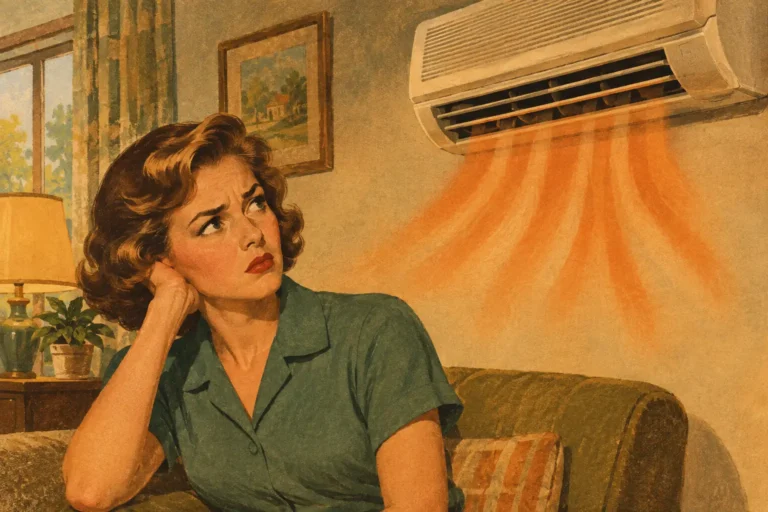
A house can go from comfortable to sticky surprisingly fast when the AC blowing warm air is the only thing coming from the vents. Before assuming the system needs replacement, check the obvious settings and airflow issues. But if the problem persists, warm air can also point to a mechanical, electrical, or refrigerant issue that needs prompt professional attention.
For homeowners and businesses in Elgin and throughout Northeast Illinois, acting early can protect comfort, avoid further equipment damage, and help prevent an inconvenient breakdown during a heat wave.
Start With the Thermostat and Airflow
A thermostat setting is one of the simplest explanations for warm air. Confirm the system is set to Cool, not Heat or Fan Only, and set the temperature at least a few degrees below the current indoor temperature. If the fan is set to “On,” it runs continuously, including between cooling cycles. That can make it feel as though the AC is producing warm air when it is simply circulating room-temperature air.
Next, inspect the air filter. A heavily clogged filter limits airflow across the indoor coil, reducing cooling performance and sometimes causing the coil to freeze. Replace a disposable filter if it is dirty, collapsed, or overdue according to the manufacturer’s recommended schedule. Make sure supply vents are open and not blocked by furniture, rugs, cartons, or drapes.
These checks are safe and worthwhile, but they do not solve every airflow problem. A failed blower component, damaged ductwork, a dirty indoor coil, or an improperly sized system can also affect the amount and temperature of air reaching individual rooms.
Why Is the AC Blowing Warm Air? Common Causes
Air conditioning is a process of moving heat out of a building. When one part of that process is interrupted, the system may run without delivering the cool air you expect.
The outdoor unit has lost power
Your indoor blower may still operate even when the outdoor condenser is not running. That means air moves through the vents, but it is not being cooled. Check whether the circuit breaker has tripped. If it has, reset it once. A breaker that trips again should not be repeatedly reset, since it may indicate an electrical fault, failing component, or compressor issue.
The outdoor disconnect near the condenser can also be affected by a service issue, storm damage, or an accidental shutoff. Because electrical equipment carries real risk, leave deeper diagnosis to a qualified technician.
The condenser coil is dirty or blocked
The outdoor unit needs open space to release heat. Cottonwood, grass clippings, leaves, mulch, and dirt can restrict the coil and force the equipment to work harder. If the unit cannot shed heat effectively, cooling capacity drops and energy use rises.
You can gently clear loose debris from around the cabinet and maintain clearance around it. Do not pressure-wash the coil or bend its delicate fins. A thorough coil cleaning during professional maintenance is the safer way to restore proper heat transfer.
Refrigerant is low because of a leak
Refrigerant does not get “used up” like fuel. If the level is low, there is typically a leak somewhere in the system. Low refrigerant can lead to weak cooling, warm supply air, longer run times, ice on refrigerant lines or the indoor coil, and higher utility bills.
Adding refrigerant without finding and repairing the leak is not a lasting fix. A trained HVAC technician should test the system, identify the cause, repair it when practical, and charge the equipment to manufacturer specifications.
A frozen evaporator coil is restricting cooling
Ice on the indoor coil prevents the system from absorbing heat from your home. Restricted airflow, low refrigerant, a dirty coil, or a blower problem can all contribute. You may notice reduced airflow, water near the furnace or air handler after the ice melts, or frost on the insulated refrigerant line outside.
Turn the cooling mode off, set the thermostat fan to “On” if airflow is normal, and allow the system time to thaw. Do not chip at ice or run the AC while the coil is frozen. Once thawed, schedule service to determine why it froze in the first place.
A capacitor, contactor, or compressor has failed
The condenser contains several electrical and mechanical parts that must work together. A weak capacitor may keep the fan motor or compressor from starting correctly. A worn contactor can interrupt power. Compressor problems are more serious and can range from repairable electrical concerns to a larger equipment decision.
These issues are not visible from a thermostat screen, and symptoms can overlap. A professional diagnosis protects against replacing the wrong part or overlooking a problem that could damage the system further.
Heat Pumps Need a Different Check
If your home or business uses a heat pump, warm air in cooling mode may involve the reversing valve, defrost controls, or thermostat wiring. A heat pump can also deliver air that feels less icy than air from some conventional central AC systems while still cooling the space effectively.
The key question is whether indoor temperature and humidity are actually coming down. If the building remains warm, the heat pump runs constantly, or the air is clearly warmer than normal, service is appropriate. Heat pump diagnostics require equipment-specific training and measurements, not guesswork.
What You Can Safely Do Before Calling
There are a few practical steps that help narrow the issue and give your technician useful information. Note the thermostat setting and indoor temperature, replace a dirty filter, verify that vents are open, and look for obvious debris around the outdoor unit. Listen for unusual buzzing, clicking, grinding, or repeated attempts to start.
Also look for ice, water around the indoor equipment, or a breaker that has tripped. If you smell burning, see damaged wiring, hear loud metal-on-metal sounds, or experience repeated breaker trips, turn the system off and request service right away.
Avoid opening electrical panels, removing refrigerant-line insulation, or attempting to add refrigerant. Those tasks can create safety hazards, void warranties, and turn a manageable repair into a more expensive one.
When Warm Air Is an Urgent Problem
A warm house is more than an inconvenience for infants, older adults, people with certain health conditions, and pets. It can also disrupt a business, affect employee comfort, and put temperature-sensitive inventory or equipment at risk.
Request prompt HVAC service when the system is running but indoor temperatures continue climbing, the outdoor unit will not start, the coil repeatedly freezes, or there are signs of an electrical problem. During extreme weather, 24/7 emergency availability can make a meaningful difference.
A NATE-certified technician can measure airflow, electrical performance, refrigerant pressures, temperature split, and overall system operation to identify the real cause. That is especially valuable when a system has more than one issue, such as a neglected filter combined with a weak capacitor or a refrigerant leak.
Prevent the Next Cooling Surprise
Most air conditioners give some warning before they stop cooling altogether. Rising energy bills, rooms that cool unevenly, longer cycles, louder operation, and recurring thermostat adjustments are all worth addressing before the hottest week of summer.
Seasonal maintenance helps catch dirty coils, worn electrical components, drainage issues, loose connections, and developing refrigerant concerns early. It also gives a technician the chance to confirm the system is operating within expected performance ranges. For older equipment, the right path depends on repair cost, efficiency, reliability history, and how well the system matches the building’s needs.
When comfort matters, Lea Heating & Air Conditioning can provide a clear diagnosis and tailored repair or replacement options – so you can make a confident decision and get back to a cooler, healthier space.