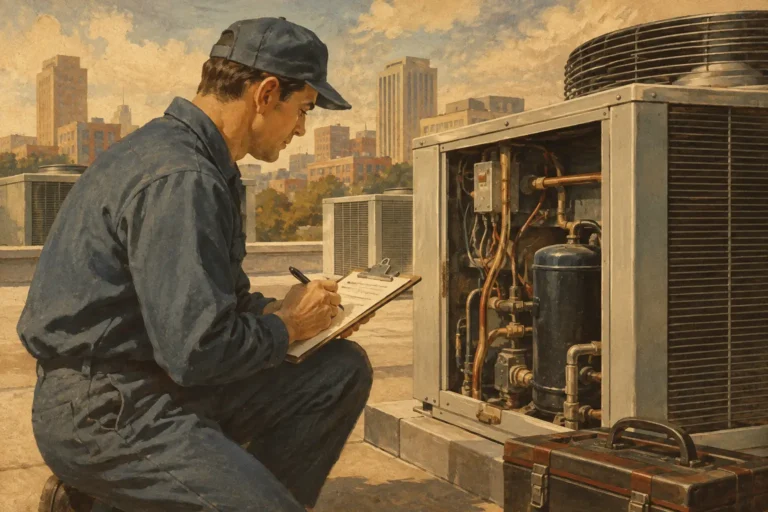
A rooftop unit that fails on the hottest afternoon in July does more than make a building uncomfortable. It can disrupt staff, frustrate customers, threaten inventory, and force a business owner into a rushed repair decision. Commercial HVAC maintenance contracts are designed to reduce those moments by giving your heating and cooling equipment consistent professional attention before a small performance issue becomes an operational problem.
For property managers and business owners, the right agreement is not simply a calendar reminder for a filter change. It is a service plan built around the equipment you own, the people who rely on it, and the consequences of downtime at your facility.
What Commercial HVAC Maintenance Contracts Actually Cover
A commercial maintenance contract is an agreement between a business and an HVAC contractor for scheduled preventive service. Most plans include seasonal inspections, cleaning, performance testing, and documentation for the systems covered under the agreement. Depending on the building, that may include rooftop units, split systems, furnaces, boilers, heat pumps, unit heaters, exhaust equipment, thermostats, and indoor air quality components.
The purpose is straightforward: keep equipment operating safely, efficiently, and predictably. During a maintenance visit, a trained technician looks beyond whether the system turns on. They check operating pressures, electrical connections, temperature differentials, airflow, drainage, safety controls, belts, motors, filters, and signs of wear that could lead to a failure.
The exact scope should match the facility. A small retail suite with one packaged rooftop unit needs a different plan than a medical office, restaurant, warehouse, or multi-tenant commercial property. Buildings with long operating hours, high occupancy, sensitive products, or strict ventilation needs often benefit from more frequent visits and closer performance monitoring.
Preventive maintenance is not the same as repair coverage
This distinction matters when comparing proposals. Preventive maintenance covers scheduled work intended to reduce breakdown risk. Repair coverage addresses the labor and parts needed when something has already failed. Some contracts offer preferred labor rates, reduced diagnostic fees, or priority scheduling for repairs, but they do not necessarily include all repair costs.
Ask for clear language about what is included and what is billed separately. Filters, belts, refrigerant, replacement parts, after-hours calls, coil cleaning, and major repairs may be outside the base agreement. That is not automatically a concern. A transparent contract is often more valuable than a low initial price that leaves key exclusions unclear.
Why a Contract Can Protect Your Operating Budget
HVAC problems rarely arrive at a convenient time. Without regular service, a worn contactor, blocked condensate drain, dirty coil, or loose electrical connection can go unnoticed until it stops a system from cooling or heating. Emergency calls are sometimes unavoidable, but many can be prevented or made less costly through early detection.
Maintenance also affects energy use. Dirty filters and coils restrict airflow and heat transfer. A belt that is slipping, a thermostat that is out of calibration, or an economizer that is not operating correctly can make equipment work harder than necessary. In a commercial facility with equipment running for many hours each day, modest inefficiencies can add up over a season.
There is still a trade-off to consider. A contract is an ongoing expense, and no maintenance plan can guarantee that every part will last its full expected life. Electronics, compressors, motors, and other components can fail unexpectedly. The value comes from fewer surprises, better system visibility, and a more deliberate approach to repairs and replacement planning.
For businesses that rent their space, responsibilities may be split between the tenant and property owner. Review the lease before selecting a plan. Knowing who is responsible for the rooftop unit, controls, filters, and emergency repairs avoids delays when service is needed.
What to Look for in a Commercial HVAC Maintenance Agreement
A useful agreement should be specific enough that you know what your business is receiving. It should identify the equipment covered, the number of planned visits, and the maintenance tasks performed at each visit. If a proposal only says “tune-up,” ask for the actual inspection and cleaning procedures.
Service timing matters, too. For many Northeast Illinois businesses, cooling maintenance should happen before sustained summer heat and heating service before the coldest part of winter. Facilities with year-round loads or critical comfort requirements may need quarterly service rather than two visits per year.
Look closely at response expectations. Priority scheduling can be meaningful when your system fails during a busy workday, but clarify what priority means. Does the contractor provide 24/7 emergency availability? Are after-hours rates different? Is there a defined response window for contract customers? A dependable service partner should answer these questions directly.
Documentation is another practical benefit. After each visit, your team should receive a service record that notes readings, completed tasks, observed concerns, and recommended repairs. This creates a useful equipment history, especially when budgeting for replacements, managing several locations, or communicating with ownership.
Finally, consider the qualifications of the service team. Commercial equipment is not a place for guesswork. Factory training, NATE-certified technicians, experience with modern controls, and a contractor’s ability to support both repairs and replacement planning can make a meaningful difference over the life of your system.
Building the Right Service Schedule
The best maintenance schedule depends on equipment age, usage, condition, and building demands. Newer equipment in a lightly occupied office may need standard seasonal service. An older rooftop unit serving a restaurant kitchen or busy retail store may require more frequent attention because it operates harder and faces greater wear.
Indoor air quality should be part of the conversation, particularly in offices, schools, healthcare settings, and customer-facing businesses. Filtration, humidity levels, ventilation, and clean coils all affect more than temperature. They influence how the space feels and how effectively the HVAC system moves and conditions air.
A contractor should also help you distinguish between maintenance and replacement planning. If a system has frequent repairs, poor efficiency, obsolete components, or capacity issues, continuing to repair it may not be the most cost-effective choice. On the other hand, replacement is not always necessary just because a unit is older. Accurate diagnostics and an honest assessment allow you to make the decision on your timeline when possible.
Questions Worth Asking Before You Sign
Before committing to a commercial HVAC maintenance contract, ask how often your equipment will be serviced, which assets are included, and which tasks occur during each visit. Confirm whether filters and common wear items are included or billed separately. Ask how repair recommendations are approved and whether your business receives priority service during peak heating and cooling seasons.
It is also reasonable to ask who will perform the work. A commercial building needs technicians who can evaluate system performance, explain findings clearly, and work respectfully around employees, tenants, and customers. Clean workmanship and consistent communication matter just as much as the checklist.
For businesses in Elgin and the surrounding area, Lea Heating & Air Conditioning brings more than 48 years of local experience to commercial HVAC service, supported by factory-trained, NATE-certified technicians and 24/7 emergency availability. That combination helps business owners address immediate needs while keeping a closer eye on long-term comfort and equipment performance.
A Better Way to Plan for HVAC Costs
The right contract should make HVAC ownership feel more manageable, not more complicated. It gives you scheduled attention, documented system conditions, and a reliable point of contact when a repair decision cannot wait. It also gives your contractor the context to spot patterns that a one-time service call might miss.
Before the next cooling or heating season puts your equipment under pressure, take inventory of your systems, recent repairs, operating hours, and comfort complaints. A thoughtful maintenance conversation now can help your business make decisions from a position of control rather than from a hot, cold, or unexpectedly closed building.