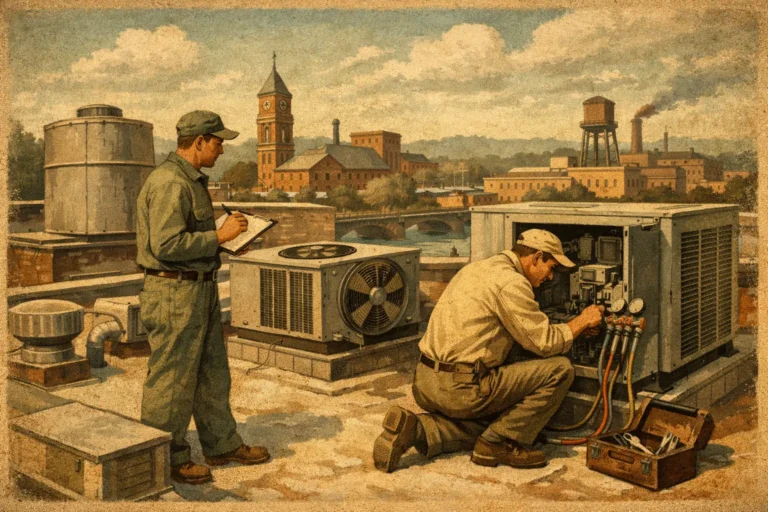
A restaurant dining room that turns stuffy during the lunch rush, an office with one freezing conference room, or a retail store with a rooftop unit that will not start are more than comfort issues. They can affect customers, employees, inventory, productivity, and the day’s revenue. Prompt commercial HVAC repair Elgin businesses can rely on helps restore control before a minor equipment issue becomes an operational disruption.
Commercial systems work harder and face more variables than most people realize. Longer run times, changing occupancy, outside-air requirements, cooking equipment, server rooms, and multiple temperature zones can all place demands on heating and cooling equipment. The right repair approach begins with accurate diagnostics, clear communication, and a solution that fits the building’s immediate needs and long-term operating plan.
When Commercial HVAC Repair in Elgin Cannot Wait
Some HVAC problems should be addressed quickly, even when the equipment is still running. A system may be warning you of a larger failure through uneven temperatures, short cycling, unusual noise, water around equipment, weak airflow, or a noticeable rise in utility costs. Waiting can turn a repairable component problem into damage to a compressor, heat exchanger, blower motor, or control system.
A full shutdown is naturally urgent, particularly during an Illinois heat wave or a winter cold spell. But urgency also depends on the space. A failed cooling system in a medical office, restaurant, daycare, fitness center, or technology room may create a more immediate concern than a temporary comfort issue in an unoccupied area. Property managers also need to consider tenant obligations and the effect a delayed repair can have on multiple occupants.
For after-hours failures, 24/7 emergency service provides an important safeguard. The goal is not simply to get equipment running at any cost. It is to identify the cause, make the system safe, explain the available repair path, and help the business make a sound decision under pressure.
What a Thorough Commercial HVAC Repair Visit Should Cover
Commercial HVAC problems can have similar symptoms but very different causes. A space that will not cool may have a refrigerant issue, failed capacitor, dirty coil, thermostat communication error, damaged belt, airflow restriction, or a problem with the electrical supply. Replacing a part before identifying why it failed can lead to repeat service calls and avoidable expense.
A qualified technician should evaluate the system as a whole. That includes checking operating pressures and temperatures when applicable, electrical components, airflow, filters, condensate drainage, controls, safety switches, and the condition of accessible mechanical parts. On larger or more complex systems, the technician may also assess how the equipment interacts with zoning controls, economizers, building schedules, or connected thermostats.
The best repair recommendation is not always the lowest immediate price. For example, replacing a failed motor may be the right choice when the rest of the unit is in good condition. If the unit has frequent breakdowns, poor efficiency, obsolete components, or a history of refrigerant leaks, a business may need to compare the repair with a planned replacement. That decision depends on equipment age, repair history, utility use, budget, occupancy needs, and how critical the system is to daily operations.
Clear Options Matter for Business Owners
A reliable contractor should explain what failed, what caused the failure when it can be determined, and what the repair is expected to accomplish. Business owners and facility managers should not be left guessing whether a repair is temporary, whether additional work is likely, or whether the system can safely continue operating.
For many businesses, the practical choice is a phased plan. Address the immediate failure, schedule work that can be completed outside business hours when possible, and build a replacement strategy for aging equipment before it fails at the worst possible time. This approach can protect cash flow while reducing the likelihood of repeated emergencies.
Common Causes of Commercial Heating and Cooling Failures
Deferred maintenance is one of the most common contributors to equipment trouble. Filters that remain in place too long restrict airflow. Dirty condenser or evaporator coils force equipment to work harder. Clogged drain lines can cause water damage or trigger shutdowns. Loose electrical connections, worn belts, and aging contactors may seem small, but they can stop an entire unit.
Controls also deserve attention. A thermostat that is incorrectly programmed, a failed sensor, or a communication issue between components can create comfort complaints even when the mechanical equipment is sound. In multi-tenant buildings, zone balance and scheduling are often part of the diagnosis. One tenant’s uncomfortable suite may be caused by a shared-system issue rather than a problem in that individual space.
Older rooftop units, boilers, furnaces, heat pumps, and split systems can remain serviceable with proper care. Still, the availability of replacement parts and the cost of operation should be considered. Repairs are often worthwhile, but continually investing in an inefficient or unreliable unit can cost more over time than a properly planned upgrade.
Preventive Maintenance Reduces Unplanned Downtime
Maintenance is not a promise that equipment will never fail. It is a practical way to find developing problems before they interrupt business. Seasonal inspections help verify that heating and cooling components are clean, operating safely, and prepared for heavy demand.
For a commercial property, a maintenance plan should reflect the equipment and the building’s use. A lightly occupied office may need a different service schedule than a busy restaurant, warehouse, retail store, or property with multiple rooftop units. Systems exposed to grease, dust, construction activity, or extended operating hours generally require closer attention.
During planned maintenance, technicians can identify worn components, clean critical areas, check safety controls, inspect belts and electrical connections, and monitor system performance. The resulting service record is useful for budgeting as well. Instead of being surprised by an aging unit, a facility manager can plan around its condition and likely future needs.
Protect Comfort, Air Quality, and Energy Use
Equipment performance affects more than the temperature on a thermostat. Poor airflow, excess humidity, uneven distribution, and neglected filtration can make a building feel uncomfortable even when the system appears to be running. In some settings, indoor air quality is also a direct concern for employees, guests, and customers.
Targeted improvements may include better filtration, humidity control, duct repairs, smart thermostats, zoning adjustments, or indoor-air-quality equipment. Not every building needs every upgrade. The right recommendation depends on the comfort complaint, the system design, maintenance history, and the building’s operational needs.
High-efficiency replacement equipment can also be a strong investment when a system is near the end of its useful life. Variable-speed technology, improved controls, and properly matched equipment can help reduce energy waste while improving temperature consistency. However, new equipment will only perform as intended when it is correctly sized, installed, and maintained.
Choosing a Commercial HVAC Partner
Commercial work calls for technical skill and reliable coordination. Look for a contractor with experience across commercial heating, cooling, controls, and maintenance, as well as technicians who receive ongoing factory training and hold respected credentials such as NATE certification. Emergency availability matters, but so do punctuality, clean workmanship, straightforward recommendations, and a commitment to follow-through after the service call.
Lea Heating & Air Conditioning brings more than 48 years of local experience to businesses throughout the northwest suburbs, supported by factory-trained technicians and a five-star customer reputation. Whether the need is an urgent repair, a recurring comfort concern, or a maintenance strategy for multiple systems, the focus should remain on dependable performance and clear options.
When your HVAC system begins showing signs of trouble, acting early gives your business more choices. Schedule an evaluation before the next weather extreme or busy season turns a manageable repair into an interruption your customers and team can feel.