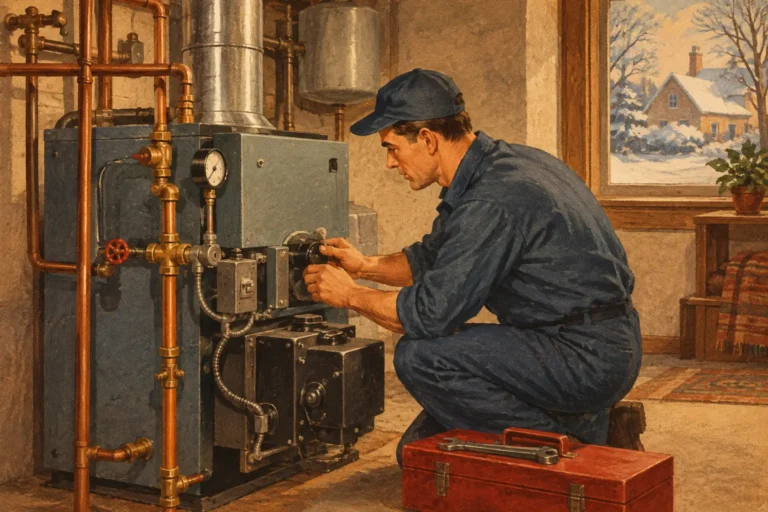
Boiler Installation Done Right for Illinois Homes
A boiler can appear to be a simple replacement until installation day reveals the details behind dependable heat: the piping layout, radiator capacity, venting path, control settings, water quality, and the building’s actual heat loss. A properly planned boiler installation addresses all of them, so your home or commercial property receives even, efficient warmth when Northeast Illinois temperatures fall.
For homeowners, property managers, and business owners, the goal is not merely to get heat back. It is to choose a system that fits the building, operates safely, and remains practical to maintain for years ahead.
Boiler Installation Starts With the Building, Not the Box
The right boiler is not automatically the largest model or the one with the highest efficiency rating. Capacity must match how much heat the building loses on a cold winter day. That requires a heat-loss calculation that considers square footage, insulation levels, windows, air leakage, ceiling height, and the local climate.
Oversizing is a common and costly mistake. A boiler that is too large may heat the space quickly, then turn off and restart repeatedly. This short cycling can waste fuel, create uneven temperatures, and add wear to components. An undersized boiler can struggle during severe cold, leaving occupants uncomfortable when they need reliable heat most.
The existing distribution system matters just as much. Cast-iron radiators, baseboard heaters, radiant floors, unit heaters, and fan coils each deliver heat differently. A contractor should inspect the piping, circulator pumps, expansion tank, isolation valves, and existing emitters before recommending equipment. Replacing the boiler without evaluating these components can leave performance problems in place.
High-Efficiency Boilers Are Not One-Size-Fits-All
A condensing boiler can deliver excellent fuel savings by recovering heat from exhaust gases that older systems send outdoors. To operate at peak efficiency, however, it generally needs lower return-water temperatures. Radiant-floor systems are often a strong match because they operate at lower water temperatures. Some radiator systems can also work very well with condensing equipment, especially when controls and system sizing are carefully considered.
In other buildings, a conventional boiler may be the more practical choice. Older radiators may require hotter water during the coldest weather, and a building’s venting or drainage conditions can affect the installation approach. The best option depends on the complete system, not a single number on an equipment brochure.
What a Proper Boiler Installation Includes
A quality installation is a process, not a delivery appointment. Before work begins, a qualified technician should verify fuel type, electrical requirements, venting options, and local code requirements. For gas boilers, this includes confirming that the gas line is properly sized for the new unit and any other gas appliances in the property.
Venting deserves close attention. High-efficiency boilers often use direct venting with approved pipe materials, while other equipment may use a chimney or dedicated vent connector. Improper venting can affect safety, reliability, and manufacturer warranty coverage. The installation plan should account for clearances, termination location, condensate drainage, and protection from snow or ice buildup.
The hydronic side of the system also needs to be built correctly. This may involve replacing aging circulators, adding air elimination equipment, confirming expansion-tank sizing, installing service valves, and separating zones where appropriate. Small details such as pipe support, insulation, drain locations, and accessible shutoffs make a meaningful difference when the system needs routine service later.
For a condensing boiler, acidic condensate must be drained appropriately. Depending on the installation, a neutralizer may be needed to protect plumbing. In a finished basement, utility room, or commercial mechanical space, clean routing and thoughtful placement matter. Equipment should remain accessible without making the room difficult to use.
Controls Turn Heat Into Comfort
A boiler produces hot water. Controls determine where that heat goes, when it goes there, and how consistently rooms feel from one end of the building to the other.
A basic thermostat may be sufficient for a compact home with one heating zone. Larger homes, multi-level properties, and commercial spaces often benefit from zoning. Separate thermostats and zone controls can allow different areas to operate based on their individual needs. Bedrooms can be kept cooler than living areas, for example, while a rarely used portion of a business does not receive unnecessary heat.
Outdoor reset controls are another valuable option for many boiler systems. Rather than sending the same high-temperature water through the system every day, these controls adjust water temperature based on outdoor conditions. On a milder winter day, the boiler can provide lower-temperature water that better matches the building’s needs. This can improve comfort, reduce temperature swings, and help a high-efficiency boiler spend more time in its most efficient operating range.
Smart thermostat compatibility depends on the system configuration. It is worth discussing early, especially if you want remote temperature adjustments, schedules, or alerts. A good recommendation should explain what the controls will do for your specific property, not simply add technology for its own sake.
Replacement Is a Good Time to Fix Old Problems
Many boiler replacements happen after a leak, no-heat call, or rising repair costs. While urgency is understandable, replacement also creates an opportunity to correct ongoing comfort issues. Cold rooms, banging pipes, trapped air, uneven radiator heat, and high fuel use may point to problems beyond the boiler itself.
If one room has always lagged behind the rest of the house, the cause could be an undersized radiator, an unbalanced zone, a failing circulator, or poor insulation. If a boiler has needed frequent water additions, a hidden leak or failed component should be identified. Simply installing new equipment without addressing the cause can shorten the life of the replacement system.
For commercial properties, planning is especially important. Businesses may need installation work scheduled around operating hours, tenant needs, and safety requirements. A staged plan can help protect operations while ensuring the heating system is ready before cold weather arrives.
What to Expect on Installation Day
The length of a boiler installation depends on the equipment, condition of the existing piping, permit requirements, and whether upgrades are needed. A direct replacement can sometimes be completed in a day, while a more involved project may take longer. Your contractor should set expectations before work begins, including the anticipated heat interruption and any needed access to utility areas.
Professional workmanship should include protection for floors and work areas, safe removal of old equipment, organized piping and wiring, and cleanup after the project. The job is not complete when the boiler first fires. It must be commissioned.
Commissioning includes checking for proper ignition and combustion, verifying system pressure, purging air from the piping, testing safety controls, confirming venting and condensate drainage, and reviewing thermostat operation. The installer should also explain the basics of operation, including where to find system pressure readings and when to call for service.
Lea Heating & Air Conditioning brings factory-trained, NATE-certified expertise to heating projects across Elgin and surrounding communities, with clear options designed around the property rather than a one-size-fits-all recommendation.
Protecting the Investment After Installation
A new boiler benefits from annual maintenance, even when it seems to be running normally. Service visits can identify developing issues with pumps, valves, controls, pressure, combustion, and venting before they become a no-heat emergency. Maintenance also helps preserve efficiency and supports manufacturer warranty requirements.
Property owners can help between visits by keeping the mechanical area clear, watching for water around the boiler or piping, and reporting unusual sounds or repeated pressure changes. Do not ignore a system that needs frequent resetting or regularly loses pressure. Those are signs worth investigating early.
The right boiler installation should leave you with more than new equipment. It should give you a heating system that responds predictably, uses energy wisely, and is supported by a team you can call when comfort cannot wait. Before the next cold stretch arrives, scheduling a professional evaluation can turn an uncertain replacement decision into a well-planned improvement for your property.
A heat pump replacement can change more than the temperature in your home. For many Elgin homeowners, it can replace an aging air conditioner and furnace strategy with one efficient system that provides heating and cooling. Elgin heat pump rebates may reduce the upfront cost, but the savings depend on the equipment selected, the utility serving your address, household eligibility, and the timing of the installation.
The best time to investigate incentives is before choosing a system or signing an installation agreement. A rebate program may require a specific efficiency rating, qualifying documentation, or pre-approval. Choosing first and checking later can leave money on the table.
Where Elgin Heat Pump Rebates May Come From
Heat pump incentives are not usually a single rebate with one set dollar amount. Depending on the current programs available to your property, savings may come from a local utility, a natural gas provider, a manufacturer promotion, a state-administered energy program, or a federal tax credit. Each source has its own requirements, deadlines, and payment process.
Utility rebates often focus on measurable energy savings. They may apply to qualifying air-source heat pumps, dual-fuel systems, ductless mini-splits, smart thermostats, or other efficiency improvements. Federal tax incentives generally operate differently: rather than reducing the invoice at installation, they may be claimed when you file taxes if you meet the applicable requirements.
Manufacturer promotions can be valuable as well, particularly during seasonal replacement periods. These offers may apply only to select models or may be paired with financing. The important distinction is that a promotional discount, a utility rebate, and a tax credit are separate forms of savings. Some can be combined, while others cannot.
Because funding and program rules can change, a responsible contractor should verify active opportunities for your address and equipment choice instead of quoting a rebate amount as a permanent guarantee.
What Makes a Heat Pump Eligible?
Efficiency matters, but the highest published efficiency rating does not automatically mean the system qualifies for every incentive. Programs commonly set minimum standards for SEER2, EER2, HSPF2, or cold-weather heating performance. They may also require the complete matched system - outdoor unit, indoor coil or air handler, controls, and sometimes the furnace in a dual-fuel application - to appear on an approved product list.
This is why model numbers matter. An outdoor unit that appears eligible on its own can lose a qualifying rating when paired with different indoor equipment. Proper system design protects both comfort and potential incentive eligibility.
Installation details may matter too. Some programs require work to be completed by a participating contractor, while others require permits, paid invoices, AHRI-style matched-system documentation, or proof that an older unit was replaced. Missing paperwork can delay or prevent a rebate payment.
For homes with a gas furnace, a dual-fuel heat pump may be worth considering. The heat pump handles much of the heating season efficiently, then the furnace takes over during colder conditions when it is the more practical heat source. Whether that arrangement qualifies for a particular incentive depends on the program rules and the installed equipment, so it deserves a project-specific review.
Rebates Are Only One Part of the Cost Decision
A rebate can make a higher-efficiency system more accessible, but it should not be the only reason to select equipment. The right heat pump must be sized for the home, compatible with the ductwork, and able to manage comfort through an Illinois winter as well as a humid summer.
An oversized system can cycle too frequently, which may affect temperature consistency and humidity control. An undersized system may struggle during more demanding weather. A quality replacement starts with an evaluation of the home, not a quick estimate based only on the existing unit’s capacity.
Homeowners should also compare operating costs, repair history, expected maintenance, and warranty coverage. A larger rebate on a system that does not fit the home well is not a better value. In contrast, a properly designed variable-speed system may offer quieter operation, steadier indoor temperatures, and lower energy waste, even if its initial cost is higher.
For commercial properties, the calculation is broader. Building hours, occupancy patterns, ventilation needs, equipment downtime, and rooftop or split-system configuration can all influence the best path. Incentives can improve the project budget, but reliability and operating continuity remain central to the decision.
How to Approach a Rebate-Ready Heat Pump Project
Start with a comfort consultation that identifies what the current system is doing poorly. Is the concern high summer electric bills, uneven bedrooms, a furnace nearing the end of its life, frequent breakdowns, or a desire to reduce gas use? The answer helps determine whether a traditional central heat pump, a dual-fuel system, or a ductless solution makes sense.
Next, ask for equipment options that clearly show the expected efficiency levels and qualifying system combinations. This makes it easier to compare more than the initial price. A good proposal should explain the equipment scope, electrical requirements, thermostat compatibility, any duct modifications, and the rebate or tax-credit assumptions behind the estimate.
Before work begins, confirm these practical questions with the contractor or program administrator:
- Is the rebate currently funded and available for my service address?
- Does this exact matched system meet the program’s efficiency requirements?
- Is pre-approval required before installation?
- Who submits the application, and what documents will I receive?
- Can this incentive be combined with a manufacturer offer, financing, or a tax credit?
Do not assume an advertised maximum rebate applies to every installation. Maximum amounts may be tied to income qualification, a particular equipment tier, or limited program funding. Getting the terms in writing helps you evaluate the actual project cost with confidence.
Tax Credits and Income-Based Programs Need Extra Care
Tax credits and rebates are often discussed together, but they are not interchangeable. A tax credit may lower your federal tax liability when claimed according to current tax rules, while a rebate is typically a direct discount or payment tied to an approved installation. Tax circumstances vary, so homeowners should retain all equipment and invoice records and consult a qualified tax professional when appropriate.
Income-based energy programs can offer stronger support for eligible households, yet they may involve additional documentation and availability limits. Household income, property type, utility participation, and program launch status can affect access. It is wise to treat any estimated incentive as conditional until the qualifications are verified.
Rental and multifamily situations require special attention. The person paying the utility bill, the property owner, and the party claiming an incentive may not be the same. Property managers should confirm participation rules before authorizing work, especially when improvements affect multiple units or common areas.
Why Professional Installation Protects the Investment
Modern heat pumps are sophisticated systems. Their performance depends on correct sizing, refrigerant charge, airflow, electrical connections, condensate management, controls setup, and commissioning. A quality installation also includes clear instruction on operating the thermostat and maintaining the equipment.
Lea Heating & Air Conditioning brings more than 48 years of local HVAC experience to replacement decisions, with factory-trained and NATE-certified technicians who can evaluate the full comfort system. That matters when a rebate-eligible option must also meet the needs of an older home, updated addition, townhouse, or busy commercial space.
Once the system is installed, keep all paperwork in a dedicated file: proposal, final invoice, paid receipt, model and serial numbers, permit documentation if applicable, and any rebate confirmation. Preventive maintenance should remain part of the plan as well. A high-efficiency heat pump needs clean filters, proper airflow, and regular professional service to continue delivering the comfort and savings you expected.
If your heating or cooling equipment is becoming unreliable, schedule an evaluation before an emergency forces a rushed choice. A little planning can give you time to compare qualifying options, verify current incentives, and choose a heat pump that feels right in your home long after the rebate paperwork is finished.
A furnace that quits during an Elgin cold snap or an air conditioner that stops on a humid July afternoon rarely fails without giving some warning. Learning how to prevent HVAC breakdowns starts with noticing those warnings, keeping up with basic care, and scheduling professional service before a small issue becomes an urgent repair.
For homeowners, a breakdown can mean an uncomfortable house, frozen pipes, or indoor-air concerns. For a business, it can disrupt employees, customers, inventory, and operating hours. Preventive attention does not eliminate every unexpected failure, but it gives your heating and cooling equipment its best chance to run safely, efficiently, and reliably when you need it.
Prevent HVAC Breakdowns With Seasonal Maintenance
Your HVAC system works hardest during the first major temperature swings of the year. That is why the best maintenance schedule is usually tied to the seasons: cooling service in spring and heating service in fall. A heat pump that provides both heating and cooling may need attention before both demanding seasons.
During a professional maintenance visit, a trained technician does far more than look over the equipment. They can inspect electrical connections, test safety controls, clean critical components, check refrigerant performance where applicable, evaluate airflow, inspect the condensate system, and identify worn parts before they fail. For gas furnaces and boilers, combustion-related checks and safety inspections are especially important.
There is a practical trade-off here. A newer system with no apparent issues may seem like it can skip a visit, but maintenance is often what preserves manufacturer warranty requirements and catches the quiet problems that do not yet affect comfort. Older equipment benefits even more from regular inspection because normal wear accumulates over time.
For homes and facilities with multiple systems, create a simple service calendar. Keeping records of visits, repairs, filter changes, and unusual performance makes it easier to spot a pattern and plan repairs or replacement on your terms.
Change Filters Before Airflow Suffers
A clogged air filter is one of the most common and avoidable contributors to HVAC strain. When a filter becomes packed with dust, pet hair, or construction debris, the system has to work harder to move air. That can reduce comfort, raise energy use, contribute to frozen air-conditioning coils, and put unnecessary stress on motors and other components.
Check the filter monthly, especially during peak heating and cooling months. Many standard one-inch filters need replacement every one to three months, although the right interval depends on the filter type, household size, pets, allergies, and how often the system runs. A larger media filter may last longer, but it still needs regular inspection.
Use the filter size and efficiency rating recommended for your equipment. A very restrictive filter is not automatically better. If it is not compatible with the system’s airflow design, it can create the same problems as a dirty filter. When indoor-air-quality needs are a priority, a qualified HVAC professional can recommend options that improve filtration without compromising system performance.
Keep Outdoor Equipment Clear and Draining Properly
Your outdoor air conditioner or heat pump needs room to exchange heat. Leaves, cottonwood, grass clippings, mulch, snow, and stacked items can restrict airflow around the condenser. Keep plants trimmed back, remove loose debris, and avoid placing outdoor furniture or storage items against the unit.
Do not cover an air conditioner with a solid, airtight covering during the cooling season. It can trap moisture and invite corrosion. In winter, a heat pump must remain clear of snow and ice to operate properly. If its defrost cycle seems ineffective or ice keeps building up, call for service rather than chipping away at components yourself.
Inside, pay attention to the condensate drain. Air conditioners, high-efficiency furnaces, and some heat pumps produce water during normal operation. A blocked drain line can trigger a shutdown, cause water damage, or create conditions for microbial growth. If you see water near indoor equipment, smell mustiness, or notice a drain safety switch shutting the system off, arrange service promptly.
Pay Attention to Small Changes in Comfort
HVAC systems often communicate trouble through changes that are easy to dismiss. A new rattle, repeated cycling, rooms that no longer reach the thermostat setting, a sudden jump in utility costs, or weak airflow from several vents deserves attention.
Some warning signs require faster action. Turn off the system and seek professional help if you smell burning, see smoke, hear loud metal-on-metal sounds, repeatedly trip a breaker, or suspect a gas leak. If a carbon monoxide alarm sounds, leave the building and follow emergency guidance immediately. Do not try to diagnose combustion or electrical hazards on your own.
Less urgent symptoms still matter. A system that runs longer than usual may have a dirty filter, duct leakage, thermostat issue, refrigerant concern, or failing component. The cause depends on the equipment and the conditions in the building, which is why a proper diagnosis is more valuable than repeatedly resetting the thermostat or breaker.
Watch for short cycling
Short cycling happens when heating or cooling turns on and off in brief, frequent bursts. It can be caused by something as simple as a dirty filter or poorly placed thermostat, but it can also point to an oversized system, airflow restriction, safety-control issue, or refrigerant problem. Because frequent starts are hard on equipment, it is worth addressing early.
Use Your Thermostat Thoughtfully
A programmable or smart thermostat can help reduce wasted energy and unnecessary runtime, but it should be set up for the system you have. Avoid making large, repeated temperature changes in an attempt to heat or cool faster. Most systems deliver conditioned air at the same rate regardless of how far you move the setting; extreme adjustments simply make the system run longer.
For heat pumps, thermostat setup is particularly important. Aggressive setbacks can sometimes bring on auxiliary heat, which may cost more to operate. The right strategy depends on your equipment, insulation, occupancy schedule, and comfort preferences.
Also make sure the thermostat is not affected by direct sunlight, cooking heat, lamps, or supply vents. If it is reading the wrong conditions, the entire system will respond incorrectly. Battery-powered thermostats should receive fresh batteries before they fail completely.
Protect Airflow Throughout the Building
Closing too many supply registers, blocking returns with furniture, or leaving interior doors shut in a poorly balanced home can restrict circulation. Your equipment is designed around a certain volume of airflow. Starving it of return air can create uneven temperatures and added strain.
Keep supply and return vents open and unobstructed. Vacuum visible dust from grilles, and pay attention to rooms that are consistently too hot or too cold. Those comfort problems may be related to duct leakage, inadequate return air, insulation gaps, zoning needs, or equipment capacity. They are not always solved by turning the thermostat lower or higher.
Commercial properties need the same discipline, with added attention to tenant changes, remodeled spaces, server rooms, and areas with unusual heat loads. What worked for the building’s original layout may no longer support current operations.
Do Not Postpone Repairs That Affect Reliability
A failing capacitor, worn blower motor, damaged contactor, or ignition issue may begin as an intermittent problem. Waiting until it becomes a complete shutdown can mean a more inconvenient repair time and, in some cases, additional component damage.
Prompt repair does not always mean replacement. A well-maintained system with a repairable issue may have years of useful service left. On the other hand, if repairs are becoming frequent, energy bills are rising, and the equipment is near or beyond its expected service life, replacement may be the more predictable long-term choice. A professional should explain both paths clearly, including efficiency, comfort, and budget considerations.
Lea Heating & Air Conditioning provides preventive maintenance and responsive repair support from trained technicians, helping local homeowners and businesses make informed decisions before comfort becomes an emergency.
Build a Plan Before Extreme Weather Arrives
The most effective way to prevent HVAC breakdowns is not a single task. It is a steady routine: check filters, keep equipment clear, respond to warning signs, and schedule seasonal professional maintenance. A maintenance membership can make that routine easier by keeping service on the calendar and providing a familiar record of your system’s condition.
If your heating or cooling equipment has been making unusual noises, struggling to maintain temperature, or going longer between service visits than it should, schedule an inspection before the next period of extreme weather. A calm, planned appointment is almost always easier than waiting for the moment your system stops working.
A furnace failure in January or an air conditioner that quits during a humid Illinois heat wave rarely arrives at a convenient time. When replacement is the sensible answer, HVAC financing options Illinois homeowners and business owners can use may make it possible to choose reliable, efficient equipment now rather than postpone a needed project.
The right payment plan is not automatically the one with the lowest monthly number. A good decision accounts for the equipment’s efficiency, the length and cost of financing, available incentives, and the comfort problems the new system is meant to solve. That is especially true for a major investment such as a furnace and air conditioner replacement, a heat pump installation, or a commercial rooftop unit.
HVAC Financing Options Illinois Residents Should Compare
Most HVAC financing falls into a few familiar categories. Each can be useful in the right situation, but the details matter more than the label.
Contractor-arranged financing
Many established HVAC contractors offer financing through third-party lenders. This can be a practical choice because the application, approval process, equipment proposal, and installation schedule can often be coordinated in one place. Depending on current lender programs and approved credit, plans may include fixed monthly payments, promotional periods, or longer repayment terms.
Promotional offers deserve a close read. Some plans offer deferred interest, meaning interest may be charged retroactively if the balance is not paid in full by the promotional deadline. Others offer true zero-percent financing for a stated term. They are very different products. Ask for the annual percentage rate after any promotion ends, the total amount financed, payment due dates, late fees, and whether early payoff carries a penalty.
For many households, financing through a qualified local contractor also helps protect the project itself. The equipment must be sized correctly, installed to manufacturer requirements, and supported after installation. A low payment does not compensate for a poorly designed system or incomplete workmanship.
Credit unions, banks, and personal loans
A personal loan from a bank or credit union can offer predictable payments and a fixed payoff date. It may make sense for homeowners with strong credit who want to compare rates independently, or for a project that combines HVAC work with electrical upgrades, insulation, or other improvements.
The trade-off is that loan proceeds and contractor scheduling may be separate steps. Rates, origination fees, and repayment periods also vary widely. Compare the total cost of the loan, not only the advertised rate. A slightly lower rate with a sizable fee may not be the better choice.
Home equity financing
A home equity loan or line of credit may provide a lower rate than unsecured borrowing in some cases, particularly for a large replacement or a whole-home comfort project. It can be worth considering when there is adequate equity and the homeowner expects to stay in the property long enough to justify the process.
However, home equity financing places the home behind the debt. It can take longer to arrange than contractor financing, which may not work when an unsafe furnace, failed boiler, or damaged air conditioner needs prompt replacement. It is usually a better fit for planned improvements than for a middle-of-the-night emergency.
Credit cards and cash reserves
Credit cards can be useful for a small repair, a diagnostic visit, or a short bridge while another source of funds is finalized. For a full HVAC system replacement, high standard interest rates can make them expensive unless the balance is paid off quickly. Using savings avoids interest, but it should not leave a household without an emergency cushion. The best approach depends on the size of the project and the financial flexibility available after the work is complete.
Match the Payment Plan to the HVAC Project
Not every comfort problem requires the same investment. A repair may be the responsible route when a system is relatively young, the repair is limited, and performance has otherwise been dependable. Financing a repair can preserve the remaining useful life of the equipment while avoiding a larger immediate expense.
Replacement becomes more compelling when repair costs are recurring, a furnace or air conditioner is nearing the end of its expected service life, parts are difficult to obtain, or the system can no longer maintain even temperatures. A high-efficiency system may cost more upfront, but it can reduce energy use and improve comfort through features such as variable-speed operation, better humidity control, zoning, and smart thermostat compatibility.
For an older Illinois home, the proposal should look beyond the outdoor unit or furnace cabinet. Duct condition, airflow, insulation, thermostat control, electrical capacity, and indoor-air-quality needs all affect results. Financing a system that is properly designed for the building can be more valuable than financing the least expensive equipment available.
Commercial customers have another layer to consider. A business may prioritize uptime, tenant comfort, ventilation, or a phased equipment replacement plan. Financing can preserve working capital, but decision-makers should weigh payment terms against maintenance requirements, warranty coverage, seasonal operating costs, and the cost of an unplanned shutdown.
Include Incentives Before You Choose a Term
Illinois homeowners should check whether their planned equipment may qualify for utility rebates, manufacturer promotions, or federal energy incentives. Eligibility changes, funding can be limited, and requirements may depend on the exact equipment model, efficiency rating, installation date, and proof of purchase.
Federal tax credits are not the same as a rebate at the time of installation. A tax credit may reduce a qualifying taxpayer’s federal tax liability, while a rebate may reduce an eligible project cost sooner. Neither should be treated as guaranteed until requirements are confirmed. Keep all proposals, model information, invoices, and certification documents, and consult a tax professional for advice specific to your situation.
These incentives can still influence financing decisions. If a qualifying heat pump or high-efficiency furnace lowers the net cost, a homeowner may be able to make a larger down payment or select a shorter financing term. But do not choose equipment only because it appears on an incentive list. It must also fit the home, the climate, and the family’s comfort goals.
Questions to Ask Before Signing
Before accepting any financing offer, ask for the complete installed price and a clear description of what it includes. That should cover equipment, labor, permits when required, startup, removal of old equipment, and any recommended ductwork, electrical, thermostat, or air-quality work. Clarify warranty terms as well, including who handles service after installation.
Then compare financing offers using the same project price. Ask what the monthly payment will be, how many payments are required, the APR, total finance charge, promotional expiration date, and payoff amount. If a down payment is required, confirm when it is due. A transparent contractor should be comfortable walking through these figures without pressure.
It also helps to ask why a particular system was recommended. A complete answer should connect the equipment to the building’s size, layout, existing system, comfort concerns, and efficiency priorities. For homeowners and businesses in Elgin and surrounding Northeast Illinois communities, that conversation is part of choosing a long-term comfort partner, not simply purchasing a box of equipment.
Put Comfort and Long-Term Cost in the Same Conversation
Monthly payment matters, particularly when equipment fails unexpectedly. So do reliability, installation quality, energy use, and service support over the next decade or more. Lea Heating & Air Conditioning can help customers review tailored system options, current financing availability, and the practical differences between repair and replacement, with factory-trained and NATE-certified expertise behind the recommendation.
A well-chosen financing plan should give you room to solve the immediate problem without losing sight of the years of comfort that follow. Start with a clear assessment, compare the full cost of each option, and choose the solution that fits both your property and your budget.
A July afternoon in Northeast Illinois can put an air conditioner to work fast. When a system cannot keep up, the issue is rarely just an inconvenience. Uneven rooms, rising utility bills, excess humidity, and an unexpected shutdown can affect sleep, productivity, equipment, and peace of mind. Reliable air conditioning is about more than making a room feel cool. It is about maintaining the right temperature, controlling moisture, protecting indoor air quality, and having knowledgeable help when something changes.
For homeowners, property managers, and business owners, the best decisions usually happen before a complete breakdown. Knowing what your system is telling you can help you decide whether a repair, maintenance visit, efficiency upgrade, or replacement is the practical next step.
What Good Air Conditioning Should Feel Like
A properly sized, well-maintained cooling system should provide consistent comfort without running endlessly. It should lower indoor humidity, move conditioned air evenly through the building, and cycle on and off in a predictable pattern. You should not have to lower the thermostat to an uncomfortable setting just to make the second floor feel reasonable.
Comfort can vary from room to room, particularly in older homes, additions, townhomes, and commercial spaces with changing occupancy. That does not automatically mean the outdoor unit needs replacement. The cause may be restricted airflow, leaking or undersized ductwork, poor return-air design, inadequate insulation, thermostat placement, or a system that was never correctly sized for the space.
This is why a professional assessment matters. Replacing equipment without addressing airflow or building conditions may improve cooling capacity but leave the original comfort problem partly unresolved. A tailored solution considers the full system, not just the box outside.
Signs Your Air Conditioner Needs Attention
Cooling equipment often provides warning signs before it stops completely. A system that runs but does not cool effectively may have a refrigerant issue, a dirty coil, a failing capacitor, an airflow restriction, or a problem with the compressor. Only a trained technician can diagnose the cause safely and accurately.
Pay attention if you notice warm air from supply vents, weak airflow, frequent cycling, unfamiliar grinding or buzzing sounds, water around the indoor unit, ice on refrigerant lines, or persistent humidity indoors. A sudden increase in cooling costs is another reason to schedule service, especially if your thermostat settings and daily routine have not changed.
Some concerns need more urgent attention. Turn the system off and contact a qualified HVAC professional if you smell burning, hear loud electrical noises, see repeated breaker trips, or find significant water leakage. Continuing to operate equipment under those conditions can create more extensive damage. For an after-hours failure during extreme heat, 24/7 emergency service can be the difference between a manageable repair and a difficult night for occupants or customers.
Maintenance Is the Most Practical Efficiency Upgrade
Many expensive air conditioning repairs begin with small problems that had time to grow. Seasonal maintenance gives a technician an opportunity to inspect electrical connections, test system operation, clean critical components, confirm drainage, check airflow, and identify worn parts before peak summer demand.
A clean filter is one of the simplest things a property owner can manage. Check it regularly during cooling season and replace it according to the filter type, household conditions, and manufacturer guidance. Homes with pets, renovations, allergy concerns, or high summer use may need more frequent changes. A clogged filter restricts airflow, makes the system work harder, and can contribute to frozen coils or reduced comfort.
The outdoor unit also needs breathing room. Keep grass clippings, leaves, mulch, and stored items away from the cabinet, and avoid planting dense shrubs directly around it. Do not attempt to open the equipment or clean electrical components yourself. Professional coil cleaning and inspection are safer and more effective when needed.
Preventive service is especially valuable for commercial properties. A cooling interruption can affect employees, tenants, customers, inventory, server rooms, and operating hours. Scheduled maintenance helps businesses plan around service needs instead of reacting to an emergency during the busiest part of the season.
When Repair Makes Sense and When Replacement Does Not
A repair is often the right choice when the system is relatively young, has a clear and isolated issue, and has otherwise delivered dependable performance. Replacing a capacitor, contactor, blower component, thermostat, or drainage part can restore operation at a reasonable cost.
Replacement becomes more worth considering when repairs are frequent, cooling is inconsistent, energy use has climbed, or a major component has failed in an older system. Age alone should not be the only deciding factor. The better question is whether the current equipment can meet your comfort needs reliably and efficiently for the years ahead.
Modern systems can offer meaningful improvements, but higher efficiency is not automatically the best fit for every building. Variable-speed equipment can provide quieter operation, longer and steadier cooling cycles, better humidity control, and more precise comfort. It may be an excellent option for a family home with hot upstairs rooms or a business that needs stable temperatures throughout the day. Still, the investment should be evaluated alongside equipment sizing, duct condition, usage patterns, budget, and expected length of ownership.
A clear consultation should give you options rather than pressure. Ask for an explanation of the repair, expected system life, efficiency considerations, warranty coverage, and any work needed beyond the equipment itself. Financing can also help make a carefully planned replacement more manageable when repair is no longer the sound long-term choice.
Airflow, Humidity, and Controls Matter as Much as Cooling Capacity
Air conditioning removes heat, but a comfortable building also requires proper airflow and humidity management. A system that is too large may cool the thermostat area quickly and shut off before it has removed enough moisture. The result can be a cool but clammy home. A system that is too small may run for long periods without reaching the desired temperature on the hottest days.
Ductwork plays a major role. Leaks, poor connections, crushed sections, and insufficient returns can send conditioned air where it is not needed or prevent it from reaching rooms that need it most. In some homes, ductless equipment offers a practical way to condition an addition, converted attic, sunroom, or other hard-to-reach area without extensive duct renovations.
Smart thermostats and zoning controls can add useful precision, but they work best when matched to the system and building. A smart thermostat can help adjust schedules and reveal usage patterns. Zoning can help address distinct areas with different comfort needs. Neither is a cure-all for poor sizing or damaged ductwork, so professional guidance remains valuable.
Choosing an Air Conditioning Contractor With Confidence
The right contractor should be prepared to understand the problem before recommending the solution. Look for a company with a long local record, trained and certified technicians, manufacturer authorization, clear communication, and a strong reputation for respectful work in occupied homes and businesses.
Credentials matter because cooling systems combine electrical components, refrigerant handling, airflow design, and controls. NATE-certified technicians and factory-trained teams bring current technical knowledge to diagnosis and installation. Manufacturer-authorized dealers can also provide informed guidance on compatible equipment, warranties, and efficiency options.
It is equally reasonable to expect practical customer service. That includes arriving prepared, protecting the work area, explaining findings in plain language, presenting options clearly, and standing behind the work after installation. Lea Heating & Air Conditioning has served the area for more than 48 years with factory-trained expertise, Bryant Factory Authorized Dealer status, and responsive support for residential and commercial customers.
A Better Next Step Before the Heat Peaks
If your cooling system is already showing signs of strain, do not wait for the hottest week of the year to see whether it will make it through. Schedule an evaluation while you still have time to compare repair and replacement options thoughtfully. If it is working well, seasonal maintenance can help keep it that way.
The goal is not simply colder air. It is dependable comfort, controlled humidity, efficient operation, and the confidence that help is available when your home or business needs it most.
A restaurant dining room that is too warm at lunch, an office with uneven temperatures, or a retail store with a failed rooftop unit can affect far more than comfort. Commercial HVAC plays a direct role in customer experience, employee productivity, equipment protection, indoor air quality, and monthly operating costs. For property managers and business owners, the right service plan prevents a comfort issue from becoming an interruption to business.
Commercial systems have to handle longer operating hours, larger spaces, changing occupancy, and more demanding ventilation needs than most residential equipment. That is why a quick fix is not always the right fix. A qualified contractor should look at the building, the equipment, the controls, and the way the space is actually used before recommending repairs or replacement.
What Makes Commercial HVAC Different?
Commercial HVAC equipment is designed around the needs of a specific building. A small professional office may use split systems similar to residential equipment, while a larger facility may rely on rooftop units, boilers, make-up air systems, ductless zones, or multiple interconnected systems. The equipment itself matters, but so does the design behind it.
A system that is oversized may cycle on and off too frequently, wasting energy and leaving humidity control inconsistent. A system that is undersized can run continuously during extreme Illinois weather without ever reaching a comfortable setpoint. Both conditions can create premature wear and higher utility bills.
Ventilation also deserves close attention. Businesses bring together people, products, electronics, and sometimes processes that affect air quality. Fresh-air requirements, filtration, humidity levels, and exhaust needs vary widely between an office, medical practice, restaurant, warehouse, and retail location. There is no single commercial HVAC solution that fits every building.
The Real Cost of Inconsistent Comfort
When heating or cooling is unreliable, the first cost is often obvious: an emergency repair. The less visible costs can be just as significant. Employees may struggle to focus, customers may leave sooner than planned, inventory may be exposed to unfavorable conditions, and business owners may lose time managing complaints instead of serving customers.
Poor temperature control can also point to an underlying issue rather than a simple thermostat adjustment. Restricted airflow, leaking ductwork, dirty coils, failing motors, refrigerant problems, or outdated controls can all force equipment to work harder than it should. Addressing the root cause helps protect the system and the operating budget over time.
Signs Your Commercial HVAC System Needs Attention
Commercial equipment does not always fail without warning. Many service calls begin with smaller changes that have been easy to overlook during a busy season. A building that feels different from one area to another, takes longer to heat or cool, or produces unusual sounds is worth evaluating before the problem grows.
Pay attention when utility costs rise without a clear change in business activity. Watch for rooms that stay too hot or too cold, frequent thermostat adjustments, persistent humidity, musty odors, water near equipment, or repeated breaker trips. These issues may be connected, especially in systems that have not received regular maintenance.
Age is another factor, but it should not be the only factor. Well-maintained equipment can often deliver dependable service beyond an expected lifespan, while neglected equipment may become costly much earlier. The key question is not simply whether the system can be repaired. It is whether the repair is likely to provide dependable performance at a reasonable cost.
Repair or Replace? Start With the Right Questions
A repair can make sense when the equipment has been maintained, the issue is isolated, and efficiency remains acceptable. Replacing a failed component may restore reliable operation without a major capital expense. This is often the practical choice for newer equipment with a solid service history.
Replacement becomes more compelling when repair calls are frequent, parts are difficult to obtain, energy use is excessive, or the system cannot maintain comfort across the building. It may also be time to replace equipment when a business has remodeled, added staff, changed operating hours, or repurposed part of the property. The original system may no longer match the load it needs to serve.
A professional assessment should include equipment condition, repair history, capacity, airflow, controls, and projected operating costs. Business owners deserve clear options, not pressure. Sometimes a targeted repair and a maintenance plan are the right next steps. Other times, a high-efficiency replacement offers better long-term value and fewer disruptions.
Commercial HVAC Maintenance Is Business Protection
Preventive maintenance is one of the most effective ways to reduce unexpected HVAC downtime. It gives technicians an opportunity to find worn parts, airflow restrictions, electrical concerns, drainage problems, and control issues before they become an emergency on a hot afternoon or during a winter cold snap.
A thorough visit goes beyond changing filters. Depending on the equipment, service may include checking refrigerant performance, cleaning coils, inspecting belts and motors, testing safety controls, verifying electrical connections, clearing condensate drains, reviewing thermostat operation, and confirming that airflow is reaching occupied areas. Each task supports efficiency, comfort, and system life.
The right schedule depends on the building and equipment. Many commercial properties benefit from service before cooling season and again before heating season. Restaurants, high-occupancy spaces, facilities with sensitive equipment, and businesses that operate long hours may need more frequent attention. Filters alone may require more frequent changes when dust, foot traffic, or process contaminants are high.
Maintenance also provides useful documentation. For property managers, a service history can support budgeting, help identify recurring concerns, and make future replacement decisions more informed. It is easier to plan a capital project around business operations than to react after a system fails.
Better Controls Can Improve Comfort and Efficiency
Modern controls give businesses more visibility into how their HVAC equipment is performing. Smart thermostats and programmable controls can reduce unnecessary runtime by matching heating and cooling schedules to actual occupancy. Zoning can help address areas with different sun exposure, occupancy levels, or operating hours.
Controls are not a cure for every comfort problem. If ductwork is undersized, a unit is failing, or airflow is restricted, a new thermostat will not solve the underlying issue. But when the equipment and air distribution are in good condition, thoughtful controls can reduce energy waste while giving managers better temperature oversight.
Humidity control is another area where the details matter. Excess humidity can make a space feel warmer than the thermostat setting suggests, while overly dry winter air can affect occupant comfort and some materials. The best approach depends on the building's use, ventilation requirements, and existing equipment.
Indoor Air Quality Belongs in the Conversation
A comfortable temperature is only part of a healthy commercial environment. Filtration, ventilation, humidity, and equipment cleanliness all influence indoor air quality. Businesses with allergy-sensitive occupants, customer-facing spaces, or high indoor traffic may benefit from a review of filtration options and air purification strategies.
Higher-efficiency filtration can capture more airborne particles, but it must be matched to the system. A filter that is too restrictive for the equipment can reduce airflow and create new performance issues. This is one reason professional guidance matters. The goal is cleaner air without compromising the system's ability to heat and cool effectively.
Choosing a Commercial HVAC Partner
Commercial service requires technical skill, responsiveness, and respect for the demands of running a business. Look for a contractor with trained technicians, experience across system types, a clear diagnostic process, and the ability to support both urgent repairs and long-term planning. Availability matters when a comfort failure threatens business operations, but so does the quality of the work performed after the technician arrives.
Ask how the contractor approaches maintenance, replacement recommendations, and communication with facility contacts. The best relationship is not built around a single emergency call. It is built on consistent service, honest guidance, clean workmanship, and a clear understanding of your property.
For businesses in Elgin and the surrounding Northeast Illinois communities, Lea Heating & Air Conditioning brings more than 48 years of local experience, factory-trained and NATE-certified expertise, and 24/7 emergency support to commercial comfort needs. Whether the immediate need is a repair, a maintenance strategy, or a system upgrade, the focus should remain on dependable performance and practical value.
A well-maintained HVAC system rarely calls attention to itself, and that is exactly the point. When employees can work comfortably, customers can stay focused on why they came in, and managers can plan instead of reacting, the building is doing its job. Schedule service before the next weather swing turns a manageable concern into a business interruption.
A rooftop unit that fails on the hottest afternoon in July does more than make a building uncomfortable. It can disrupt staff, frustrate customers, threaten inventory, and force a business owner into a rushed repair decision. Commercial HVAC maintenance contracts are designed to reduce those moments by giving your heating and cooling equipment consistent professional attention before a small performance issue becomes an operational problem.
For property managers and business owners, the right agreement is not simply a calendar reminder for a filter change. It is a service plan built around the equipment you own, the people who rely on it, and the consequences of downtime at your facility.
What Commercial HVAC Maintenance Contracts Actually Cover
A commercial maintenance contract is an agreement between a business and an HVAC contractor for scheduled preventive service. Most plans include seasonal inspections, cleaning, performance testing, and documentation for the systems covered under the agreement. Depending on the building, that may include rooftop units, split systems, furnaces, boilers, heat pumps, unit heaters, exhaust equipment, thermostats, and indoor air quality components.
The purpose is straightforward: keep equipment operating safely, efficiently, and predictably. During a maintenance visit, a trained technician looks beyond whether the system turns on. They check operating pressures, electrical connections, temperature differentials, airflow, drainage, safety controls, belts, motors, filters, and signs of wear that could lead to a failure.
The exact scope should match the facility. A small retail suite with one packaged rooftop unit needs a different plan than a medical office, restaurant, warehouse, or multi-tenant commercial property. Buildings with long operating hours, high occupancy, sensitive products, or strict ventilation needs often benefit from more frequent visits and closer performance monitoring.
Preventive maintenance is not the same as repair coverage
This distinction matters when comparing proposals. Preventive maintenance covers scheduled work intended to reduce breakdown risk. Repair coverage addresses the labor and parts needed when something has already failed. Some contracts offer preferred labor rates, reduced diagnostic fees, or priority scheduling for repairs, but they do not necessarily include all repair costs.
Ask for clear language about what is included and what is billed separately. Filters, belts, refrigerant, replacement parts, after-hours calls, coil cleaning, and major repairs may be outside the base agreement. That is not automatically a concern. A transparent contract is often more valuable than a low initial price that leaves key exclusions unclear.
Why a Contract Can Protect Your Operating Budget
HVAC problems rarely arrive at a convenient time. Without regular service, a worn contactor, blocked condensate drain, dirty coil, or loose electrical connection can go unnoticed until it stops a system from cooling or heating. Emergency calls are sometimes unavoidable, but many can be prevented or made less costly through early detection.
Maintenance also affects energy use. Dirty filters and coils restrict airflow and heat transfer. A belt that is slipping, a thermostat that is out of calibration, or an economizer that is not operating correctly can make equipment work harder than necessary. In a commercial facility with equipment running for many hours each day, modest inefficiencies can add up over a season.
There is still a trade-off to consider. A contract is an ongoing expense, and no maintenance plan can guarantee that every part will last its full expected life. Electronics, compressors, motors, and other components can fail unexpectedly. The value comes from fewer surprises, better system visibility, and a more deliberate approach to repairs and replacement planning.
For businesses that rent their space, responsibilities may be split between the tenant and property owner. Review the lease before selecting a plan. Knowing who is responsible for the rooftop unit, controls, filters, and emergency repairs avoids delays when service is needed.
What to Look for in a Commercial HVAC Maintenance Agreement
A useful agreement should be specific enough that you know what your business is receiving. It should identify the equipment covered, the number of planned visits, and the maintenance tasks performed at each visit. If a proposal only says “tune-up,” ask for the actual inspection and cleaning procedures.
Service timing matters, too. For many Northeast Illinois businesses, cooling maintenance should happen before sustained summer heat and heating service before the coldest part of winter. Facilities with year-round loads or critical comfort requirements may need quarterly service rather than two visits per year.
Look closely at response expectations. Priority scheduling can be meaningful when your system fails during a busy workday, but clarify what priority means. Does the contractor provide 24/7 emergency availability? Are after-hours rates different? Is there a defined response window for contract customers? A dependable service partner should answer these questions directly.
Documentation is another practical benefit. After each visit, your team should receive a service record that notes readings, completed tasks, observed concerns, and recommended repairs. This creates a useful equipment history, especially when budgeting for replacements, managing several locations, or communicating with ownership.
Finally, consider the qualifications of the service team. Commercial equipment is not a place for guesswork. Factory training, NATE-certified technicians, experience with modern controls, and a contractor’s ability to support both repairs and replacement planning can make a meaningful difference over the life of your system.
Building the Right Service Schedule
The best maintenance schedule depends on equipment age, usage, condition, and building demands. Newer equipment in a lightly occupied office may need standard seasonal service. An older rooftop unit serving a restaurant kitchen or busy retail store may require more frequent attention because it operates harder and faces greater wear.
Indoor air quality should be part of the conversation, particularly in offices, schools, healthcare settings, and customer-facing businesses. Filtration, humidity levels, ventilation, and clean coils all affect more than temperature. They influence how the space feels and how effectively the HVAC system moves and conditions air.
A contractor should also help you distinguish between maintenance and replacement planning. If a system has frequent repairs, poor efficiency, obsolete components, or capacity issues, continuing to repair it may not be the most cost-effective choice. On the other hand, replacement is not always necessary just because a unit is older. Accurate diagnostics and an honest assessment allow you to make the decision on your timeline when possible.
Questions Worth Asking Before You Sign
Before committing to a commercial HVAC maintenance contract, ask how often your equipment will be serviced, which assets are included, and which tasks occur during each visit. Confirm whether filters and common wear items are included or billed separately. Ask how repair recommendations are approved and whether your business receives priority service during peak heating and cooling seasons.
It is also reasonable to ask who will perform the work. A commercial building needs technicians who can evaluate system performance, explain findings clearly, and work respectfully around employees, tenants, and customers. Clean workmanship and consistent communication matter just as much as the checklist.
For businesses in Elgin and the surrounding area, Lea Heating & Air Conditioning brings more than 48 years of local experience to commercial HVAC service, supported by factory-trained, NATE-certified technicians and 24/7 emergency availability. That combination helps business owners address immediate needs while keeping a closer eye on long-term comfort and equipment performance.
A Better Way to Plan for HVAC Costs
The right contract should make HVAC ownership feel more manageable, not more complicated. It gives you scheduled attention, documented system conditions, and a reliable point of contact when a repair decision cannot wait. It also gives your contractor the context to spot patterns that a one-time service call might miss.
Before the next cooling or heating season puts your equipment under pressure, take inventory of your systems, recent repairs, operating hours, and comfort complaints. A thoughtful maintenance conversation now can help your business make decisions from a position of control rather than from a hot, cold, or unexpectedly closed building.
A furnace that starts blowing cool air at 9 p.m. in January is not just an inconvenience. Neither is an air conditioner that cannot keep up during a humid Illinois afternoon. Finding HVAC service northwest suburbs residents and business owners can trust means finding a team that can respond quickly, diagnose the real issue, and recommend a solution that makes sense for the system, building, and budget.
For some customers, that means an urgent repair that restores heat or cooling the same day. For others, it means a carefully planned replacement, better humidity control, or maintenance that helps prevent a breakdown before the season reaches its peak. The right service approach is not one-size-fits-all. It starts with listening, inspecting thoroughly, and explaining the available options clearly.
What Reliable HVAC Service in the Northwest Suburbs Looks Like
Reliable service is about more than arriving with a truck and replacing a part. A well-trained technician should look at how the equipment is operating as a complete system. That includes the furnace, air conditioner or heat pump, thermostat, airflow, ductwork, filtration, drainage, and indoor-air conditions.
A thermostat problem can look like an equipment failure. Restricted airflow from a dirty filter, undersized return duct, or blower issue can cause a system to run longer, heat unevenly, or shut down unexpectedly. A technician who takes time to diagnose the cause helps prevent customers from paying for a repair that only treats a symptom.
For homes in and around Elgin, comfort can also vary dramatically from one room to the next. Older homes may have rooms that run hot in summer or cold in winter, while additions and finished basements often place new demands on an existing system. In those cases, a repair may be appropriate, but it may not fully solve the comfort concern. Zoning, duct modifications, a smart thermostat, or ductless equipment may offer a more precise answer.
When to Call for HVAC Repair
Waiting for a complete system failure is rarely the least stressful or least expensive option. HVAC equipment often gives warning signs before it stops working altogether. If your furnace, boiler, air conditioner, or heat pump is behaving differently than usual, a prompt service visit can protect comfort and may limit further damage.
Watch for changes such as unusual rattling or grinding sounds, frequent cycling, weak airflow, uneven temperatures, rising utility costs, water around the equipment, or persistent odors when the system operates. A furnace that repeatedly trips a safety switch or an air conditioner that freezes over should be checked promptly rather than restarted again and again.
Emergency service matters when a loss of heating or cooling affects safety, occupants, inventory, or business operations. No-heat conditions during cold weather, a suspected gas smell, electrical burning odors, or major water leaks deserve immediate attention. If you smell gas, leave the area and follow local utility emergency guidance before arranging HVAC service.
For less urgent problems, scheduling a diagnosis before the next severe weather event is still a smart move. Demand rises quickly when the first heat wave or cold snap arrives. Addressing performance concerns early gives you more flexibility to consider repair options instead of making a rushed decision.
Repair or Replacement: The Decision Depends on More Than Age
Homeowners often ask whether an older system should be repaired or replaced. Equipment age is relevant, but it is not the only factor. A newer system with a failed component may be an excellent repair candidate, especially if it has otherwise operated reliably. On the other hand, repeated repairs on an aging unit can add up while efficiency and comfort continue to decline.
The best decision usually considers the repair cost, the condition of major components, expected remaining service life, energy use, refrigerant availability, and how well the system meets the needs of the space. A system that technically runs but leaves bedrooms uncomfortable, creates excessive humidity, or produces high monthly bills may no longer be delivering the value a household or business needs.
High-efficiency furnaces, air conditioners, boilers, and heat pumps can reduce energy waste, but savings depend on correct sizing and installation. Bigger is not automatically better. An oversized air conditioner may cool quickly but cycle off before removing enough humidity. An improperly sized furnace can create temperature swings and unnecessary wear. A professional load calculation and evaluation of ductwork help ensure the selected equipment fits the building.
Financing can also make a planned replacement more manageable, particularly when a major repair is approaching the cost of a long-term solution. The goal should be clear options, not pressure. Customers deserve to understand what each option solves, what it costs, and what to expect from it over time.
Preventive Maintenance Protects Comfort and Equipment
A heating and cooling system works hard through Northwest Illinois seasons. Maintenance does not guarantee that a part will never fail, but it gives technicians an opportunity to identify developing issues, clean key components, confirm safe operation, and restore performance before a small concern becomes a disruptive repair.
For cooling equipment, service may include checking refrigerant performance, electrical connections, condensate drainage, coils, blower operation, and thermostat controls. For heating equipment, maintenance focuses on combustion safety where applicable, heat exchanger condition, ignition and safety controls, airflow, filters, and overall operation. Boilers, ductless systems, and heat pumps need service procedures specific to their design.
Most households benefit from professional maintenance before the heavy cooling season and again before the heating season. Commercial properties may need a more frequent schedule based on occupancy, equipment type, operating hours, and the importance of temperature control to daily operations. A Comfort Club membership can help make seasonal service easier to plan while supporting a more consistent maintenance history.
Between visits, homeowners can help by changing filters on the schedule recommended for their system and household, keeping outdoor units clear of leaves and debris, and watching for changes in airflow or noise. Do not close off large numbers of supply vents in an attempt to redirect comfort. That can disrupt system airflow and create performance problems.
Better Indoor Air Is Part of Better HVAC Service
Temperature is only one part of indoor comfort. Dry winter air can aggravate dry skin, static electricity, and irritated sinuses. Summer humidity can make rooms feel warmer than the thermostat setting and contribute to a damp, uncomfortable feeling. Dust, pet dander, odors, and other airborne particles can also affect how a home or workplace feels.
Indoor-air-quality solutions should be selected based on the concern, not added automatically. A whole-home humidifier may help during the heating season, while improved filtration or a UV air purifier may be useful for certain air-quality goals. Proper ventilation, duct condition, and humidity control are often just as important as the air-cleaning product itself.
For businesses, indoor air can influence employee comfort and customer experience. Restaurants, offices, retail spaces, medical practices, and multi-unit properties all have different needs. Commercial HVAC service should account for operating schedules, ventilation demands, comfort zones, and the cost of an interruption.
Choosing an HVAC Partner for the Long Term
The lowest initial price is not always the lowest overall cost. Quality installation practices, accurate diagnostics, manufacturer-backed equipment knowledge, and dependable follow-up all affect how well an HVAC system performs over its lifespan. Ask whether technicians are trained and certified, whether the company services the equipment it installs, and whether emergency help is available when it is truly needed.
Experience matters, especially when a project involves more than a standard equipment swap. Ductwork changes, boiler systems, heat pumps, zoning, and indoor-air upgrades require careful planning. Factory-trained and NATE-certified technicians bring valuable technical knowledge, while a local company with a long history has a strong reason to protect its reputation on every visit.
Lea Heating & Air Conditioning has served local homes and businesses for more than 48 years, combining 24/7 emergency availability with factory-trained expertise and individualized comfort recommendations. As a Bryant Factory Authorized Dealer and Bryant National Award Winning Company, the team helps customers make informed choices for repairs, maintenance, and high-efficiency system upgrades.
Comfort should not be something you only think about when it disappears. Scheduling service when your system begins showing signs of strain can give you more control, more options, and greater confidence heading into the next Illinois season.
A house can go from comfortable to sticky surprisingly fast when the AC blowing warm air is the only thing coming from the vents. Before assuming the system needs replacement, check the obvious settings and airflow issues. But if the problem persists, warm air can also point to a mechanical, electrical, or refrigerant issue that needs prompt professional attention.
For homeowners and businesses in Elgin and throughout Northeast Illinois, acting early can protect comfort, avoid further equipment damage, and help prevent an inconvenient breakdown during a heat wave.
Start With the Thermostat and Airflow
A thermostat setting is one of the simplest explanations for warm air. Confirm the system is set to Cool, not Heat or Fan Only, and set the temperature at least a few degrees below the current indoor temperature. If the fan is set to “On,” it runs continuously, including between cooling cycles. That can make it feel as though the AC is producing warm air when it is simply circulating room-temperature air.
Next, inspect the air filter. A heavily clogged filter limits airflow across the indoor coil, reducing cooling performance and sometimes causing the coil to freeze. Replace a disposable filter if it is dirty, collapsed, or overdue according to the manufacturer’s recommended schedule. Make sure supply vents are open and not blocked by furniture, rugs, cartons, or drapes.
These checks are safe and worthwhile, but they do not solve every airflow problem. A failed blower component, damaged ductwork, a dirty indoor coil, or an improperly sized system can also affect the amount and temperature of air reaching individual rooms.
Why Is the AC Blowing Warm Air? Common Causes
Air conditioning is a process of moving heat out of a building. When one part of that process is interrupted, the system may run without delivering the cool air you expect.
The outdoor unit has lost power
Your indoor blower may still operate even when the outdoor condenser is not running. That means air moves through the vents, but it is not being cooled. Check whether the circuit breaker has tripped. If it has, reset it once. A breaker that trips again should not be repeatedly reset, since it may indicate an electrical fault, failing component, or compressor issue.
The outdoor disconnect near the condenser can also be affected by a service issue, storm damage, or an accidental shutoff. Because electrical equipment carries real risk, leave deeper diagnosis to a qualified technician.
The condenser coil is dirty or blocked
The outdoor unit needs open space to release heat. Cottonwood, grass clippings, leaves, mulch, and dirt can restrict the coil and force the equipment to work harder. If the unit cannot shed heat effectively, cooling capacity drops and energy use rises.
You can gently clear loose debris from around the cabinet and maintain clearance around it. Do not pressure-wash the coil or bend its delicate fins. A thorough coil cleaning during professional maintenance is the safer way to restore proper heat transfer.
Refrigerant is low because of a leak
Refrigerant does not get “used up” like fuel. If the level is low, there is typically a leak somewhere in the system. Low refrigerant can lead to weak cooling, warm supply air, longer run times, ice on refrigerant lines or the indoor coil, and higher utility bills.
Adding refrigerant without finding and repairing the leak is not a lasting fix. A trained HVAC technician should test the system, identify the cause, repair it when practical, and charge the equipment to manufacturer specifications.
A frozen evaporator coil is restricting cooling
Ice on the indoor coil prevents the system from absorbing heat from your home. Restricted airflow, low refrigerant, a dirty coil, or a blower problem can all contribute. You may notice reduced airflow, water near the furnace or air handler after the ice melts, or frost on the insulated refrigerant line outside.
Turn the cooling mode off, set the thermostat fan to “On” if airflow is normal, and allow the system time to thaw. Do not chip at ice or run the AC while the coil is frozen. Once thawed, schedule service to determine why it froze in the first place.
A capacitor, contactor, or compressor has failed
The condenser contains several electrical and mechanical parts that must work together. A weak capacitor may keep the fan motor or compressor from starting correctly. A worn contactor can interrupt power. Compressor problems are more serious and can range from repairable electrical concerns to a larger equipment decision.
These issues are not visible from a thermostat screen, and symptoms can overlap. A professional diagnosis protects against replacing the wrong part or overlooking a problem that could damage the system further.
Heat Pumps Need a Different Check
If your home or business uses a heat pump, warm air in cooling mode may involve the reversing valve, defrost controls, or thermostat wiring. A heat pump can also deliver air that feels less icy than air from some conventional central AC systems while still cooling the space effectively.
The key question is whether indoor temperature and humidity are actually coming down. If the building remains warm, the heat pump runs constantly, or the air is clearly warmer than normal, service is appropriate. Heat pump diagnostics require equipment-specific training and measurements, not guesswork.
What You Can Safely Do Before Calling
There are a few practical steps that help narrow the issue and give your technician useful information. Note the thermostat setting and indoor temperature, replace a dirty filter, verify that vents are open, and look for obvious debris around the outdoor unit. Listen for unusual buzzing, clicking, grinding, or repeated attempts to start.
Also look for ice, water around the indoor equipment, or a breaker that has tripped. If you smell burning, see damaged wiring, hear loud metal-on-metal sounds, or experience repeated breaker trips, turn the system off and request service right away.
Avoid opening electrical panels, removing refrigerant-line insulation, or attempting to add refrigerant. Those tasks can create safety hazards, void warranties, and turn a manageable repair into a more expensive one.
When Warm Air Is an Urgent Problem
A warm house is more than an inconvenience for infants, older adults, people with certain health conditions, and pets. It can also disrupt a business, affect employee comfort, and put temperature-sensitive inventory or equipment at risk.
Request prompt HVAC service when the system is running but indoor temperatures continue climbing, the outdoor unit will not start, the coil repeatedly freezes, or there are signs of an electrical problem. During extreme weather, 24/7 emergency availability can make a meaningful difference.
A NATE-certified technician can measure airflow, electrical performance, refrigerant pressures, temperature split, and overall system operation to identify the real cause. That is especially valuable when a system has more than one issue, such as a neglected filter combined with a weak capacitor or a refrigerant leak.
Prevent the Next Cooling Surprise
Most air conditioners give some warning before they stop cooling altogether. Rising energy bills, rooms that cool unevenly, longer cycles, louder operation, and recurring thermostat adjustments are all worth addressing before the hottest week of summer.
Seasonal maintenance helps catch dirty coils, worn electrical components, drainage issues, loose connections, and developing refrigerant concerns early. It also gives a technician the chance to confirm the system is operating within expected performance ranges. For older equipment, the right path depends on repair cost, efficiency, reliability history, and how well the system matches the building’s needs.
When comfort matters, Lea Heating & Air Conditioning can provide a clear diagnosis and tailored repair or replacement options - so you can make a confident decision and get back to a cooler, healthier space.
A water heater leaking in a utility room is more than an inconvenience. A few ounces of water can become a damaged floor, mold concern, interrupted hot water, or a major equipment failure if the source is not identified quickly. The good news is that many leaks give clear clues about what is happening and how urgently you need professional help.
Start by protecting your home or business. Move belongings away from the unit, dry up standing water, and look for the point where the water is actually appearing. Condensation, a nearby appliance, or a plumbing line above the tank can sometimes make a water heater look like the culprit. If the tank itself is leaking, however, prompt action matters.
What to Do When a Water Heater Is Leaking
If water is actively pooling around the heater, turn off the cold-water supply valve above the unit if it is accessible and you can do so safely. For an electric water heater, switch off power at the breaker before touching controls or working near water. For a gas unit, turn the gas control to the off position if you smell gas, hear hissing, or have any safety concern. Leave the area and contact emergency help if you suspect a gas leak.
Do not remove panels, loosen fittings, or try to drain a hot tank unless you understand the process and conditions are safe. Water inside the tank can be extremely hot, and a rushed repair can create burns, flooding, or additional damage. Taking a few photos of the leak location before a technician arrives can be helpful, especially if the leak comes and goes.
A small, steady leak may not feel urgent, but it should not be ignored. Water can travel beneath flooring and behind walls before it becomes visible. For property managers and business owners, even a minor utility-room leak can affect adjacent suites, stored inventory, or daily operations.
Where Is the Leak Coming From?
The location of the water usually provides the best first indication of the problem. A trained technician will confirm the source, evaluate the heater's overall condition, and explain whether a repair is practical or replacement is the better long-term choice.
Water at the top of the tank
Water near the top often points to a loose connection, a leaking cold-water inlet or hot-water outlet, or a problem with the temperature and pressure relief valve. Pipe connections can sometimes be repaired by replacing fittings or correcting a failed section of piping.
The relief valve is a critical safety component. It opens when pressure or temperature inside the tank reaches an unsafe level. If it is dripping, the valve itself may be worn, but there may also be a pressure, expansion tank, thermostat, or overheating issue behind it. Replacing the valve without finding the cause can leave the underlying problem unresolved.
Water around a side fitting or valve
A leak from the drain valve near the bottom of a tank may come from a valve that no longer seals completely. Mineral buildup is common in Northeast Illinois, where hard water can affect plumbing components over time. In some cases, a drain valve can be replaced. In others, age, corrosion, and sediment inside the heater may influence whether repair makes sense.
Leaks at side connections or around recirculation lines should also be inspected. These may be external plumbing repairs rather than a failed water heater tank, but they still deserve timely attention.
Water from the bottom of the water heater
Water beneath the tank is the situation homeowners worry about most, and for good reason. It can be caused by condensation, a drain valve issue, or discharge from the relief valve. But if the inner tank has corroded and developed a crack or pinhole, replacement is usually the only dependable solution.
Storage-tank water heaters have a sacrificial anode rod designed to corrode before the steel tank does. Once that protection is depleted, corrosion can progress inside the tank where it cannot be repaired. Rusty water, popping or rumbling sounds, inconsistent hot water, and a leak at the base can all point to a tank nearing the end of its service life.
A failed tank will not heal or reseal itself. Waiting can turn a controlled replacement into an after-hours flood response.
Why Water Heaters Leak in Illinois Homes
Age is a major factor. Traditional tank water heaters commonly last around eight to 12 years, although maintenance, water quality, usage, installation quality, and model type all affect lifespan. A lightly used unit may last longer, while a busy household, commercial application, or hard-water conditions can shorten its useful life.
Sediment is another common contributor. Minerals settle at the bottom of the tank, reducing heating efficiency and creating hot spots that put stress on the equipment. As sediment accumulates, the unit may make banging or popping sounds and use more energy to deliver the same amount of hot water.
Pressure issues can also contribute to leaks. Water expands as it heats, and a closed plumbing system may need an expansion tank to safely manage that change. High incoming water pressure, a malfunctioning relief valve, or a failed expansion tank can put unnecessary strain on the water heater and connected plumbing.
Installation details matter as well. Incorrect venting on a gas water heater, poor drainage, inadequate clearance, improper pipe connections, or an undersized system can create performance and safety concerns. This is why a water heater replacement should be designed around the building's hot-water demand, fuel source, space constraints, and plumbing configuration, not just the capacity of the old tank.
Repair or Replace? The Right Answer Depends
A leaking fitting, drain valve, or relief valve can often be repaired if the rest of the water heater is in good condition. A technician should verify that the repair addresses the reason for the leak, rather than simply stopping the visible drip.
Replacement is generally the wiser investment when the tank is leaking, the unit is near or beyond its expected lifespan, repairs are becoming frequent, or hot-water demand has changed. A family that has added bathrooms, a homeowner converting to a larger soaking tub, or a business with increased occupancy may benefit from a different system size or configuration.
There is also an efficiency decision to consider. A standard tank replacement can be a practical, cost-conscious option. High-efficiency tank models and tankless water heaters can offer lower energy use or longer service life in the right application, but they may require changes to venting, gas supply, electrical service, or water treatment. The best option depends on your usage patterns and installation conditions, not a one-size-fits-all recommendation.
How to Reduce the Risk of Another Leak
Regular maintenance gives a water heater the best chance of operating reliably. Annual service may include inspecting the relief valve, checking for corrosion and connection issues, assessing the anode rod when appropriate, testing operating conditions, and flushing sediment according to the manufacturer's guidance and the unit's condition.
Keep the area around the heater clear so small leaks are easier to spot. Check periodically for moisture, rust streaks, corrosion on fittings, or water marks on the floor. If the unit sits in a finished space or above an area where a leak could be costly, a drain pan and leak detection device may provide valuable extra protection. A pan is not a repair for a leaking tank, but it can help direct water away from vulnerable surfaces.
For older units, proactive planning is often less stressful than waiting for a failure. A professional evaluation can clarify the heater's age, condition, capacity, and expected replacement needs so you can make decisions on your schedule.
When to Call for Water Heater Service
Call for professional service promptly if you see water at the base of the tank, repeated relief-valve discharge, rust-colored water, unusual noises, or a leak that returns after you shut off a nearby valve. Request emergency service when active water is spreading, hot water is spraying, the leak cannot be isolated, or you suspect a gas-related issue.
Lea Heating & Air Conditioning provides responsive water heater service for homeowners and businesses in Elgin and surrounding Northeast Illinois communities. Our trained team can identify the source of the leak, explain clear repair or replacement options, and help restore safe, dependable hot water with clean, reliable workmanship.
A water heater rarely picks a convenient time to fail. Addressing the first sign of moisture can protect your property and give you more control over what happens next.