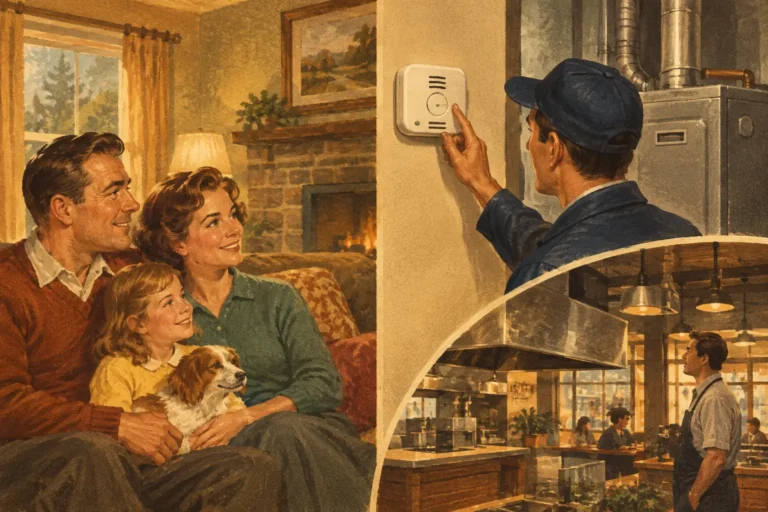
A carbon monoxide alarm is not a maintenance reminder you can put off until the weekend. If it sounds, the safest response is to get people and pets outside immediately, call 911 or the fire department from a safe location, and do not reenter until emergency personnel say it is safe. Carbon monoxide safety depends on treating this invisible, odorless gas as the serious emergency it is.
Carbon monoxide, often called CO, is created when fuel does not burn completely. Natural gas, propane, oil, wood, charcoal, and gasoline-burning equipment can all produce it. In a home or business, the risk usually comes from a malfunctioning appliance, blocked venting, inadequate combustion air, or equipment used where it should never be used.
Why Carbon Monoxide Safety Requires More Than an Alarm
A CO alarm is essential, but it is the last line of defense, not the whole plan. It warns occupants that carbon monoxide has reached a dangerous concentration. It cannot repair a cracked heat exchanger, clear a blocked flue pipe, or correct an improperly vented water heater.
That is why a complete approach combines reliable alarms, safe equipment operation, professional maintenance, and a clear response plan. This matters especially during Northeast Illinois winters, when furnaces, boilers, fireplaces, and space heaters work harder and windows stay closed for long stretches.
Carbon monoxide exposure can cause headache, dizziness, nausea, weakness, confusion, chest pain, and flu-like symptoms without a fever. Severe exposure can lead to loss of consciousness or death. Symptoms may be harder to recognize in sleeping people, young children, older adults, and anyone who has been drinking alcohol or taking medication that causes drowsiness. Never wait for symptoms before acting on an alarm.
Where Carbon Monoxide Can Come From
Most fuel-burning equipment operates safely when it is installed, vented, and maintained correctly. Problems arise when combustion or exhaust pathways change. A furnace with a damaged vent connection, a boiler with a blocked chimney, or a water heater starved for combustion air may not operate as intended.
Common sources include gas furnaces and boilers, fireplaces, gas water heaters, ranges, clothes dryers, and attached garages. Portable generators, grills, camp stoves, and propane heaters create particularly high risks when used indoors or too close to doors, windows, or vents.
An attached garage deserves special attention. Even with the garage door open, a running vehicle can create dangerous CO levels. Do not idle a car, truck, snowblower, or other gasoline-powered equipment in an attached garage. Move the vehicle outside before warming it up, and keep the door between the garage and living space closed.
For commercial properties, risks may also involve unit heaters, make-up air equipment, rooftop systems, warehouse loading areas, and mechanical rooms. Occupants may not notice a developing issue until alarms activate or several people report similar symptoms. Property managers should ensure employees know who to call and where to evacuate if a CO alarm sounds.
Place and Maintain Carbon Monoxide Alarms Correctly
Install CO alarms on every level of a home, outside sleeping areas, and according to the manufacturer’s instructions. Larger homes, multi-level townhomes, and properties with bedrooms separated by long hallways may need more than the minimum number of alarms. Follow local code requirements as well as the alarm manufacturer’s placement guidance.
Avoid placing alarms directly beside fuel-burning appliances, where normal startup conditions could create nuisance alerts, unless the manufacturer specifically allows it. Do not paint over an alarm, cover it, or install it in a location where furniture blocks airflow. A qualified HVAC professional can help identify sensible locations when you are unsure.
Test alarms monthly using the test button. Replace batteries as directed for battery-operated models, and replace the entire device when it reaches the end of its listed service life. Many alarms need replacement after five to 10 years, depending on the model. Check the label rather than guessing.
If an alarm chirps, it may indicate a low battery, end of life, or fault condition. That is different from a full alarm signal, but it still needs prompt attention. Read the device instructions and replace batteries or the unit as needed. Never remove batteries to silence a chirp and forget about it.
What to Do When a CO Alarm Sounds
The right response is simple, even if it feels disruptive: leave first, investigate later. Do not search the home for the source, open windows as your only response, or assume the alarm is defective because no one feels sick.
If the CO alarm sounds, follow these steps:
- Move everyone outside to fresh air, including pets.
- Call 911 or the local fire department from outside. If anyone has symptoms, seek medical care immediately.
- Do not go back inside to reset the alarm, collect belongings, or turn off equipment.
- Allow emergency responders to determine whether it is safe to reenter.
- After the immediate emergency is resolved, arrange for qualified inspection and repair of the suspected fuel-burning equipment before using it again.
Opening windows can help ventilate a space, but it does not identify the source or make it safe to remain indoors. Carbon monoxide levels can change quickly as equipment cycles on and off. A professional inspection is the only responsible next step after an alarm event involving HVAC or water-heating equipment.
Reduce the Risk With Safe Habits and Seasonal Service
Many CO hazards are preventable. Start with the equipment you use every day. Keep furnace, boiler, water-heater, and fireplace venting clear of snow, leaves, nests, and other debris. After heavy snowfall, check exterior intake and exhaust terminations carefully. A blocked vent can affect performance and create a safety concern.
Never heat a home with a gas oven or range. Do not operate charcoal grills, generators, pressure washers, or gasoline-powered tools indoors, in garages, in basements, or near open windows and doors. Portable generators should operate outdoors, well away from the building, with exhaust directed away from occupied areas.
Space heaters require caution, too. Use only equipment rated for indoor use, keep it on a stable surface, and follow the manufacturer’s clearance instructions. Unvented combustion heaters may not be appropriate for every space. If you rely on one during an outage or in a workshop, understand the ventilation requirements and never use it while sleeping unless it is specifically designed and approved for that purpose.
Annual professional heating maintenance is one of the most practical ways to reduce carbon monoxide risk. During a properly performed visit, a trained technician can inspect burners, heat exchangers, vent connections, drains, safeties, combustion conditions, and overall system operation. The exact checks vary by equipment type, but the goal is the same: identify concerns before they become an emergency.
Older equipment deserves particular attention. Age alone does not mean a furnace or boiler is unsafe, but wear, corrosion, outdated venting, and repeated repair history can change the conversation. A technician should explain the condition of the system, the available repair options, and whether replacement may be the safer long-term investment. The right choice depends on the equipment, the building, and the nature of the problem.
When to Call an HVAC Professional
Call for service promptly if you notice soot around an appliance, excessive moisture on nearby windows, yellow or flickering burner flames where blue is expected, unusual odors, recurring pilot-light problems, or a heating system that frequently shuts down. These signs do not confirm carbon monoxide, but they warrant inspection.
A CO alarm activation, however, is not a routine service call until the building has been cleared by emergency responders. Once it is safe, do not restart the furnace, boiler, water heater, or other suspected appliance yourself. Have a qualified technician assess the equipment and venting before returning it to service.
For homeowners and businesses in the Elgin area, Lea Heating & Air Conditioning can provide professional heating-system inspection, repair, and preventive maintenance from factory-trained, NATE-certified technicians. Keeping combustion equipment maintained is not just about dependable heat. It is about protecting the people who rely on your space.
A working alarm, a clear evacuation plan, and properly maintained fuel-burning equipment create real peace of mind. Take care of the small checks now, so your home or business is prepared to respond quickly if carbon monoxide ever becomes a threat.