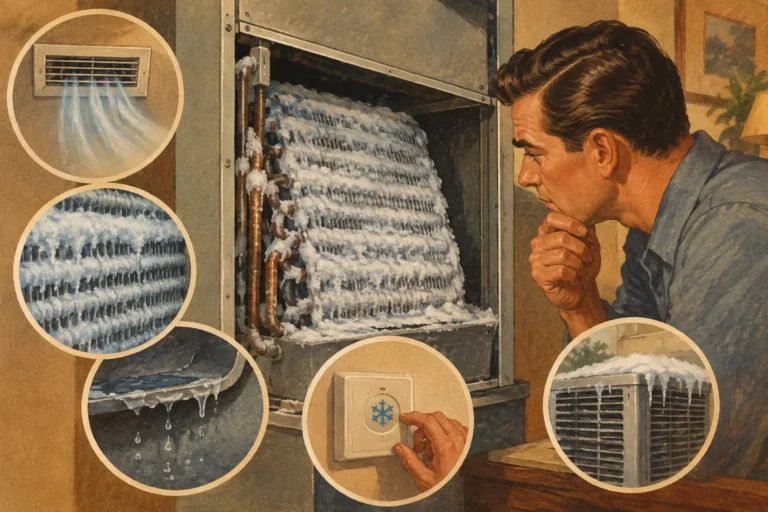
A frozen air conditioner can look like a minor inconvenience at first: the house feels a little warmer, airflow seems weaker, or the system runs longer than usual. But the signs your evaporator coil freezes are worth taking seriously. Ice on an indoor coil is not normal, even during a hot, humid Illinois summer. It usually means your system has an airflow, refrigerant, or mechanical problem that needs attention before it leads to water damage or compressor failure.
The evaporator coil sits inside your indoor air handler or furnace cabinet. It absorbs heat from the air moving through your home or business. When the coil gets too cold, moisture in the air can freeze on its surface, creating a layer of ice that further blocks airflow. The longer the system runs this way, the harder it has to work.
7 signs your evaporator coil freezes
1. Weak airflow from supply vents
One of the earliest clues is a noticeable drop in airflow. You may still hear the system running, but rooms no longer cool as quickly or evenly. As frost builds on the coil, it acts like a blockage and prevents conditioned air from moving through the system.
Before assuming the coil is frozen, check the simplest possibility: a heavily loaded air filter. A filter that has not been changed on schedule can restrict airflow enough to contribute to icing. However, replacing the filter does not solve every frozen-coil problem. If airflow remains weak after the coil thaws and a clean filter is installed, professional diagnosis is the right next step.
2. Warm or inconsistent air while the AC runs
An air conditioner with a frozen evaporator coil may blow air that feels cool at first, then gradually becomes lukewarm. In some cases, certain rooms receive little air while others are somewhat comfortable. This can be especially frustrating in larger homes, multi-story properties, and commercial spaces where one weak system can affect several occupied areas.
A thermostat set lower than usual will not fix the issue. It can make icing worse by keeping the system operating longer. If your AC is running but cannot maintain the set temperature, turn off the cooling mode rather than forcing it to continue.
3. Visible frost or ice on refrigerant lines
You may be able to see ice without opening any equipment panels. Check the insulated copper refrigerant line near the outdoor unit or where the line enters the indoor equipment. Frost, ice, or a visibly iced-over line is a strong indication that the indoor coil may be freezing.
Do not remove access panels or try to chip ice off the coil. Coil fins are delicate, and refrigerant components can be damaged easily. A technician needs to determine why the temperature dropped below freezing in the first place.
4. Water around the indoor unit after the system stops
A frozen coil eventually thaws. When it does, the accumulated ice becomes a large amount of water that the condensate drain may not be able to handle quickly. Water near the furnace, air handler, utility closet, or ceiling-mounted equipment can signal a thawing coil or a clogged drain system.
Treat indoor water seriously, particularly if the equipment is located in an attic, finished basement, or above a ceiling. Shut off cooling, protect nearby belongings, and arrange service. Leaving the system on can create more ice, more runoff, and potentially more damage to flooring, drywall, insulation, or electrical components.
5. Hissing, bubbling, or other unusual sounds
A refrigerant leak is one possible cause of an evaporator coil freeze-up. When refrigerant is low, pressure in the system can drop and make the coil colder than it should be. Some leaks produce a faint hissing or bubbling sound, although many are too small to hear.
Low refrigerant is not something an AC system simply uses up. If a technician finds that refrigerant is low, the proper repair includes locating and addressing the leak when possible, then charging the system to manufacturer specifications. Adding refrigerant without diagnosing the source is usually a short-lived fix.
6. The outdoor unit runs constantly or cycles oddly
Your condenser may run for long stretches because the indoor system cannot transfer heat effectively. Alternatively, a safety control may shut the equipment down and restart it as conditions change. Either pattern can increase energy use while doing very little to improve comfort.
Long run times can happen during extreme heat, so context matters. On a 95-degree day, an appropriately sized system may run often. The concern is a change from its normal performance, especially when it is paired with weak airflow, ice, water, or rising indoor humidity.
7. Higher utility bills and sticky indoor air
When an evaporator coil is covered with ice, the system cannot remove heat and humidity efficiently. Your space may feel clammy even if the thermostat shows the desired temperature. Meanwhile, the equipment consumes electricity trying to overcome a problem it cannot resolve on its own.
A sudden increase in cooling costs does not prove a frozen coil, but it is a meaningful warning sign when it occurs alongside comfort problems. For businesses, this may show up as occupant complaints, hot offices, or a system that struggles during operating hours.
Why an evaporator coil freezes
A frozen coil is a symptom, not the diagnosis. Restricted airflow is one of the most common causes. Dirty filters, blocked return grilles, closed supply registers, dirty blower components, damaged ductwork, and a failing blower motor can all reduce the warm air moving across the coil.
Refrigerant problems are another frequent cause. A leak, improper refrigerant charge, or metering-device issue can lower coil temperature enough for condensation to freeze. Mechanical concerns, including a malfunctioning indoor fan, can produce similar symptoms.
Operating conditions matter, too. Running air conditioning when outdoor temperatures are mild, particularly overnight, can sometimes cause freeze-ups. A thermostat, control, or zoning issue may also keep equipment running in a way that does not match the building’s actual cooling needs. This is why a complete evaluation is more valuable than guessing based on ice alone.
For heat pump owners, there is one useful distinction: frost on an outdoor heat-pump coil in winter can be normal because the unit periodically enters a defrost cycle. Ice on the indoor evaporator coil while cooling, however, is not a routine condition and should be checked.
What to do when you suspect a frozen coil
First, switch the thermostat from Cool to Off. Continuing to run the compressor can stress the system, especially if refrigerant pressures are abnormal. If your blower is operating normally, setting the fan to On may help move room-temperature air across the coil and speed thawing. Do not use heat, sharp tools, or hot water to melt ice.
Next, check your air filter and replace it if it is visibly dirty or overdue. Make sure return grilles and supply vents are open and not blocked by furniture, rugs, or stored items. These are safe checks that can eliminate an obvious airflow restriction, but they should not replace a service visit if the system froze.
Allow time for the coil to thaw completely before restarting cooling. Depending on the amount of ice, that can take several hours. Restarting too soon can send the system back into the same freezing cycle. If you see water accumulating, hear unusual sounds, smell something electrical, or cannot restore cooling after thawing, keep the system off and call for service.
How professional service protects the system
A qualified HVAC technician will inspect more than the ice. The diagnosis should include airflow, filter condition, blower operation, coil cleanliness, drain performance, thermostat controls, refrigerant pressures, and signs of a refrigerant leak. That approach helps distinguish a maintenance issue from a repair that requires parts or refrigerant work.
For older systems, the recommended path may depend on repair cost, refrigerant type, equipment condition, and efficiency goals. A repair is often sensible when the cause is a dirty component or isolated airflow problem. If a system has repeated leaks, frequent breakdowns, or a failing compressor, replacement may offer a more dependable long-term comfort solution.
Lea Heating & Air Conditioning provides responsive service for homeowners and businesses that need clear answers, careful workmanship, and a repair recommendation based on the condition of the actual system. Regular maintenance also gives a technician the opportunity to catch airflow restrictions and drainage concerns before a hot day turns them into an urgent problem.
If your AC is showing signs of ice, weak airflow, or unexplained water, give it a break instead of asking it to work harder. A prompt inspection can protect your comfort now and help prevent a small cooling issue from becoming a much larger repair.