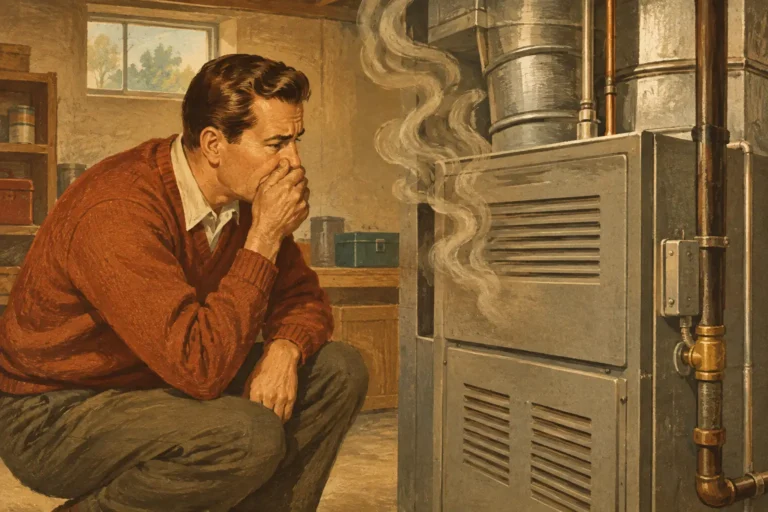
A furnace that smells burning can be unsettling, especially when the heat has been off for months and a cold Northeast Illinois night arrives. Sometimes the smell is simply dust burning away from the system. Other times, it points to an electrical issue, a blocked filter, or a condition that deserves immediate professional attention. The difference often comes down to what the odor smells like, how long it lasts, and whether you notice other warning signs.
When a Burning Furnace Smell Is Normal
The most common harmless explanation is dust. During spring, summer, and early fall, dust can settle on the heat exchanger, burners, and nearby components. When you first run the furnace for the season, that dust heats up and creates a dry, slightly burning odor.
This smell should be mild and should fade after roughly 30 to 60 minutes of operation. Opening a few windows briefly can help clear the odor from the home, although you should not need to leave the furnace running all day to “burn it off.” If the smell is getting stronger, continues after the first hour, or returns every time the system starts, treat it as a service concern rather than a normal seasonal occurrence.
A newly installed furnace or recently completed repair can also produce a temporary odor as manufacturing residues or protective coatings heat for the first time. Your installer should let you know if that is expected. Even then, a sharp chemical or electrical smell is not something to ignore.
What Different Burning Smells Can Mean
Your nose can provide useful information, but it cannot diagnose a furnace safely. Use the odor as a reason to observe the system and decide whether to shut it down or request service.
Dusty or dry burning odor
A dusty smell at the first startup of the heating season is usually the least concerning. It should fade quickly and should not be accompanied by smoke, unusual furnace noises, or poor airflow from supply vents.
If dust is present every time the furnace runs, a clogged air filter may be contributing. A restricted filter forces the blower and furnace to work harder, can raise operating temperatures, and may allow more dust to circulate through the system. Check the filter’s condition and replace it with the correct size and type recommended for your equipment.
Electrical, metallic, or hot plastic odor
A sharp electrical smell, hot plastic odor, or smell similar to overheated wiring requires prompt action. Potential causes include a failing blower motor, damaged wiring, a loose electrical connection, an overheating control board, or an issue with another electrical component.
Turn the furnace off at the thermostat. If the smell is strong, if you see smoke, or if you hear buzzing or popping, turn off power to the furnace at the breaker if you can do so safely. Do not restart the system to see whether the odor disappears. Call a qualified HVAC technician for an inspection.
Burning rubber odor
A burning rubber smell may come from an overheating blower motor, worn belt on an older belt-driven system, or a motor component under excessive strain. Modern furnaces commonly use direct-drive blower motors, but any moving part can develop a fault. Continuing to operate the furnace may worsen the damage, so shut it down and arrange service.
Musty odor with a scorched note
A musty smell is not always a burning smell, but the two can overlap when dust, microbial growth, or debris is present in the air handler or ductwork. A dirty evaporator coil, drain issue, humidifier problem, or neglected filter can affect indoor air quality and create unpleasant odors when the blower starts.
This situation may not be an emergency, but it is worth addressing. A technician can inspect the furnace, blower compartment, filtration, humidification equipment, and related indoor-air-quality components to identify the source.
Oil, exhaust, or chemical odor
An oil-like smell can indicate a problem with an oil-fired heating system. Exhaust odors or strong chemical smells can also point to combustion or venting concerns. Turn the system off and contact a heating professional right away.
Natural gas itself is treated with an odorant often described as rotten eggs or sulfur. If you smell gas, do not operate switches, use a phone inside the building, light a flame, or attempt furnace repairs. Leave the area, call the gas utility or emergency services from a safe location, then contact an HVAC professional once the utility has cleared the situation.
When a Furnace Smells Burning, Watch for These Red Flags
A smell alone deserves attention, but a combination of symptoms increases the urgency. Shut off the furnace and request service if you notice smoke, sparks, repeated breaker trips, loud buzzing, a furnace that cycles on and off rapidly, weak airflow, or a burning odor that does not fade.
Also pay attention to your carbon monoxide alarms. Carbon monoxide has no smell, so a burning odor cannot tell you whether CO is present. Every home with fuel-burning equipment should have working carbon monoxide alarms installed according to local requirements and manufacturer instructions. If a CO alarm sounds, get everyone outside immediately and contact emergency services or the gas utility from outdoors.
For property managers and business owners, the response should be especially cautious. A furnace odor affecting a common area, office, retail space, or occupied building can disrupt operations and expose more people to poor air quality or a potential safety hazard. Document the symptom, keep occupants away from any area with smoke or a strong odor, and arrange a professional assessment without delay.
Safe Steps You Can Take Before Calling
Homeowners can complete a few simple checks without opening the furnace cabinet or touching internal components. First, look at the thermostat to confirm the system is set to heat and note whether the odor occurs only during startup or throughout the heating cycle. Then inspect the air filter and replace it if it is visibly loaded with dust or overdue for replacement.
Walk through the home and make sure supply and return vents are not blocked by furniture, rugs, boxes, or closed dampers. Restricted airflow can contribute to overheating and uneven comfort. You can also check outside vent terminations for obvious snow, leaves, or other visible obstructions, but do not dismantle vent piping or attempt combustion adjustments.
Avoid spraying fragrances into vents, pouring cleaners into the furnace, or repeatedly resetting the breaker. Those actions can mask the source, create a new problem, or delay a needed repair. A trained technician has the tools to check temperature rise, electrical connections, blower performance, combustion, venting, and safety controls properly.
Prevent Burning Odors With Furnace Maintenance
Not every furnace smell can be prevented, but annual maintenance catches many conditions before they become an after-hours emergency. During a professional tune-up, technicians can clean accumulated debris, inspect electrical components, test safety controls, evaluate airflow, check the blower assembly, and verify that the heating system is operating within manufacturer specifications.
Maintenance matters even more for older furnaces, homes with pets, properties with heavy dust loads, and commercial spaces where equipment operates for long hours. A clean filter and clear airflow may seem basic, but they protect comfort, efficiency, and equipment life.
Lea Heating & Air Conditioning provides responsive furnace service for homeowners and businesses in Elgin and surrounding communities, including 24/7 emergency support when a heating concern cannot wait. If the odor is electrical, smoky, persistent, or paired with unusual operation, turn the system off and schedule a professional inspection rather than taking chances with your comfort or safety.
A brief dusty smell at the season’s first startup is often nothing more than a furnace waking up. Any smell that lingers, intensifies, or comes with smoke, alarms, or electrical symptoms is your cue to stop the system and get experienced help.