
Planning an AC Installation in Elgin, IL? Start Here
Maybe your current air conditioner is more than fifteen years old, or you have just finished an addition that the existing system was never sized to cool. Perhaps you are building new and want the cooling equipment specified correctly from the first day rather than corrected later. Whatever brought you to this decision, an air conditioning installation is a long-term investment in your home, and the quality of that installation determines how the system will perform for the next decade and beyond. At Lea Heating & Air Conditioning, we approach every Elgin installation as an engineered project, not a swap of one box for another.
We are a second-generation, family-owned HVAC provider in Northeast Illinois. Continuing 45 years of excellence in the residential and light commercial heating, cooling, indoor air quality, and hot water fields, we bring both leading innovation and proven integrity to every job. That history matters when you are choosing who will size, install, and commission a system that must handle the humid heat of an Illinois July and integrate cleanly with your existing ductwork and electrical service.
How We Match Equipment to Your Elgin Home
A correct installation begins long before any equipment arrives. The single most common cause of poor cooling performance is improper sizing. An oversized air conditioner cools the air quickly but shuts off before it removes enough moisture, which leaves rooms feeling cold and clammy. An undersized unit runs continuously and never reaches setpoint on the hottest days. To avoid both problems, we perform a Manual J load calculation that accounts for the specific characteristics of your home.
That calculation considers a number of measurable factors, and we work through each one carefully before recommending a system:
- Square footage and ceiling height: the actual conditioned volume of air the system must handle, not just the floor area.
- Insulation levels and window performance: older Elgin homes often have single-pane windows or under-insulated attics that dramatically change the cooling load.
- Solar orientation and shading: a west-facing living room with large windows gains far more heat in the afternoon than a shaded north side.
- Ductwork condition and layout: existing supply and return runs affect airflow, and undersized returns can throttle even a properly rated unit.
- Occupancy and internal heat gain: appliances, electronics, and the number of people living in the home all add measurable heat.
Once we understand the load, we help you choose equipment that meets it. Central air conditioners are rated by SEER2, the updated seasonal efficiency standard, and by tonnage, which describes cooling capacity. A typical Elgin single-family home falls somewhere between two and four tons, but the load calculation gives us the precise figure. We also discuss whether a single-stage, two-stage, or variable-speed compressor best fits your comfort goals and budget. Variable-speed systems, in particular, deliver excellent humidity control and quiet operation by running at low capacity most of the time and ramping up only when demand spikes.
What a Complete Installation Involves
A new air conditioner is a system of connected components, and getting all of them right is what separates a lasting installation from one that causes trouble within a few seasons. When our technicians install a central cooling system, they address the outdoor condenser, the indoor evaporator coil, the refrigerant lines, the electrical connections, the condensate management, and the airflow through your ductwork.
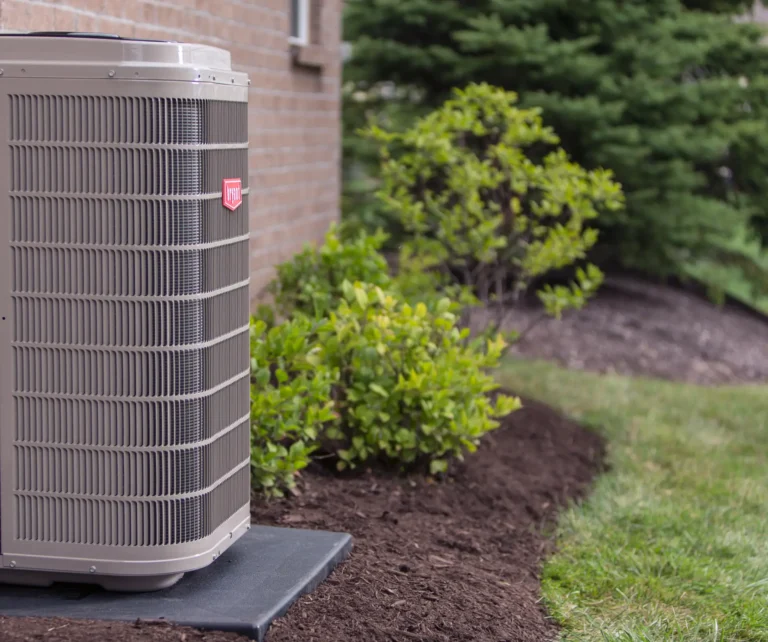
The outdoor condenser must sit on a level, stable pad with adequate clearance for airflow and future service access. Refrigerant lines are cut to length, brazed, pressure-tested with nitrogen, and evacuated with a vacuum pump to remove moisture and non-condensable gases. This evacuation step is one that hurried installers sometimes shorten, but skipping it introduces moisture that can freeze in the metering device and corrode internal components. We pull the system down to the correct micron level and verify that it holds before charging.
Indoors, the evaporator coil is matched to the condenser so that the two operate as a designed pair. Mismatched coils are a frequent cause of underperformance because the pressures and temperatures the manufacturer engineered no longer line up. After the mechanical work, we weigh in the exact refrigerant charge, then verify it by measuring superheat and subcooling under actual operating conditions. We check static pressure across the air handler to confirm the ductwork is not restricting airflow, and we set the blower speed for the correct cubic feet per minute per ton. Finally, we confirm the condensate drain runs freely and, where needed, install a safety switch that shuts the system down before an overflow can damage your home.
Every installation from Lea Heating & Air Conditioning ends with a full commissioning check. We record the operating pressures, temperature split across the coil, and electrical draw, then compare those numbers against the manufacturer specifications. This documentation gives you a baseline and gives us a reference point for any future service.
Installations for Different Homes and Situations
No two Elgin properties present the same challenge, and part of our work is recommending the right approach for the structure in front of us. A traditional home with existing ductwork is often the most straightforward case, where we replace aging equipment and correct any airflow problems we find along the way. Homes with finished basements, converted attics, or additions frequently need supplemental solutions, and here a ductless mini-split system can cool a specific zone without the cost and disruption of extending ductwork.
For older Elgin homes that were never built with central air, we sometimes recommend high-velocity systems that use small-diameter flexible ducts, which route through existing wall cavities with minimal demolition. Light commercial spaces have their own requirements, including higher occupancy loads, extended run times, and sometimes rooftop packaged units rather than split systems. Because our experience spans residential and light commercial work, we can specify and install the configuration that genuinely fits the application rather than forcing every project into the same template.
We serve homeowners and business owners throughout Elgin, Crystal Lake, Carpentersville, Algonquin, West Dundee, Sleepy Hollow, East Dundee, Lake in the Hills, and Hoffman Estates, IL, and we understand how the regional climate shapes cooling needs. The Fox Valley area sees hot, humid summers where dehumidification is nearly as important as temperature control, and it sees shoulder seasons where a system must handle mild days without short-cycling. Sizing and equipment selection that ignore those conditions lead to comfort complaints, so we factor them into every recommendation.
Why the Quality of Installation Matters Most
Studies across the HVAC industry consistently find that installation quality affects real-world efficiency more than the equipment rating itself. A high-SEER2 unit installed with an incorrect charge, poor airflow, or leaky ductwork will underperform a modest unit installed correctly. That is why we place so much emphasis on measurement and verification rather than assuming factory settings will suit your home.
Correct installation also protects your investment over time. Proper refrigerant charge reduces strain on the compressor, the most expensive component in the system. Balanced airflow prevents coil freezing and premature blower wear. Secure electrical connections reduce the risk of failure during peak load. When these details are handled from the start, your system runs quieter, costs less to operate, and lasts closer to its full expected service life.
When you are ready to discuss an AC installation in Elgin, the team at Lea Heating & Air Conditioning is prepared to evaluate your home, walk you through the options, and install a system engineered to keep you comfortable through many Illinois summers. Reach out to schedule an assessment and let us build a cooling solution around the specific needs of your property.