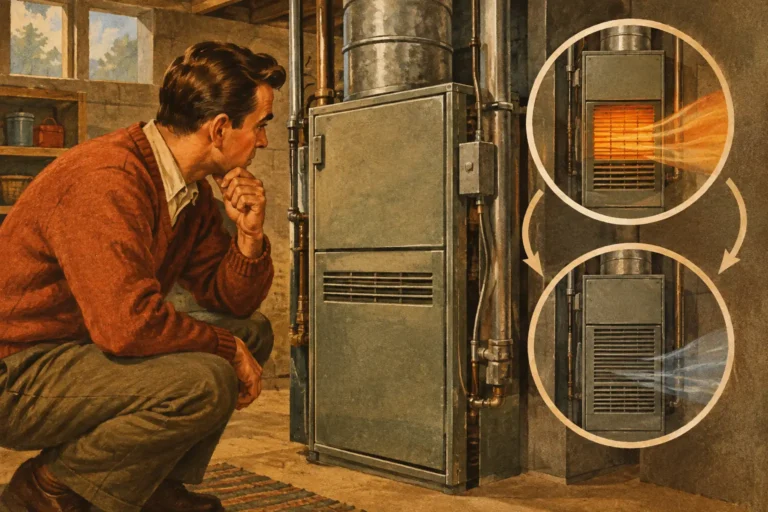
A furnace that starts, runs for a few minutes, shuts off, and then restarts soon after is not simply being efficient. If you are asking, “why does furnace short cycle,” the system is likely turning off before it has properly satisfied the thermostat. That pattern can leave rooms unevenly heated, raise utility costs, and put unnecessary wear on critical furnace components during a cold Northeast Illinois winter.
A normal heating cycle often lasts roughly 10 to 15 minutes, though outdoor temperatures, insulation, furnace size, and thermostat settings all affect run time. Short cycling means the burner and blower are repeatedly starting and stopping in much shorter intervals. Some causes are simple to address. Others involve safety controls that should only be evaluated by a trained HVAC professional.
Why Does a Furnace Short Cycle?
Your furnace has several safety switches and sensors designed to stop operation when something is not right. Short cycling is frequently the result of one of these controls doing its job. The goal is not to force the furnace to keep running. It is to identify why it is overheating, receiving an incorrect signal, or struggling to move air safely.
A clogged air filter is restricting airflow
A dirty filter is one of the most common reasons for furnace short cycling. When airflow is restricted, heat builds up inside the furnace instead of moving through the ductwork. The high-limit switch may shut the burners down to prevent overheating. Once the unit cools, it starts again, and the cycle repeats.
Check your filter first if it has been more than one to three months since replacement. The right interval depends on the filter type, household pets, construction dust, and how often the system runs. Use the correct filter size and follow the furnace manufacturer’s recommendations. A very high-density filter can also reduce airflow if the system was not designed for it.
Closed vents or blocked returns can create the same problem
Your furnace needs a clear path for conditioned air to leave through supply vents and return through return grilles. Closing multiple vents to redirect heat may seem practical, but it can restrict airflow enough to trigger overheating. Furniture, rugs, drapes, or storage boxes placed over return grilles can have the same effect.
Open the supply registers throughout the home and make sure return grilles are unobstructed. One partially closed vent is rarely the sole cause, but several closed registers combined with a dirty filter can be enough to affect performance.
The thermostat may be in a poor location or malfunctioning
A thermostat measures the temperature where it is installed, not the temperature in every room. If it is located near a heat source, supply vent, sunny window, fireplace, kitchen, or exterior door, it may sense temperature changes too quickly. The furnace can shut off before the rest of the home is comfortable.
A thermostat with failing batteries, loose wiring, outdated calibration, or incorrect settings can also cause erratic cycling. Before assuming the furnace is at fault, set the thermostat to Heat, choose a temperature several degrees above room temperature, and confirm the fan setting is on Auto. If it uses batteries, replace them with fresh ones. Avoid opening the thermostat or handling wiring unless you are comfortable doing so safely.
An oversized furnace heats too fast
A furnace that is too large for the home can raise the thermostat area to the set temperature very quickly, then shut down before warm air has circulated evenly. The result is short cycles, temperature swings, excess noise, and greater wear on ignition and blower components.
Oversizing can happen when a replacement system is selected based only on the old furnace’s capacity or the home’s square footage. Proper furnace sizing should account for insulation, windows, ductwork, air leakage, occupancy, and the local climate. In some cases, short cycling from oversizing can be improved with thermostat placement, blower adjustments, duct modifications, or zoning. It depends on the equipment and the home, so an on-site evaluation matters.
The flame sensor may be dirty
Many modern gas furnaces use a flame sensor to confirm that the burners have ignited safely. If the sensor is dirty or failing, it may not detect the flame. The furnace will often light briefly, then shut the burners down within a few seconds as a safety precaution.
This is a common repair, but it should not be confused with a filter-related overheating issue. A technician can inspect, clean, test, and reinstall the sensor correctly while checking for ignition, grounding, gas-pressure, or control-board concerns that may produce similar symptoms.
A venting or pressure-switch issue may be stopping the furnace
High-efficiency furnaces use intake and exhaust piping, a condensate drain, and pressure switches to verify that combustion gases are venting properly. Snow, ice, leaves, insect nests, debris, a blocked condensate line, or a damaged vent pipe can interfere with this process. The furnace may shut down because it cannot confirm safe operation.
You can visually check outdoor intake and exhaust terminations for obvious snow or debris, keeping clear of hot exhaust and avoiding damage to the pipes. Do not disconnect venting, bypass a pressure switch, or attempt to alter combustion components. Those safety controls protect occupants from dangerous exhaust conditions.
The blower motor or ductwork may be limiting heat delivery
A weak blower motor, failing capacitor, dirty evaporator coil, blocked secondary heat exchanger, or undersized ductwork can prevent the furnace from moving enough air. These problems can cause overheating and short cycling even with a clean filter and open vents.
This is especially likely if you notice weak airflow, unusually loud operation, hot-and-cold rooms, a burning smell, or a furnace cabinet that feels unusually hot. A professional diagnosis may include airflow measurement, temperature-rise testing, electrical testing, and inspection of internal components. Replacing a part without testing can mask the real issue and lead to another breakdown.
A damaged heat exchanger or other safety concern needs immediate attention
The heat exchanger separates combustion gases from the air circulating through your home. Cracks, corrosion, or other damage can create unsafe operating conditions and may trigger unusual cycling or safety shutdowns. Although short cycling alone does not confirm a failed heat exchanger, it is not a symptom to ignore when paired with soot, rust, flame changes, frequent limit-switch trips, or carbon monoxide detector alerts.
If you smell gas, see signs of soot, feel dizzy or nauseated, or a carbon monoxide alarm sounds, leave the building immediately and contact emergency services or the gas utility as appropriate. Do not restart the furnace. For non-emergency concerns, schedule a qualified furnace inspection as soon as possible.
What You Can Check Before Calling for Furnace Repair
A few simple observations help narrow down the problem and may save time during a service visit. Replace a visibly dirty filter, make sure vents and return grilles are open, verify thermostat settings and batteries, and check that the furnace switch and circuit breaker are on. If your furnace has a diagnostic light visible through a small panel window, note the blinking pattern without removing panels.
Also pay attention to timing. Does the furnace shut down after a few seconds, after two or three minutes, or only when temperatures drop severely? Does the blower continue running after the burners stop? Does the system make clicking, humming, or rattling noises? These details can point a technician toward a flame-sensing, airflow, thermostat, ignition, or venting issue.
Avoid repeatedly resetting the furnace or cycling power to make it run. Repeated restarts can place additional stress on the equipment, and a persistent safety shutdown should be investigated rather than overridden.
When Short Cycling Calls for Professional Service
Schedule service promptly when a clean filter and open vents do not correct the issue, when the furnace is shutting down multiple times per hour, or when your home cannot maintain a safe, comfortable temperature. A professional should also assess any system that has water around it, visible corrosion, error codes, unusual odors, or signs of combustion trouble.
For homeowners and businesses in the Elgin area, Lea Heating & Air Conditioning can evaluate short cycling with the careful testing it requires. Factory-trained, NATE-certified technicians can check airflow, combustion, safety controls, thermostat communication, and equipment condition before recommending a repair or replacement path. The right solution may be a straightforward maintenance repair, but older or improperly sized equipment may warrant a broader comfort and efficiency discussion.
Do not wait for a brief heating cycle to become a no-heat call on the coldest night of the season. A timely inspection can protect your furnace, improve comfort from room to room, and give you clearer direction on the safest next step.