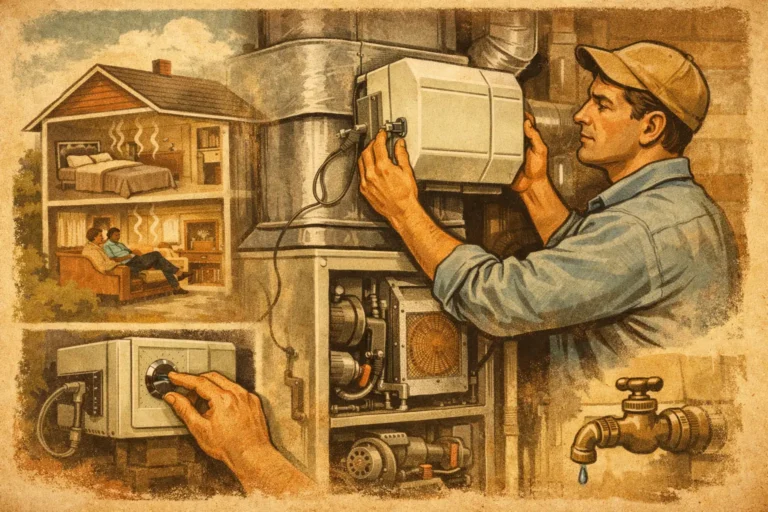

Winter air in Northeast Illinois can make a well-heated home feel unexpectedly uncomfortable. Dry lips, static shocks, irritated sinuses, creaking wood floors, and restless sleep are often signs that indoor humidity has dropped too low. A properly planned whole house humidifier installation addresses that dryness through your heating system, bringing balanced moisture to the rooms you use every day.
Unlike a portable unit that treats one area at a time, a whole-home humidifier works with your furnace and ductwork. It can be an effective comfort upgrade, but the right equipment, placement, controls, and drainage setup all matter. The goal is not to add as much moisture as possible. It is to maintain a healthy, comfortable humidity level without creating window condensation, excess moisture, or unnecessary maintenance issues.
How a Whole-House Humidifier Works
Most central humidifiers are installed on or near the supply and return ductwork of a forced-air heating system. When the furnace runs, air moves through the system and passes across a water panel or another humidifying component. That moisture is then distributed through the ducts along with the heated air.
A humidistat, often paired with a thermostat or integrated into a smart control, tells the system when humidity needs to be added. In a typical home, indoor relative humidity is commonly kept around 30% to 40% during cold weather. The ideal setting depends on outdoor temperature, window quality, insulation, and how tightly the home is sealed.
That last point is especially relevant during an Illinois winter. When outdoor temperatures fall sharply, a humidity level that feels comfortable on a mild day may cause condensation on colder windows. A qualified technician helps set expectations based on your home instead of treating one humidity number as universally correct.
Choosing the Right Humidifier for Your Home
Whole-house humidifiers are not one-size-fits-all. The best option depends on the home’s square footage, duct design, heating equipment, water availability, drainage access, and winter comfort concerns.
Bypass humidifiers
A bypass humidifier uses a small duct connection to direct warm air from the supply side of the HVAC system through the humidifier and back to the return side. It is a dependable, cost-conscious choice for many homes with compatible ductwork. Because it relies on the furnace blower and heat cycle, it works best when the heating system runs regularly.
Fan-powered humidifiers
Fan-powered models include an internal fan that moves air across the water panel. They typically do not require a bypass duct, which can make placement easier when space around the furnace is limited. They can also provide more moisture output than many bypass models, making them a strong fit for larger or drier homes.
Steam humidifiers
Steam systems create steam directly and deliver it into the ductwork. They provide the highest capacity and can operate with less dependence on a heating cycle, depending on the system design. For larger homes, tightly built homes, or households with significant dryness concerns, steam can be the right answer. It also comes with a higher upfront investment, additional electrical requirements, and more specific maintenance needs.
A technician should assess more than home size before recommending a model. Ceiling height, open floor plans, insulation levels, recent window upgrades, and whether the house has one HVAC system or several can all affect performance.
What Whole House Humidifier Installation Includes
Professional installation begins with confirming that the HVAC system and ductwork can support the selected humidifier. This is not simply a matter of mounting a unit to a duct. The equipment must be placed where airflow, service access, electrical connections, water delivery, and drainage can all be handled correctly.
For many installations, the process includes cutting and sealing the necessary duct openings, mounting the humidifier cabinet, adding a water line with a shutoff valve, and routing a drain line to an approved location. The installer also connects low-voltage controls and verifies that the humidifier operates with the furnace blower as intended.
For steam equipment, the scope may include a dedicated electrical circuit, a steam distribution tube in the supply duct, and careful attention to manufacturer clearance requirements. Water quality and drain routing deserve attention as well, since mineral buildup and poor drainage can shorten equipment life or create preventable service calls.
Before leaving, a thorough HVAC professional should test the unit, check for leaks, confirm airflow is not restricted, and explain how to adjust the humidistat. Homeowners should also be shown where the water shutoff is located and what routine seasonal care looks like.
Why Proper Controls Matter as Much as the Humidifier
More humidity is not always better. If indoor moisture is too high during very cold weather, condensation can form on windows, exterior doors, and other cold surfaces. Over time, that can contribute to damaged trim, peeling paint, or moisture concerns around windows.
Modern controls help avoid this issue. Some humidistats require manual adjustment as outdoor temperatures change. Others use outdoor temperature information to automatically lower the humidity setting during colder conditions. Smart thermostat integration may provide convenient monitoring and control, though compatibility varies by humidifier and thermostat model.
The best setup is one that homeowners can understand and use. A complicated control strategy is not helpful if it leads to frequent adjustments or incorrect settings. Clear instruction after installation is part of protecting both comfort and the home.
Is Your HVAC System a Good Candidate?
A whole-house humidifier is usually associated with a furnace and central duct system, but suitability depends on the specific equipment. Homes with heat pumps and air handlers may also be candidates, particularly when a compatible ducted system is in place. Homes that rely on boilers, radiators, or ductless mini-splits may need a different humidity solution because there is no forced-air ductwork to distribute moisture.
Duct condition matters, too. Leaky, undersized, or poorly balanced ducts can affect how evenly conditioned air reaches the home. If one level is consistently drier than another, the answer may involve airflow improvements in addition to humidification.
For property managers and business owners, the same principle applies on a larger scale. A humidification strategy should account for occupancy, building use, ventilation requirements, and operating schedules. An office, medical space, retail location, and warehouse do not have the same moisture needs.
What to Expect After Installation
Most residential installations can be completed in a single visit when the system is accessible and no major electrical or duct modifications are needed. Steam installations or more complex mechanical rooms may require additional planning. A professional consultation should identify those conditions before work begins, along with clear options for the equipment and scope of installation.
Once the humidifier is operating, comfort improvements may be noticeable within a few days of normal heating cycles. The air may feel less harsh, static electricity can decrease, and sleeping conditions may improve. Still, a humidifier is not a cure for every dry-air complaint. Air leaks, insufficient insulation, overly high thermostat settings, and an oversized or short-cycling furnace can also influence how a home feels.
Seasonal maintenance protects performance. For most evaporative units, the water panel should be inspected and replaced at least once each heating season, or sooner if mineral accumulation is heavy. The water feed, drain line, solenoid, and humidifier cabinet should be checked for buildup or leaks. Steam units require maintenance according to the manufacturer’s schedule, which may include canister replacement.
At the end of heating season, many systems should be shut down and the water supply turned off. Leaving a humidifier running when it is no longer needed wastes water and can increase the chance of buildup. Including the humidifier in routine furnace maintenance is a practical way to keep these steps from being overlooked.
When Professional Installation Is Worth It
Installing a humidifier involves water, electricity, ductwork, and equipment controls. An incorrect installation can result in air leaks, water damage, inadequate moisture output, or avoidable strain on the HVAC system. It can also make future service more difficult if the unit is mounted without proper clearance.
For homeowners in Elgin and surrounding communities, Lea Heating & Air Conditioning can evaluate the heating system, recommend equipment that matches the home, and complete installation with the same attention to clean workmanship used across its indoor air quality services. Factory-trained, NATE-certified technicians can also help determine whether humidity control should be paired with duct improvements, filtration, or thermostat upgrades.
Comfort during a Midwest winter should not mean choosing between dry air and moisture on the windows. The right humidifier, installed and maintained correctly, gives your home a more balanced way to heat through the season.