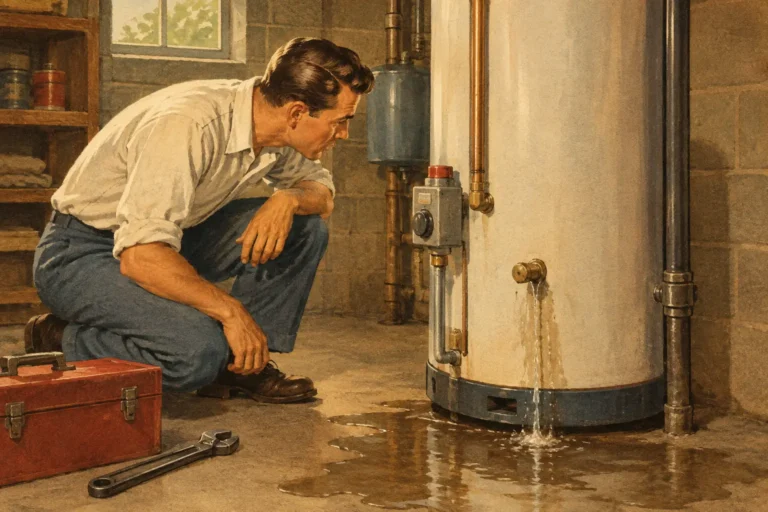
A water heater leaking in a utility room is more than an inconvenience. A few ounces of water can become a damaged floor, mold concern, interrupted hot water, or a major equipment failure if the source is not identified quickly. The good news is that many leaks give clear clues about what is happening and how urgently you need professional help.
Start by protecting your home or business. Move belongings away from the unit, dry up standing water, and look for the point where the water is actually appearing. Condensation, a nearby appliance, or a plumbing line above the tank can sometimes make a water heater look like the culprit. If the tank itself is leaking, however, prompt action matters.
What to Do When a Water Heater Is Leaking
If water is actively pooling around the heater, turn off the cold-water supply valve above the unit if it is accessible and you can do so safely. For an electric water heater, switch off power at the breaker before touching controls or working near water. For a gas unit, turn the gas control to the off position if you smell gas, hear hissing, or have any safety concern. Leave the area and contact emergency help if you suspect a gas leak.
Do not remove panels, loosen fittings, or try to drain a hot tank unless you understand the process and conditions are safe. Water inside the tank can be extremely hot, and a rushed repair can create burns, flooding, or additional damage. Taking a few photos of the leak location before a technician arrives can be helpful, especially if the leak comes and goes.
A small, steady leak may not feel urgent, but it should not be ignored. Water can travel beneath flooring and behind walls before it becomes visible. For property managers and business owners, even a minor utility-room leak can affect adjacent suites, stored inventory, or daily operations.
Where Is the Leak Coming From?
The location of the water usually provides the best first indication of the problem. A trained technician will confirm the source, evaluate the heater’s overall condition, and explain whether a repair is practical or replacement is the better long-term choice.
Water at the top of the tank
Water near the top often points to a loose connection, a leaking cold-water inlet or hot-water outlet, or a problem with the temperature and pressure relief valve. Pipe connections can sometimes be repaired by replacing fittings or correcting a failed section of piping.
The relief valve is a critical safety component. It opens when pressure or temperature inside the tank reaches an unsafe level. If it is dripping, the valve itself may be worn, but there may also be a pressure, expansion tank, thermostat, or overheating issue behind it. Replacing the valve without finding the cause can leave the underlying problem unresolved.
Water around a side fitting or valve
A leak from the drain valve near the bottom of a tank may come from a valve that no longer seals completely. Mineral buildup is common in Northeast Illinois, where hard water can affect plumbing components over time. In some cases, a drain valve can be replaced. In others, age, corrosion, and sediment inside the heater may influence whether repair makes sense.
Leaks at side connections or around recirculation lines should also be inspected. These may be external plumbing repairs rather than a failed water heater tank, but they still deserve timely attention.
Water from the bottom of the water heater
Water beneath the tank is the situation homeowners worry about most, and for good reason. It can be caused by condensation, a drain valve issue, or discharge from the relief valve. But if the inner tank has corroded and developed a crack or pinhole, replacement is usually the only dependable solution.
Storage-tank water heaters have a sacrificial anode rod designed to corrode before the steel tank does. Once that protection is depleted, corrosion can progress inside the tank where it cannot be repaired. Rusty water, popping or rumbling sounds, inconsistent hot water, and a leak at the base can all point to a tank nearing the end of its service life.
A failed tank will not heal or reseal itself. Waiting can turn a controlled replacement into an after-hours flood response.
Why Water Heaters Leak in Illinois Homes
Age is a major factor. Traditional tank water heaters commonly last around eight to 12 years, although maintenance, water quality, usage, installation quality, and model type all affect lifespan. A lightly used unit may last longer, while a busy household, commercial application, or hard-water conditions can shorten its useful life.
Sediment is another common contributor. Minerals settle at the bottom of the tank, reducing heating efficiency and creating hot spots that put stress on the equipment. As sediment accumulates, the unit may make banging or popping sounds and use more energy to deliver the same amount of hot water.
Pressure issues can also contribute to leaks. Water expands as it heats, and a closed plumbing system may need an expansion tank to safely manage that change. High incoming water pressure, a malfunctioning relief valve, or a failed expansion tank can put unnecessary strain on the water heater and connected plumbing.
Installation details matter as well. Incorrect venting on a gas water heater, poor drainage, inadequate clearance, improper pipe connections, or an undersized system can create performance and safety concerns. This is why a water heater replacement should be designed around the building’s hot-water demand, fuel source, space constraints, and plumbing configuration, not just the capacity of the old tank.
Repair or Replace? The Right Answer Depends
A leaking fitting, drain valve, or relief valve can often be repaired if the rest of the water heater is in good condition. A technician should verify that the repair addresses the reason for the leak, rather than simply stopping the visible drip.
Replacement is generally the wiser investment when the tank is leaking, the unit is near or beyond its expected lifespan, repairs are becoming frequent, or hot-water demand has changed. A family that has added bathrooms, a homeowner converting to a larger soaking tub, or a business with increased occupancy may benefit from a different system size or configuration.
There is also an efficiency decision to consider. A standard tank replacement can be a practical, cost-conscious option. High-efficiency tank models and tankless water heaters can offer lower energy use or longer service life in the right application, but they may require changes to venting, gas supply, electrical service, or water treatment. The best option depends on your usage patterns and installation conditions, not a one-size-fits-all recommendation.
How to Reduce the Risk of Another Leak
Regular maintenance gives a water heater the best chance of operating reliably. Annual service may include inspecting the relief valve, checking for corrosion and connection issues, assessing the anode rod when appropriate, testing operating conditions, and flushing sediment according to the manufacturer’s guidance and the unit’s condition.
Keep the area around the heater clear so small leaks are easier to spot. Check periodically for moisture, rust streaks, corrosion on fittings, or water marks on the floor. If the unit sits in a finished space or above an area where a leak could be costly, a drain pan and leak detection device may provide valuable extra protection. A pan is not a repair for a leaking tank, but it can help direct water away from vulnerable surfaces.
For older units, proactive planning is often less stressful than waiting for a failure. A professional evaluation can clarify the heater’s age, condition, capacity, and expected replacement needs so you can make decisions on your schedule.
When to Call for Water Heater Service
Call for professional service promptly if you see water at the base of the tank, repeated relief-valve discharge, rust-colored water, unusual noises, or a leak that returns after you shut off a nearby valve. Request emergency service when active water is spreading, hot water is spraying, the leak cannot be isolated, or you suspect a gas-related issue.
Lea Heating & Air Conditioning provides responsive water heater service for homeowners and businesses in Elgin and surrounding Northeast Illinois communities. Our trained team can identify the source of the leak, explain clear repair or replacement options, and help restore safe, dependable hot water with clean, reliable workmanship.
A water heater rarely picks a convenient time to fail. Addressing the first sign of moisture can protect your property and give you more control over what happens next.