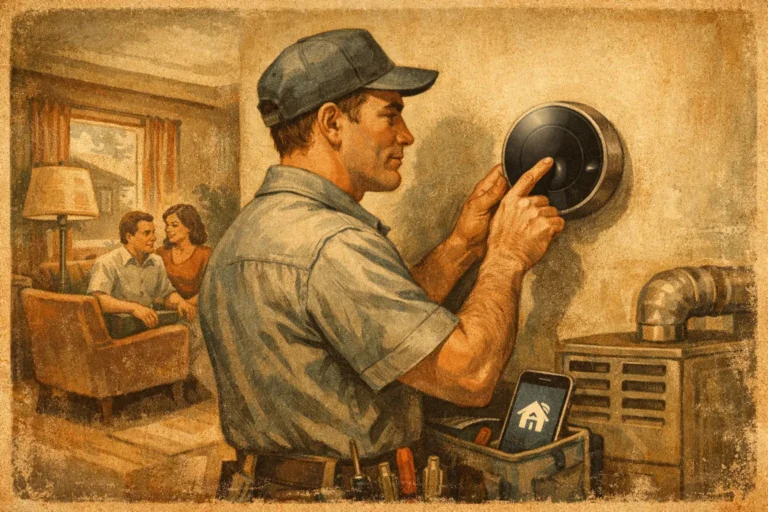

A thermostat can look like a small upgrade until it starts controlling a two-stage furnace, heat pump, whole-home humidifier, zoning system, or commercial rooftop unit. That is why a professional smart thermostat installation service is about more than mounting a new device on the wall. It is about making sure the thermostat understands the equipment it is meant to control, responds correctly in every season, and gives you useful information without creating comfort problems.
For homeowners and business owners in the Elgin area, the right installation can make daily temperature control more convenient while helping reduce unnecessary heating and cooling runtime. The wrong setup can leave a system short-cycling, failing to reach set temperatures, or using auxiliary heat when it should not.
What a Smart Thermostat Installation Service Should Include
A qualified technician begins with the HVAC system, not the thermostat box. Smart thermostats are not universally interchangeable. The equipment type, wiring arrangement, voltage, number of heating and cooling stages, and accessories all affect which models will work properly.
During a professional visit, the technician should verify compatibility with your furnace, air conditioner, heat pump, boiler, ductless equipment, or commercial system. They should also inspect the existing thermostat wires and terminal connections. Older homes may not have a dedicated common wire, often called a C-wire, that many Wi-Fi thermostats need for steady power. There are solutions for this situation, but the right solution depends on the thermostat and the HVAC controls already in place.
Installation also includes configuring the thermostat for the specific system. That can mean identifying a conventional furnace and air conditioner setup, setting heat-pump changeover controls, programming multi-stage equipment, or connecting compatible humidification and ventilation accessories. A screen that turns on is not proof that the controls are set correctly.
Once the thermostat is installed, testing matters. The technician should confirm heating, cooling, fan operation, and any connected accessories. For Wi-Fi-enabled models, they can also help connect the device to the network and walk you through the app, schedules, alerts, and basic settings.
Why Wiring and System Settings Matter
Most thermostat issues after a replacement are not caused by the thermostat itself. They come from a wiring mismatch, an incomplete configuration, or a control setting that does not match the equipment.
For example, heat pumps require different setup decisions than a standard gas furnace and air conditioner. If auxiliary heat is not configured correctly, the system may rely on more expensive backup heat too often. A multi-stage furnace needs its stages recognized so it can deliver steady comfort rather than running at full capacity whenever the temperature changes. Boilers and millivolt systems can have different compatibility requirements than forced-air equipment.
Smart thermostats can also interact with indoor-air-quality equipment. If your home has a whole-home humidifier, dehumidifier, ventilator, or zoning controls, each connection must be considered before installation. In some cases, a particular thermostat may not support every feature you currently use. In others, a compatible model can give you much better visibility and control.
This is where professional advice has real value. A good installer explains what your system can do, what the thermostat can manage, and any trade-offs before work begins.
The Best Thermostat Is Not Always the Most Feature-Packed One
It is easy to focus on colorful displays, voice control, occupancy sensors, and extensive energy reports. Those features can be helpful, but they should not outweigh equipment compatibility and everyday usability.
A homeowner who wants simple scheduling, remote temperature changes, and filter reminders may be better served by a dependable, straightforward model. A household with variable schedules may benefit more from occupancy sensing and app-based control. A business may prioritize access permissions, scheduling by operating hours, and alerts that flag a temperature issue before it affects customers or staff.
The location of the thermostat matters, too. A device placed near a kitchen, exterior door, supply register, direct sunlight, or heat-producing electronics may read the room inaccurately. If the current location is poor, moving the thermostat can improve comfort, although doing so may require additional wiring and wall repair. It depends on the layout of the property and the practical access to the HVAC system.
When a Smart Thermostat Can Improve Efficiency
A smart thermostat does not automatically lower utility bills. Savings come from better control habits and equipment operation. If a home is empty for much of the day, a schedule that eases heating or cooling during those hours can reduce waste. If a family has an unpredictable routine, remote access makes it easier to adjust settings without conditioning an empty house all afternoon.
For many Northeast Illinois properties, the greatest benefit is avoiding overcorrection. Constantly raising and lowering the temperature can make a system work harder without producing better comfort. A properly programmed thermostat supports more consistent settings while allowing reasonable setbacks when occupants are away or asleep.
Smart features can also provide early warnings. Some models notify users about unusual temperature drops, maintenance reminders, dirty filter intervals, or extended system runtime. Those alerts are useful prompts, not diagnostic conclusions. If a furnace runs longer because of a clogged filter, duct issue, failing component, or extreme outdoor temperature, the underlying condition still needs professional attention.
High-efficiency equipment often benefits from careful thermostat configuration. Variable-speed and multi-stage systems are designed to run longer at lower output when conditions allow. That quieter, steadier operation can improve temperature consistency and humidity control. A thermostat programmed as if the system were single-stage can limit those advantages.
Signs You Should Replace an Older Thermostat
A thermostat does not need to be visibly broken to be worth replacing. Inconsistent temperatures between rooms, an unresponsive display, frequent battery changes, inaccurate readings, and schedules that no longer fit your household are all signs it may be time to assess your controls.
Replacement can be especially worthwhile when installing a new furnace, air conditioner, heat pump, or zoning system. The controls should complement the new equipment rather than restrict its performance. Pairing a high-efficiency system with an outdated or poorly matched thermostat can leave comfort features unused.
There are times when replacement is not the immediate answer. If rooms are uneven because of undersized ductwork, air leaks, poor insulation, a clogged filter, or an aging HVAC system, a new thermostat alone will not correct the problem. A trained technician can help separate a control issue from a broader heating and cooling concern.
What to Expect During the Appointment
A professional appointment should be clear and efficient. Before the work begins, share the make and model of the thermostat you are considering, if you have one, along with details about your HVAC equipment and any comfort concerns. If you are unsure which thermostat fits your system, an in-home evaluation can prevent a costly mismatch.
The technician will inspect the existing control wiring, confirm the system type, discuss available options, and install the selected compatible thermostat. After setup, they should test operation in the relevant modes and show you how to use the controls. Ask about scheduling, vacation settings, app access, filter reminders, and what alerts warrant a service call.
For businesses and property managers, it is also worth discussing who needs access to the thermostat. Establishing clear permissions and temperature policies can prevent conflicting changes, especially in shared offices, rental common areas, or customer-facing spaces.
Choose Installation Support That Looks Beyond the Wall
Smart thermostat installation should leave you with more than a connected device. You should understand how it operates, know that it is configured for your equipment, and feel confident that the system has been tested before the technician leaves.
Lea Heating & Air Conditioning brings factory-trained, NATE-certified expertise to comfort upgrades throughout the area, with the same careful approach used for heating, cooling, and indoor-air-quality systems. If your current thermostat is frustrating, or you are planning an HVAC replacement, scheduling a compatibility review first can help you choose controls that support reliable comfort instead of adding another complication.
A well-chosen thermostat should make comfort easier to manage on an ordinary Tuesday morning, not give you another piece of technology to troubleshoot when the weather turns.