Heating Maintenance in East Dundee, IL: The Groundwork of a Reliable Winter
A heat exchanger with a hairline stress crack, a flame sensor coated in silica dust, and a blower motor drawing amperage above its rated limit all share one trait: each one develops quietly, long before the furnace fails outright. Scheduled maintenance is how these conditions get caught while they are still minor adjustments rather than emergency repairs. At Lea Heating & Air Conditioning, we treat a maintenance visit in East Dundee as a full inspection of the mechanical, electrical, and combustion systems that keep a home warm through an Illinois winter.
We are a second-generation, family-owned HVAC provider in Northeast Illinois, continuing 45 years of work in residential and light commercial heating, cooling, indoor air quality, and hot water systems. That length of experience shapes how we approach maintenance. We do not run through a checklist and leave. We measure, record, and compare readings against manufacturer specifications so that a small drift in performance gets documented before it turns into a no-heat call in January.
What a Furnace Loses Without Regular Service
A gas furnace is a balance of airflow, combustion, and heat transfer. When one part of that balance shifts, the whole system compensates in ways that shorten its life. A clogged air filter, for example, restricts return airflow. The heat exchanger then runs hotter than designed, the limit switch cycles the burner off and on, and the temperature rise across the exchanger climbs outside its rated band. Left alone, this thermal stress accelerates metal fatigue and can crack the exchanger, which is both an efficiency and a safety concern.
Combustion drift causes similar trouble. A burner that runs slightly rich wastes fuel and deposits soot on the sensor and exchanger surfaces. A burner that runs lean can produce elevated carbon monoxide. During a maintenance visit in East Dundee, we check combustion with instruments rather than by appearance alone, because the difference between a healthy flame and a dangerous one is not always visible. Correcting these conditions early keeps operating costs predictable and protects the household from the risks tied to incomplete combustion.
Inside a Lea Heating & Air Conditioning Maintenance Visit
Our maintenance procedure follows a consistent sequence so nothing gets skipped. Each step feeds information into the next, giving us a complete picture of how the system performs under load rather than a snapshot of one component.
- Combustion analysis: We sample the flue gas to read carbon monoxide, oxygen, and combustion efficiency, then compare those numbers against the range the manufacturer specifies for that model.
- Electrical inspection: We measure motor amperage, check capacitor microfarad values, tighten connections, and confirm that the control board and safety switches respond correctly.
- Airflow verification: We record the temperature rise across the heat exchanger and inspect the blower wheel, filter, and ductwork transitions for restrictions.
- Heat exchanger inspection: We examine the exchanger surfaces for cracks, corrosion, and soot, using visual inspection and combustion data together.
- Ignition and flame system: We clean the flame sensor, inspect the igniter, and confirm the burner lights promptly and holds a stable flame.
- Venting and drainage: On high-efficiency units, we clear the condensate trap and lines and confirm the vent is clear and properly pitched.
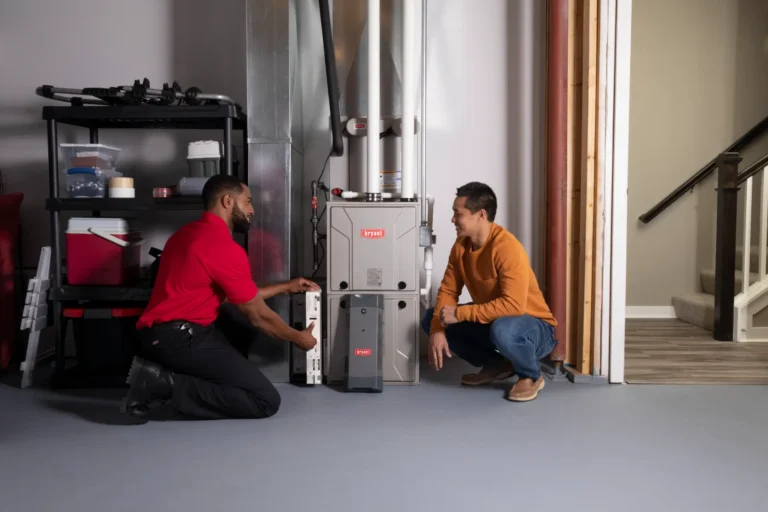
After the work is finished, we walk the homeowner through what we found and what we adjusted. If a component is trending toward failure but still functioning, we explain the reading and the expected timeline so the decision to repair or replace stays in the owner’s hands. We would rather flag a weakening inducer motor in October than replace it during a cold snap.
Maintenance Across Different Systems and Situations
No two heating systems in East Dundee age the same way, and our maintenance approach adjusts to the equipment and the building it serves. The following scenarios show how the same core methodology adapts to real conditions we encounter throughout Northeast Illinois.
Older Single-Stage Furnaces
Furnaces installed fifteen or more years ago tend to have simpler controls but more accumulated wear. On these units we pay close attention to the heat exchanger, the blower bearings, and the gas valve response. A single-stage furnace runs at full output every cycle, so its components see more thermal shock than a modulating unit. Careful cleaning and combustion tuning can extend the useful life of these systems well past their expected retirement, and honest reporting helps owners plan a replacement on their own schedule rather than in a crisis.
High-Efficiency Condensing Furnaces
Condensing furnaces extract additional heat from the flue gas, which produces acidic condensate. That condensate has to drain freely, or it backs up into the secondary heat exchanger and pressure switches. During maintenance we clear the trap, flush the drain line, and confirm the pressure switches open and close at the correct thresholds. We also inspect the PVC venting for proper slope and secure joints, since a compromised vent on a sealed-combustion system triggers safety lockouts and stops heat production entirely.
Light Commercial Rooftop and Packaged Units
Small businesses and light commercial buildings often rely on rooftop or packaged heating equipment that runs longer hours than a typical home furnace. These units accumulate wear faster and are harder to reach for spot repairs. Scheduled maintenance from Lea Heating & Air Conditioning keeps belts, bearings, and gas trains within tolerance, and helps building operators avoid unplanned downtime that interrupts tenants or customers. We document our findings so facility managers have a clear record for budgeting and warranty purposes.
Heat Pumps and Dual-Fuel Systems
Homes with heat pumps or dual-fuel setups need attention to both the electric and gas sides of the system, along with the controls that switch between them. We verify defrost cycles, check refrigerant charge against manufacturer targets, and confirm the changeover logic hands off correctly between the heat pump and the backup furnace. When these transitions work as designed, the system delivers steady comfort while keeping energy use low across the range of temperatures East Dundee sees in winter.
Why Local Homeowners Choose Lea Heating & Air Conditioning for Maintenance
Serving East Dundee places us close to the communities we have worked in for decades, including Elgin, Crystal Lake, Carpentersville, Algonquin, West Dundee, Sleepy Hollow, East Dundee, Lake in the Hills, and Hoffman Estates, IL. That proximity matters for maintenance because we understand how this region’s temperature swings, humidity, and even airborne debris affect heating equipment year after year. The knowledge we bring to a furnace in East Dundee comes from servicing thousands of similar systems in nearby towns under the same climate conditions.
Our reputation rests on proven integrity and leading innovation, and maintenance is where both show most clearly. We use current diagnostic instruments, we record measurable data rather than opinions, and we explain our findings in plain terms. When a furnace is healthy, we tell you so. When a component is failing, we show you the reading behind that conclusion. That transparency is what keeps homeowners returning to Lea Heating & Air Conditioning season after season, and it is the standard we hold to on every maintenance visit we perform.
If your heating system has not been inspected before the cold season, scheduling maintenance now is the most direct way to protect both comfort and safety. Reach out to Lea Heating & Air Conditioning to arrange a visit and give your furnace the attention it needs before winter demands its full performance.