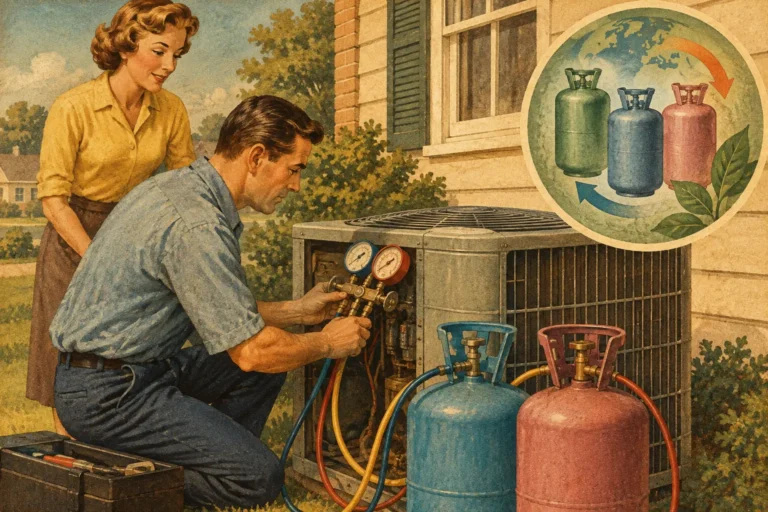
A refrigerant leak used to lead to a fairly simple question: Can the system be repaired and recharged? With current HVAC refrigerant changes, that answer now carries more weight. The refrigerant in your air conditioner or heat pump affects repair costs, equipment availability, installation requirements, and the best time to plan a replacement.
For homeowners and business owners in Northeast Illinois, the practical message is reassuring: a properly operating system does not need to be replaced just because refrigerant regulations are changing. But if an older unit develops a major leak or is nearing the end of its useful life, knowing what has changed can help you make a more confident decision.
Why HVAC Refrigerant Changes Are Happening
Refrigerants transfer heat. In cooling mode, they move unwanted heat from inside your home or building outdoors. In heating mode, a heat pump reverses that process and brings heat indoors. They are essential to comfort, but some refrigerants have a high global warming potential if released into the atmosphere.
For many years, R-22 was common in residential air conditioners and heat pumps. Its production was phased out because of its impact on the ozone layer. R-410A became the standard replacement for new equipment and remains widely used in systems installed over the last two decades.
The current transition concerns R-410A and other higher-global-warming-potential refrigerants. Federal rules are gradually reducing their production and use in newly manufactured HVAC equipment. Manufacturers are introducing systems designed for lower-impact alternatives, most commonly R-454B and, in some product lines, R-32.
This is not a sudden ban on operating existing R-410A equipment. It is a long-term market shift. Older systems can still be serviced, and recycled or reclaimed refrigerant can continue to support repairs. The larger concern is that supplies and pricing may become less predictable as the years pass.
What the Change Means for an Existing AC or Heat Pump
If your R-410A air conditioner is cooling effectively, has no known leaks, and is maintained regularly, there is usually no reason to replace it solely because newer refrigerants are entering the market. Continue with seasonal maintenance, change filters as needed, keep the outdoor unit clear, and address performance concerns early.
The decision becomes more complicated when a system needs a significant repair. Refrigerant is not consumed during normal operation. If a technician finds a low charge, the system has a leak that should be located and repaired rather than simply refilled. Repeatedly adding refrigerant without correcting the source wastes money and can shorten equipment life.
A small, accessible leak in a relatively young system may make repair the sensible choice. A major coil leak, compressor issue, or recurring refrigerant problem in a 12- to 15-year-old unit may point toward replacement instead. Age is not the only factor. Efficiency, repair history, system condition, indoor comfort, and the availability of compatible parts all matter.
A qualified technician should explain both paths clearly: what the repair involves, how long it is likely to extend the system’s life, and what a replacement would provide in efficiency, warranty coverage, and refrigerant technology.
New Refrigerants Require Equipment Designed for Them
One point causes frequent confusion: new refrigerants are generally not a drop-in substitute for R-410A. An R-410A system was engineered around specific refrigerant properties, pressures, oil, metering devices, components, and safety requirements. Installing a different refrigerant in equipment not approved for it can damage the system, reduce performance, and create safety concerns.
Most new residential equipment using R-454B is classified as A2L, meaning it has a lower flammability rating than traditional refrigerants but still requires additional safeguards. The equipment, installation practices, tools, labeling, and technician training must all meet applicable codes and manufacturer instructions.
For property owners, this does not mean your mechanical room or backyard condenser has become unsafe. It means installation quality matters even more. Proper sizing, refrigerant charging, airflow testing, electrical work, drainage, and startup procedures remain central to reliable comfort. The refrigerant transition adds another reason to work with a contractor that keeps its technicians trained on current equipment and code requirements.
Should You Replace Your System Before It Fails?
There is no one answer. Replacing an aging unit before an emergency can provide more choice, but it is not always the right financial move. A well-maintained system that is still dependable may deserve continued service.
Planned replacement is often worth considering when your system is older, requires expensive repairs, struggles to keep rooms comfortable, runs loudly, or drives unusually high summer electric bills. It can also make sense if you are already considering a heat pump, zoning, duct improvements, or indoor-air-quality upgrades. Combining related work can produce a more complete comfort solution than replacing a condenser alone after a breakdown.
Waiting can be reasonable for a newer unit with a minor repair. Still, waiting until the hottest week of July or a critical business day limits your options. You may need to make a fast decision based on what is available rather than what best fits your home, building, budget, and comfort goals.
For many families, the best approach is to have the conversation during routine maintenance. Ask about the system’s condition, estimated remaining life, refrigerant type, and the cost range for likely future repairs. That turns a surprise into a plan.
How Refrigerant Changes Affect New System Purchases
When replacing a central air conditioner or heat pump, buyers will increasingly see models designed around newer refrigerants. These systems may have different cabinet designs, service-port configurations, safety controls, and installation specifications than older R-410A equipment.
The choice should not rest on refrigerant alone. A high-efficiency system that is incorrectly sized or installed will not deliver the comfort or operating savings it should. A professional assessment should consider your home’s layout, insulation, ductwork, windows, humidity concerns, occupancy, and thermostat preferences. For commercial properties, operating schedules, ventilation needs, load variation, and critical spaces must also be part of the discussion.
A new heat pump can be particularly appealing in the Chicago area when paired with the right backup heat strategy. It can provide efficient electric cooling and heating, though equipment selection should account for cold-weather performance and your existing furnace, boiler, or electrical capacity. The best answer depends on the building, not a one-size-fits-all recommendation.
Protect Your Investment With Preventive Care
Refrigerant problems often reveal themselves through early warning signs: weak cooling, longer run times, ice on refrigerant lines, uneven temperatures, rising utility bills, or a system that cannot maintain the thermostat setting. Those symptoms can also come from airflow restrictions, electrical issues, dirty coils, failing components, or ductwork problems. Diagnosis matters.
Annual maintenance gives a trained technician an opportunity to check system operation before a small issue becomes a disruptive one. This includes evaluating refrigerant performance, checking electrical connections, measuring airflow, cleaning components as appropriate, and identifying wear that could lead to a midseason failure.
For businesses, preventive service also protects operations. A comfort issue in an office, retail space, restaurant, or multifamily property can affect employees, customers, tenants, inventory, and daily revenue. A maintenance plan helps managers budget for equipment decisions instead of reacting to every problem as an emergency.
Questions to Ask Before Approving a Refrigerant Repair
When a technician identifies a refrigerant issue, ask where the leak is, whether it can be repaired, and whether the repair includes verification that the leak has been resolved. You should also ask how much refrigerant the system requires, whether the cost reflects current supply conditions, and what the repair means for the unit’s expected remaining life.
If replacement is presented as an option, request a clear comparison. Look beyond the initial price to efficiency, warranty terms, installation scope, electrical or duct modifications, and expected comfort improvements. A trustworthy recommendation recognizes when repair is reasonable as well as when replacement offers stronger long-term value.
Lea Heating & Air Conditioning brings factory-trained, NATE-certified expertise to these conversations, helping customers weigh immediate needs against long-term comfort rather than pushing a premature replacement.
The refrigerant transition is best treated as useful planning information, not a reason to panic. Keep a dependable system maintained, repair leaks correctly, and start the replacement conversation before comfort becomes an emergency.