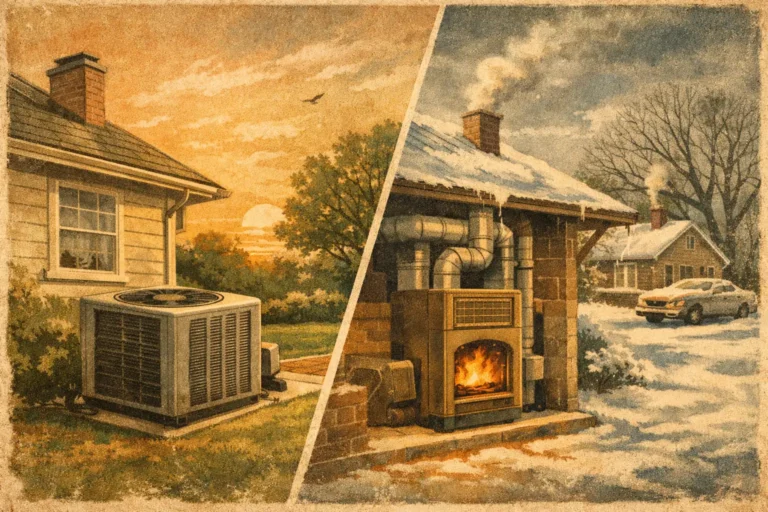
A winter heating failure in Elgin is not the time to make a rushed equipment decision. The heat pump vs furnace question is worth considering before replacement day because both systems can deliver dependable comfort, but they do it in very different ways. The best fit depends on your existing equipment, home design, energy priorities, budget, and how you want your system to perform through a Northeast Illinois winter.
Heat Pump vs Furnace: The Fundamental Difference
A gas furnace creates heat by burning natural gas. Warm air moves through the ductwork and into the rooms of your home. Modern high-efficiency furnaces are built to convert a large share of that fuel into usable heat, and their ability to produce strong, hot supply air makes them a familiar choice in cold climates.
A heat pump does not generate heat in the same way. It uses electricity to move heat from outdoors to indoors during the heating season. In summer, it reverses direction and operates as your central air conditioner, moving heat out of the home. That two-in-one capability is a major reason heat pumps have become a serious consideration for Illinois homeowners.
The key distinction is that a furnace is heating-only equipment, while a heat pump provides heating and cooling. A heat pump can still collect usable heat from outdoor air when temperatures are cold, though its capacity and efficiency change as temperatures drop.
Which System Handles an Illinois Winter Better?
For consistently intense cold, a properly sized gas furnace remains exceptionally capable. It delivers reliable heat regardless of outdoor temperature, provided it is maintained and has a safe fuel supply. If your home already has natural gas service and ductwork, replacing an aging furnace with a high-efficiency model can be a straightforward, dependable investment.
Cold-climate heat pumps have improved substantially. Many newer models can heat effectively in below-freezing conditions and are engineered to retain useful capacity at much lower temperatures than earlier designs. Still, when the temperature falls deep into the single digits or below zero, a heat pump may need supplemental heat to maintain comfort efficiently.
That is why a dual-fuel system is often worth discussing in this region. It pairs an electric heat pump with a gas furnace. During milder fall and spring weather, and often through much of the winter, the heat pump handles heating. When outdoor conditions reach a programmed balance point, the furnace takes over. You get efficient electric heating when it makes sense and powerful gas heat when Chicago-area weather becomes severe.
The right changeover temperature is not universal. It should account for the heat pump’s performance data, local utility costs, your home’s heat loss, thermostat settings, and personal comfort preferences. A professional load calculation is more useful than choosing a system based on square footage alone.
Energy Efficiency and Monthly Operating Costs
A heat pump can be highly efficient because it transfers heat rather than producing it through combustion. In moderate weather, it may provide several units of heat for every unit of electricity it consumes. That efficiency can reduce heating costs compared with electric resistance heat and may be attractive for homeowners seeking to reduce natural gas use.
But efficiency ratings do not tell the entire financial story. Electricity and natural gas rates, winter temperatures, insulation levels, air leakage, duct condition, and thermostat habits all affect the actual bill. A heat pump that performs very well in a mild climate may have a different operating-cost profile in Northeast Illinois.
High-efficiency gas furnaces also offer meaningful savings over older equipment. A furnace with a high AFUE rating wastes less fuel through the venting process than an aging, lower-efficiency unit. For a homeowner replacing a 20-year-old furnace, the improvement in comfort and fuel use can be noticeable even without switching to a heat pump.
When comparing proposals, look beyond the equipment price. Ask for expected operating considerations based on your utility setup, not a broad claim that one technology will always cost less. The best value is the system that is correctly sized, professionally installed, and appropriate for your home.
Comfort Feels Different With Each Option
Furnace heat often feels warmer at the supply register because the air leaving the system is hotter. It can quickly raise indoor temperature after a thermostat setback, which appeals to families who like a warm, immediate response on cold mornings.
A heat pump generally runs longer at lower output. That is not a weakness. Longer, gentler cycles can help maintain steadier room temperatures and avoid the larger swings associated with oversized or short-cycling equipment. Variable-speed heat pumps and air handlers can also provide quieter operation and more consistent airflow.
Humidity is another consideration. Winter air in Illinois is naturally dry, and either heating method can make a home feel drier. A whole-home humidifier, properly managed to avoid excess moisture on windows and building surfaces, may be the more meaningful comfort upgrade than choosing one heat source over another.
For homes with hot or cold rooms, the equipment type is only part of the answer. Duct leakage, inadequate return air, poor insulation, sun exposure, and thermostat location can all create uneven comfort. Zoning, duct improvements, or ductless equipment may solve the actual problem more effectively than simply installing a larger furnace or heat pump.
Installation Cost and Replacement Timing
If you need to replace both an air conditioner and a furnace, a heat pump deserves a close look because it replaces the cooling equipment while adding electric heating capability. A dual-fuel system can be especially practical when your furnace is near the end of its service life and you want flexibility rather than an all-or-nothing decision.
If your air conditioner is relatively new and your furnace has failed, a furnace replacement may be the sensible path. Replacing equipment that still has years of reliable life simply to change technologies is not always the strongest financial decision.
Installation quality matters as much as the equipment label. Proper sizing, refrigerant setup, airflow testing, electrical work, combustion safety checks for furnaces, and duct evaluation directly affect performance and longevity. An oversized system can cycle too often, create temperature swings, and wear components prematurely. An undersized system may struggle during peak weather.
For commercial properties, the analysis may be more complex. Occupancy patterns, ventilation requirements, operating hours, rooftop equipment condition, and tenant comfort needs all influence the right choice. A system designed for a single-family home should not be used as a shortcut for a business replacement decision.
Questions to Ask Before Choosing
Start with the condition of your current furnace and air conditioner. If both are aging, compare a conventional furnace-and-air-conditioner replacement with a heat pump and furnace combination. If only one component needs replacement, consider whether matching equipment and future replacement plans support a phased approach.
Next, think about your priorities. Do you want the strongest possible heat output during extreme cold? Are you focused on reducing gas use? Do you value one system for heating and cooling? Is quieter, more even operation important? There is no wrong priority, but there can be a mismatch between a homeowner’s goals and the system selected.
Also ask whether your home is ready for high-efficiency equipment. Sealed combustion furnaces may require changes to venting. Heat pumps may require electrical upgrades. Older duct systems may need attention to deliver the airflow a new variable-speed system is designed to provide. These details should be part of the recommendation, not unexpected additions after installation begins.
A Practical Choice for Your Home
For many Northeast Illinois homes, a high-efficiency gas furnace remains a trusted answer for winter comfort. For others, a modern cold-climate heat pump or dual-fuel setup offers compelling efficiency, air-conditioning replacement value, and year-round flexibility. The better option is not automatically the newest technology or the lowest initial quote. It is the system built around your home, your utility costs, and the way you live in the space.
A careful in-home evaluation can turn a complicated choice into a clear plan. Lea Heating & Air Conditioning can assess equipment condition, heating load, ductwork, and comfort concerns to help you choose with confidence before the next cold snap puts the decision on a deadline.