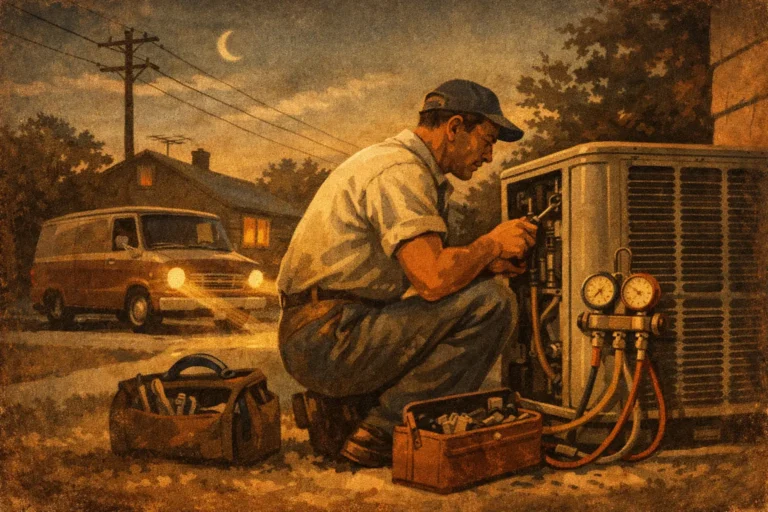
When You Need 24 Hour Air Conditioner Repair
A July night in Northeast Illinois can turn uncomfortable fast when the air conditioner stops cooling, especially when young children, older adults, pets, or sensitive electronics are in the building. 24 hour air conditioner repair gives homeowners and business owners a way to address urgent cooling problems without waiting for regular business hours.
Not every AC issue requires an overnight service call. But a system that will not run during extreme heat, a burning odor, water near electrical equipment, or an office that is becoming unsafe for staff and customers deserves prompt professional attention. Knowing what to do in the first few minutes can protect your equipment, your property, and the people relying on your space.
When Is an AC Problem an Emergency?
An air conditioner that is running but not keeping up may be able to wait until the next available appointment, depending on outdoor temperatures and who occupies the property. Start by checking the thermostat setting, replacing a visibly clogged filter, and making sure the outdoor unit has not been blocked by leaves, grass clippings, or stored items. If the system resumes normal operation, schedule maintenance rather than assuming the problem is solved for good.
Other symptoms call for faster action. Shut the system off and request emergency service if you notice electrical burning smells, smoke, sparking, a repeatedly tripped breaker, loud grinding or banging, or water pooling near the furnace, air handler, or electrical components. These conditions can point to a failing motor, damaged wiring, a blocked condensate drain, or another problem that should not be ignored.
Loss of cooling is also more urgent when indoor temperatures are climbing quickly. Homes with infants, seniors, people with medical needs, or pets may need immediate help even if the equipment failure is not hazardous. For restaurants, retail spaces, medical offices, server rooms, and other commercial properties, a cooling failure can affect inventory, equipment, employees, and customer comfort within hours.
What to Do Before 24 Hour Air Conditioner Repair Arrives
A few practical steps can make the visit safer and help a technician diagnose the issue efficiently. First, turn the thermostat to Off if the unit is making unusual noises, emitting an odor, leaking heavily, or tripping the breaker. Do not continue resetting the breaker or forcing the equipment to run. Repeated resets can worsen electrical damage.
Next, keep the area around the indoor and outdoor equipment clear. If there is a water leak, protect nearby belongings and use towels or a shallow container only if it is safe to do so. Avoid opening electrical panels or attempting to add refrigerant. Air conditioning systems contain high-voltage components and refrigerant circuits that require trained handling.
While you wait, close blinds and curtains on sunny windows, limit use of ovens and dryers, and keep interior doors open where appropriate to encourage air circulation. Portable fans can improve comfort, but they do not correct the underlying problem. If the indoor temperature is becoming unsafe, make alternate arrangements for vulnerable occupants.
What an Emergency AC Technician Checks
A reliable emergency repair visit should be more than a quick restart. Air conditioners often stop cooling because of an electrical, airflow, drainage, refrigerant, or control issue. The visible symptom may be the same, but the solution is not.
A trained technician typically begins by confirming the thermostat call for cooling and checking the electrical supply, disconnect, breaker, capacitor, contactor, and safety controls. A failed capacitor or contactor can prevent the outdoor unit from starting. A tripped float switch may shut down cooling to prevent condensate overflow. These are common issues, but they should be tested rather than guessed at.
The technician will also inspect airflow through the filter, blower, evaporator coil, supply vents, and return ducts. Restricted airflow can cause the evaporator coil to freeze, leaving the system running with little or no cool air coming through the vents. Simply thawing the coil may restore cooling temporarily, but the real cause could be a dirty filter, blower problem, duct restriction, or low refrigerant charge.
Refrigerant concerns require particular care. Refrigerant does not get “used up” like fuel. If the charge is low, there is generally a leak or an installation-related issue that needs to be identified. Adding refrigerant without evaluating the system may provide short-term relief while allowing a larger problem to continue.
For commercial systems, the diagnostic process may also include checking rooftop units, economizer controls, multiple thermostats, zoning equipment, drain lines, and the effects of building occupancy or heat-generating equipment. A repair strategy should account for how the building is actually used, not just whether the unit turns on.
Repair Now or Plan for Replacement?
When an air conditioner fails after hours, the immediate goal is usually to restore safe cooling. Still, an emergency visit can reveal that the equipment is nearing the end of its practical service life. The right choice depends on more than the repair price alone.
Age matters. Many well-maintained central air conditioners can operate for 12 to 15 years or longer, though performance and repair needs vary by equipment quality, installation, maintenance history, and usage. If a newer system needs a straightforward part replacement, repair is often the sensible path. If an older system has a major compressor failure, repeated refrigerant leaks, or frequent breakdowns, replacement may offer better long-term value.
Efficiency and comfort matter, too. An undersized, oversized, or poorly installed unit can create uneven temperatures, high humidity, excess energy use, and short cycling. A replacement consultation should look at the home or building as a whole, including ductwork, insulation, thermostat controls, zoning needs, and indoor-air-quality goals. The lowest upfront cost is not always the lowest cost of ownership.
A trustworthy contractor should explain the diagnosis in clear language, present realistic repair and replacement options, and let you understand the trade-offs. Emergency conditions can create pressure, but you should never feel rushed into a decision that has not been properly explained.
Why Local Experience Matters After Hours
After-hours service is about more than answering the phone. It requires stocked service vehicles, trained technicians, accurate diagnostics, and a process for communicating what happens next. A repair that is completed neatly and correctly helps prevent a second disruption the following day.
For homeowners and businesses in Elgin and surrounding Northeast Illinois communities, Lea Heating & Air Conditioning brings more than 48 years of local experience to urgent HVAC needs. As a Bryant Factory Authorized Dealer and Bryant National Award Winning Company, the team combines factory training and NATE-certified technical knowledge with respectful, customer-focused service. That experience matters when a modern variable-speed system, smart thermostat, ductless unit, or commercial setup needs a careful diagnosis rather than a one-size-fits-all fix.
Prevent the Next After-Hours Breakdown
Some AC failures are unpredictable, but preventive maintenance lowers the odds of a surprise shutdown during the hottest stretch of summer. A seasonal tune-up gives a technician the opportunity to inspect electrical connections, test capacitors, clean critical components, verify drainage, evaluate refrigerant performance, and catch wear before it becomes a no-cooling call.
Homeowners can help between visits by changing filters on schedule, keeping the outdoor condenser clear, watching for unusual sounds, and addressing weak airflow or humidity changes early. Property managers and business owners benefit from a maintenance plan that accounts for operating hours, occupant needs, multiple systems, and the cost of downtime.
When your air conditioner quits at the worst possible time, focus first on safety and comfort. Turn off equipment that appears unsafe, avoid do-it-yourself electrical or refrigerant work, and seek qualified help before a small fault turns into a larger repair. A prompt, well-diagnosed service call can restore cooling now and provide a clearer path to dependable comfort through the rest of the season.
A furnace failure in an Illinois winter creates a fast decision: restore heat now, but avoid paying for the wrong solution. A reliable furnace replacement cost estimate gives you more than a single price. It explains the equipment being proposed, the work required to install it safely, and the comfort and operating costs you can expect in the years ahead.
For most homeowners, replacement pricing varies because no two homes, existing systems, or comfort goals are identical. The most useful estimate is built after an in-person evaluation, not from a flat number offered over the phone. It should help you compare options with confidence while accounting for the details that affect safety, performance, and long-term value.
What a Furnace Replacement Cost Estimate Should Include
A complete estimate begins with the furnace itself, but it should not end there. It should identify the proposed fuel type, heating capacity, efficiency rating, warranty information, installation labor, required permits, and the materials needed to connect the new system properly.
If the replacement requires new venting, a condensate drain, gas-line adjustments, electrical work, thermostat updates, or duct modifications, those items should be clearly addressed. A lower initial quote can sometimes leave out necessary work that appears later as an added charge or, worse, compromises the installation.
For a typical Northeast Illinois home, the total project can range from several thousand dollars for a straightforward, standard-efficiency replacement to substantially more for a high-efficiency system that requires venting changes, airflow improvements, or accessory upgrades. The right number depends on the home and the scope of work. A contractor who explains that scope clearly is giving you something far more valuable than a quick price: a basis for making a sound decision.
The Main Factors That Affect Furnace Replacement Pricing
Furnace size and heating capacity
A furnace must be sized for the home, not simply matched to the old unit. An oversized furnace may heat rooms quickly but can cycle on and off too often, creating uneven temperatures, unnecessary wear, and reduced efficiency. An undersized unit may struggle during the coldest weather.
A qualified contractor considers square footage, insulation, window quality, ceiling height, duct design, sun exposure, and the home’s heat loss. This evaluation may show that the existing furnace was never the right size. Choosing the proper capacity can matter more to everyday comfort than choosing the most expensive model.
Efficiency level
Furnace efficiency is measured by AFUE, or Annual Fuel Utilization Efficiency. A furnace with a higher AFUE converts more of the fuel it uses into heat for the home. High-efficiency furnaces can reduce fuel waste, but they also may cost more upfront and often require PVC intake and exhaust venting along with condensate drainage.
For some homes, a high-efficiency furnace is an excellent long-term investment, especially when heating bills are a concern or the system will be used for many years. For others, the additional installation requirements may change the value calculation. A professional should explain both the upfront investment and the expected operating-cost difference without pressuring you toward a one-size-fits-all answer.
Installation conditions and code requirements
The existing installation has a direct effect on cost. Replacing a furnace in an open utility room with accessible gas, electrical, drain, and duct connections is generally simpler than replacing one in a tight attic, crawl space, or finished mechanical closet.
Older homes can also require updates to meet current code requirements. That may include correcting venting, replacing an outdated shutoff valve, upgrading the electrical disconnect, adding a drain solution, or improving combustion air provisions. These items are not extras when they are needed for a safe, code-compliant installation.
Ductwork and airflow
A new furnace cannot deliver its best performance through undersized, leaky, or poorly balanced ducts. If certain rooms are always cold, airflow may be part of the problem. Duct repairs, return-air improvements, and balancing adjustments add to the project scope, but they can prevent a new furnace from inheriting the comfort problems of the old one.
This is also the time to consider zoning, a variable-speed blower, or a compatible smart thermostat. These upgrades are not essential for every replacement, yet they can provide more precise temperature control in multi-level homes, additions, or spaces with different comfort needs.
Why the Lowest Quote Is Not Always the Best Value
Comparing estimates is wise. Comparing only the bottom line is less useful. Two proposals can differ because one includes permits, startup testing, new venting, thermostat compatibility, haul-away of the old equipment, and warranty registration while another does not.
Ask each contractor what is included, what conditions could change the price, and how they will verify the system is operating correctly after installation. Proper commissioning should include checking gas pressure, temperature rise, airflow, venting, safety controls, and thermostat operation. Those steps help protect the equipment, the home, and the people inside it.
Installation quality also affects reliability. Even a premium furnace can perform poorly if it is incorrectly sized, improperly vented, or connected to inadequate ductwork. Factory-trained, NATE-certified technicians bring the technical knowledge needed to address these details, particularly when a replacement involves a high-efficiency system or a complex home layout.
When to Repair and When to Replace
A repair is often the sensible choice when a furnace is relatively new, has been maintained, and needs a straightforward component replacement. But replacement becomes more compelling when repairs are frequent, the heat exchanger has failed, parts are becoming difficult to source, or the furnace is nearing the end of its expected service life.
Age alone should not force the decision. Instead, consider the repair cost, the unit’s condition, its efficiency, your plans for the property, and whether the system still keeps the building comfortable. If a repair is expensive and the furnace has a history of breakdowns, putting that money toward a new system may offer more predictable comfort and fewer disruptions.
Property managers and business owners should also weigh downtime. An older furnace that fails during a cold spell can affect tenants, employees, customers, inventory, and daily operations. Planning a replacement before an emergency may provide more equipment choices and more time to review the project scope.
How to Prepare for an Accurate Estimate
Before an appointment, make note of rooms that feel too cold or too warm, unusual noises, rising utility bills, and any previous repair history. If you have a preferred temperature, concerns about dry winter air, or plans to finish a basement or add onto the home, share them. These details help shape an appropriate recommendation.
During the evaluation, expect the contractor to inspect the existing furnace, ventilation, ductwork, thermostat, and electrical and gas connections. Ask about available efficiency levels, warranty coverage, maintenance requirements, and financing options. You should leave with clear choices, not vague promises.
Lea Heating & Air Conditioning approaches furnace replacement as a tailored comfort project, with options designed around the home, budget, and long-term performance goals. For urgent no-heat situations, responsive service matters just as much as careful planning once the immediate problem is resolved.
A Better Way to Think About Replacement Cost
The best furnace replacement cost estimate is not the cheapest number or the highest-efficiency model by default. It is the proposal that fits the building, addresses installation requirements honestly, and gives you dependable heat without unnecessary energy waste.
If your furnace is becoming unreliable, schedule an assessment before the next cold stretch turns a planned upgrade into an emergency. A clear, detailed proposal gives you room to choose the comfort solution that makes sense for your home or property.
A boiler can sound perfectly ordinary right up until it does not. A new bang in the pipes, a room that will not warm up, or a pressure gauge that keeps dropping can quickly turn into a comfort and safety concern. For boiler repair Elgin Illinois homeowners, property managers, and business owners need, the right response starts with recognizing the difference between a minor operating quirk and a problem that needs professional attention.
Boilers are durable heating systems, but they are not simple appliances. They rely on controlled combustion, water pressure, circulation, venting, and safety controls working together. When one part falls out of balance, the system can lose efficiency, create uneven heat, or stop operating altogether. Prompt service helps protect your comfort, your equipment, and your energy budget.
When to Schedule Boiler Repair in Elgin, Illinois
Some boiler problems call for immediate action. If you smell gas, suspect a carbon monoxide issue, see soot around the unit, or notice water near electrical components, leave the area if necessary and contact the appropriate emergency services or a qualified HVAC professional. Do not try to relight, reset, or disassemble a boiler when there is a potential combustion or electrical hazard.
Other warning signs may not feel urgent at first, but they still deserve a service call before cold weather puts greater demand on the equipment. A boiler that runs longer than usual, makes persistent noises, or heats only part of a building is telling you something has changed.
Uneven heat and cold rooms
Hydronic heating should provide consistent comfort when the system is sized and balanced correctly. Cold radiators, baseboards that stay cool, or rooms that lag far behind the thermostat setting may point to trapped air, circulation trouble, zone valve problems, a failing circulator pump, or an issue with the thermostat controls.
The solution depends on the system. Bleeding air from a radiator can help in certain situations, but repeated air buildup is not a normal long-term condition. A technician can determine whether the source is a leak, improper pressure, a faulty expansion tank, or another underlying concern.
Unusual sounds from the boiler or pipes
A brief click at startup can be normal. Repeated banging, whistling, kettling, gurgling, or rumbling is not something to ignore. Mineral buildup on heat-transfer surfaces can cause kettling, while air in the system or poor water circulation may create gurgling and banging.
Noise alone does not identify the repair, which is why a professional diagnosis matters. Replacing a part without checking water quality, pressure, venting, and system operation can leave the original cause unresolved.
Leaks, low pressure, and frequent resets
Water around a boiler should always be evaluated. A small drip can corrode components over time, lower system pressure, and eventually lead to a no-heat call. The leak may come from a valve, fitting, pump seal, pressure relief valve, or the boiler itself.
If you are regularly adding water to restore pressure or pressing a reset button to get heat back, the system needs attention. Repeated resets are not routine operation. They can mask a problem with ignition, flame sensing, venting, circulation, or a safety control.
Higher heating bills without better comfort
An unexplained increase in gas or electric use is often one of the earliest signs of declining boiler performance. A system may be working harder because of scale buildup, combustion inefficiency, failing controls, heat loss through uninsulated piping, or a circulation issue.
Energy use also depends on thermostat settings, building insulation, and outdoor temperatures. Still, if the bill rises while comfort declines, a repair visit can identify whether the boiler is the issue and whether maintenance, repair, or replacement makes the most financial sense.
What a Professional Boiler Diagnosis Should Cover
A meaningful repair visit should go beyond getting the heat back on for the moment. A trained technician evaluates how the boiler operates as a complete system. That includes checking the burner and ignition sequence, combustion and venting, safety devices, water pressure, expansion components, circulator pumps, controls, and visible piping conditions.
For gas boilers, combustion and venting deserve particular care. Proper fuel-to-air operation supports efficiency and safe performance, while blocked or damaged venting can create serious risks. Technicians should also look for signs of corrosion, moisture, soot, or vent connector concerns that can affect reliable operation.
On the hydronic side, the technician may assess zone controls, thermostats, pumps, air elimination equipment, and radiator or baseboard performance. In a commercial setting, that assessment can extend to larger distribution systems, multiple zones, and the building's operating schedule. The goal is not just to make a boiler fire. It is to restore stable, controlled heat throughout the property.
Lea Heating & Air Conditioning brings more than 48 years of local HVAC experience to these decisions, with factory-trained, NATE-certified technicians and 24/7 emergency availability when a heating issue cannot wait. Clear findings and practical options give customers a better basis for deciding what to do next.
Repair or Replacement: How to Make the Call
A repair is often the sensible choice when a boiler is relatively young, the issue is isolated, and the heat exchanger and major controls are in sound condition. Common repairs such as replacing an igniter, sensor, valve, circulator component, thermostat, or expansion tank can restore dependable operation without requiring a full system investment.
Replacement becomes worth discussing when repair needs are recurring, parts are obsolete, efficiency has dropped substantially, or the boiler has a compromised heat exchanger. Age matters, but it is not the only factor. Some well-maintained boilers can provide many years of service, while a younger neglected unit may have extensive problems.
The best decision comes down to repair cost, expected remaining service life, operating efficiency, parts availability, and the comfort needs of the building. A business owner may prioritize predictable operation and reduced downtime. A homeowner may be weighing a near-term repair against better efficiency, quieter performance, or a planned renovation. There is no one answer that fits every boiler.
If replacement is the better path, proper sizing is essential. A larger boiler is not automatically better. Oversized equipment can cycle too frequently, waste energy, and create uneven comfort. A professional load assessment and review of the existing distribution system help ensure the new equipment fits the home or commercial space.
Simple Steps That Help Prevent Boiler Trouble
Preventive maintenance is especially valuable for boilers because many issues develop gradually. Annual service before the heating season gives a technician the opportunity to inspect combustion, test safety controls, clean components as needed, verify pressure, and catch wear before it causes a breakdown.
Property owners can also support reliable operation by keeping the boiler area clear, watching for moisture or corrosion, and paying attention to changes in noise or comfort. Do not block combustion-air openings or store flammable materials near the unit. If your system uses radiators or baseboards, avoid covering them with furniture, curtains, or stored items that restrict heat delivery.
For commercial properties, maintenance planning should account for occupancy patterns and critical areas. A boiler problem in a retail space, office, multifamily building, or care facility can affect more than comfort. It can disrupt operations, create tenant concerns, and increase the chance of an after-hours emergency.
Do Not Wait for a Complete No-Heat Failure
A boiler rarely chooses a convenient time to fail. The first cold night after a long stretch of mild weather is often when hidden problems become obvious. Scheduling service when you first notice pressure changes, new noises, inconsistent heat, or repeated cycling gives you more options than waiting for the system to shut down.
If your boiler is showing signs of trouble, arrange an evaluation with a qualified local HVAC team. A careful diagnosis now can protect the warmth, safety, and peace of mind your home or business depends on when Illinois winter temperatures arrive.
A restaurant dining room that turns stuffy during the lunch rush, an office with one freezing conference room, or a retail store with a rooftop unit that will not start are more than comfort issues. They can affect customers, employees, inventory, productivity, and the day’s revenue. Prompt commercial HVAC repair Elgin businesses can rely on helps restore control before a minor equipment issue becomes an operational disruption.
Commercial systems work harder and face more variables than most people realize. Longer run times, changing occupancy, outside-air requirements, cooking equipment, server rooms, and multiple temperature zones can all place demands on heating and cooling equipment. The right repair approach begins with accurate diagnostics, clear communication, and a solution that fits the building’s immediate needs and long-term operating plan.
When Commercial HVAC Repair in Elgin Cannot Wait
Some HVAC problems should be addressed quickly, even when the equipment is still running. A system may be warning you of a larger failure through uneven temperatures, short cycling, unusual noise, water around equipment, weak airflow, or a noticeable rise in utility costs. Waiting can turn a repairable component problem into damage to a compressor, heat exchanger, blower motor, or control system.
A full shutdown is naturally urgent, particularly during an Illinois heat wave or a winter cold spell. But urgency also depends on the space. A failed cooling system in a medical office, restaurant, daycare, fitness center, or technology room may create a more immediate concern than a temporary comfort issue in an unoccupied area. Property managers also need to consider tenant obligations and the effect a delayed repair can have on multiple occupants.
For after-hours failures, 24/7 emergency service provides an important safeguard. The goal is not simply to get equipment running at any cost. It is to identify the cause, make the system safe, explain the available repair path, and help the business make a sound decision under pressure.
What a Thorough Commercial HVAC Repair Visit Should Cover
Commercial HVAC problems can have similar symptoms but very different causes. A space that will not cool may have a refrigerant issue, failed capacitor, dirty coil, thermostat communication error, damaged belt, airflow restriction, or a problem with the electrical supply. Replacing a part before identifying why it failed can lead to repeat service calls and avoidable expense.
A qualified technician should evaluate the system as a whole. That includes checking operating pressures and temperatures when applicable, electrical components, airflow, filters, condensate drainage, controls, safety switches, and the condition of accessible mechanical parts. On larger or more complex systems, the technician may also assess how the equipment interacts with zoning controls, economizers, building schedules, or connected thermostats.
The best repair recommendation is not always the lowest immediate price. For example, replacing a failed motor may be the right choice when the rest of the unit is in good condition. If the unit has frequent breakdowns, poor efficiency, obsolete components, or a history of refrigerant leaks, a business may need to compare the repair with a planned replacement. That decision depends on equipment age, repair history, utility use, budget, occupancy needs, and how critical the system is to daily operations.
Clear Options Matter for Business Owners
A reliable contractor should explain what failed, what caused the failure when it can be determined, and what the repair is expected to accomplish. Business owners and facility managers should not be left guessing whether a repair is temporary, whether additional work is likely, or whether the system can safely continue operating.
For many businesses, the practical choice is a phased plan. Address the immediate failure, schedule work that can be completed outside business hours when possible, and build a replacement strategy for aging equipment before it fails at the worst possible time. This approach can protect cash flow while reducing the likelihood of repeated emergencies.
Common Causes of Commercial Heating and Cooling Failures
Deferred maintenance is one of the most common contributors to equipment trouble. Filters that remain in place too long restrict airflow. Dirty condenser or evaporator coils force equipment to work harder. Clogged drain lines can cause water damage or trigger shutdowns. Loose electrical connections, worn belts, and aging contactors may seem small, but they can stop an entire unit.
Controls also deserve attention. A thermostat that is incorrectly programmed, a failed sensor, or a communication issue between components can create comfort complaints even when the mechanical equipment is sound. In multi-tenant buildings, zone balance and scheduling are often part of the diagnosis. One tenant’s uncomfortable suite may be caused by a shared-system issue rather than a problem in that individual space.
Older rooftop units, boilers, furnaces, heat pumps, and split systems can remain serviceable with proper care. Still, the availability of replacement parts and the cost of operation should be considered. Repairs are often worthwhile, but continually investing in an inefficient or unreliable unit can cost more over time than a properly planned upgrade.
Preventive Maintenance Reduces Unplanned Downtime
Maintenance is not a promise that equipment will never fail. It is a practical way to find developing problems before they interrupt business. Seasonal inspections help verify that heating and cooling components are clean, operating safely, and prepared for heavy demand.
For a commercial property, a maintenance plan should reflect the equipment and the building’s use. A lightly occupied office may need a different service schedule than a busy restaurant, warehouse, retail store, or property with multiple rooftop units. Systems exposed to grease, dust, construction activity, or extended operating hours generally require closer attention.
During planned maintenance, technicians can identify worn components, clean critical areas, check safety controls, inspect belts and electrical connections, and monitor system performance. The resulting service record is useful for budgeting as well. Instead of being surprised by an aging unit, a facility manager can plan around its condition and likely future needs.
Protect Comfort, Air Quality, and Energy Use
Equipment performance affects more than the temperature on a thermostat. Poor airflow, excess humidity, uneven distribution, and neglected filtration can make a building feel uncomfortable even when the system appears to be running. In some settings, indoor air quality is also a direct concern for employees, guests, and customers.
Targeted improvements may include better filtration, humidity control, duct repairs, smart thermostats, zoning adjustments, or indoor-air-quality equipment. Not every building needs every upgrade. The right recommendation depends on the comfort complaint, the system design, maintenance history, and the building’s operational needs.
High-efficiency replacement equipment can also be a strong investment when a system is near the end of its useful life. Variable-speed technology, improved controls, and properly matched equipment can help reduce energy waste while improving temperature consistency. However, new equipment will only perform as intended when it is correctly sized, installed, and maintained.
Choosing a Commercial HVAC Partner
Commercial work calls for technical skill and reliable coordination. Look for a contractor with experience across commercial heating, cooling, controls, and maintenance, as well as technicians who receive ongoing factory training and hold respected credentials such as NATE certification. Emergency availability matters, but so do punctuality, clean workmanship, straightforward recommendations, and a commitment to follow-through after the service call.
Lea Heating & Air Conditioning brings more than 48 years of local experience to businesses throughout the northwest suburbs, supported by factory-trained technicians and a five-star customer reputation. Whether the need is an urgent repair, a recurring comfort concern, or a maintenance strategy for multiple systems, the focus should remain on dependable performance and clear options.
When your HVAC system begins showing signs of trouble, acting early gives your business more choices. Schedule an evaluation before the next weather extreme or busy season turns a manageable repair into an interruption your customers and team can feel.
A second-floor bedroom that stays warm long after the rest of the house is comfortable is not always a sign that the furnace is failing. It may be a sign that one thermostat is trying to manage spaces with very different heating and cooling needs. HVAC zoning system benefits address that problem by giving separate areas of a home or building more precise temperature control.
For homeowners in Northeast Illinois, zoning can be especially valuable during weather swings, when sunny rooms, finished basements, additions, and upper floors do not behave the same way. For businesses, it can prevent an empty conference room or lightly used office area from receiving the same conditioning as an occupied workspace. The right system can improve comfort and reduce unnecessary runtime, but zoning works best when it is carefully designed around the building, equipment, and occupants.
What Is an HVAC Zoning System?
An HVAC zoning system divides a home or commercial space into separate comfort areas, called zones. Each zone has its own thermostat or temperature sensor. A central control panel receives those signals and directs heating or cooling where it is needed.
In a ducted system, motorized dampers installed within the ductwork open and close to regulate airflow to each zone. If the upstairs needs cooling while the main floor does not, the system can direct more conditioned air upstairs rather than treating the entire house as one area. The furnace, air conditioner, heat pump, or boiler still provides the heating or cooling, but zoning controls where that comfort is delivered.
Ductless mini-split systems provide another form of zoning. Each indoor unit can generally be controlled independently, making them a practical option for additions, converted garages, offices, and rooms where extending ductwork would be difficult.
HVAC Zoning System Benefits That Matter Day to Day
The most noticeable benefit is better room-by-room comfort. A two-story home may have one zone for the main level and another for bedrooms upstairs. A home with a finished basement can keep that cooler space comfortable without overheating the rest of the house. Homes with large windows, cathedral ceilings, sunrooms, or a room over the garage often benefit because these areas gain and lose heat differently than surrounding rooms.
Zoning also gives families fewer reasons to argue over the thermostat. One person can sleep comfortably in a cooler bedroom while common areas remain at a different setting. Instead of choosing one compromise temperature for the entire house, the system can better reflect how each part of the home is actually used.
Energy savings are another potential advantage. When certain areas are unoccupied, their temperature can be adjusted rather than conditioning every room to the same setting. A zoning system does not create savings by itself - the result depends on insulation, thermostat schedules, equipment efficiency, and how the zones are used. Still, reducing conditioning in low-use areas can lower energy waste, particularly in larger homes and commercial buildings with varying occupancy.
There is also a practical wear-and-tear consideration. Properly matched zoning can help high-efficiency, variable-speed HVAC equipment operate at lower, steadier output for longer periods. That can support more consistent temperatures and quieter operation. It is not a replacement for maintenance, however. Filters, ductwork, refrigerant levels, and annual system service still affect performance.
Better control for changing schedules
A zoning system is useful when a building's schedule changes throughout the day. In a house, the kitchen and family room may be busiest in the evening, while bedrooms need attention overnight. In a small office, staff may occupy one section of the building while other spaces remain unused.
Smart thermostats can add another layer of control by allowing schedules, remote adjustments, and alerts. They are most effective when the zoning layout is logical. Adding several thermostats without addressing airflow, duct design, or equipment capacity will not solve an underlying comfort issue.
More precise solutions for difficult rooms
Some comfort complaints are highly localized. A nursery may be too cold, a west-facing office may overheat in the afternoon, or a bonus room may never feel right. Before recommending zoning, a qualified HVAC professional should look at the full cause: duct sizing, insulation, air leaks, window exposure, return-air pathways, and the condition of the existing equipment.
Sometimes zoning is the right answer. In other cases, duct modifications, air sealing, insulation improvements, a thermostat relocation, or a ductless unit may provide a better result. A tailored recommendation protects homeowners from investing in controls when the real problem is elsewhere.
Is HVAC Zoning Right for Your Property?
Zoning is often a strong fit for homes with multiple stories, large square footage, separate living areas, major additions, or persistent hot and cold spots. It can also be a smart choice during a furnace and air conditioner replacement, when ductwork and controls can be evaluated as part of the overall system design.
For commercial properties, zoning can help match comfort to occupancy patterns. Retail areas, offices, storage rooms, conference spaces, and customer-facing areas may have different loads and operating hours. Proper zoning can give property managers better control without treating the entire building as one uniform environment.
That said, more zones are not automatically better. An oversized number of small zones can make airflow management more complicated. A system that was not designed for zoning may need additional controls, a bypass strategy, variable-speed equipment, duct changes, or other modifications to protect static pressure and maintain proper airflow.
The size and layout of each zone matter as much as the number of zones. For example, grouping all bedrooms together may be practical if they have similar exposure and occupancy. Placing a sunny bedroom, shaded bedroom, and open hallway on one zone may still leave comfort differences. A professional load calculation and duct evaluation are essential before deciding how to divide the space.
What a Proper Zoning Installation Should Include
A reliable zoning project begins with a conversation about where discomfort occurs, when it happens, and how each area is used. From there, the contractor should assess the existing HVAC equipment, ductwork, insulation, return-air system, and thermostat locations. This step is particularly important in older homes, where ducts may not have been designed for modern comfort expectations.
The installation may include zone dampers, thermostats or sensors, a zoning control panel, and equipment controls that coordinate the components. The system must be commissioned after installation so that dampers respond correctly, airflow remains within safe limits, and each zone reaches its set temperature without causing problems elsewhere.
Homeowners should also ask how the system will be maintained. Dampers and controls are durable components, but they should be checked during preventive service visits. A technician can confirm that thermostats communicate properly, damper motors operate as intended, and system airflow remains balanced as the equipment ages.
Pair Zoning With the Right HVAC Equipment
Zoning can work with many forced-air furnaces, air conditioners, and heat pumps, but compatibility varies. Single-stage equipment has only one output level, so it can be less flexible when only a small zone calls for conditioning. Two-stage and variable-speed systems are often better partners because they can adjust output more gradually.
This does not mean every zoning project requires a full equipment replacement. A well-designed system may be possible with existing equipment, depending on its condition and capacity. But if a replacement is already planned, considering zoning at the same time can make the installation more efficient and help ensure the equipment is sized for the home's actual needs.
For a room addition or isolated comfort issue, a ductless heat pump may be the more direct path. It offers independent control without adding dampers to the central duct system. The best choice depends on the building and the goal, not on a one-size-fits-all product recommendation.
Comfort should not depend on which room has the best thermostat location. If parts of your home or business are consistently too warm, too cold, or unnecessarily conditioned when vacant, a professional evaluation can identify whether zoning, duct improvements, or another solution makes sense. Lea Heating & Air Conditioning can help Elgin-area property owners evaluate the options and build a comfort plan that supports the way their space is actually used.
A bedroom that runs too warm in July or too cold on a January night can make the rest of the home feel irrelevant. If the central system performs well everywhere else, expanding ductwork or replacing the entire HVAC system may be more than the problem calls for. Ductless mini split bedrooms can provide precise, quiet comfort for the rooms where sleep, privacy, and personal temperature preferences matter most.
A ductless system is not automatically the right answer for every upstairs bedroom, addition, or converted attic. The best choice depends on the room’s heat gain, insulation, layout, electrical capacity, and how the rest of the home is conditioned. A professional evaluation helps ensure the equipment solves the comfort issue rather than simply adding another piece of equipment.
Why Bedrooms Are a Strong Fit for Ductless Systems
A ductless mini split has two primary components: an outdoor condenser and one or more indoor air handlers. Refrigerant lines, power wiring, and a condensate drain connect the components through a small wall opening. Because the system does not need a large supply and return duct network, it can be practical for rooms that were difficult to serve when the house was built.
Bedrooms are often the last rooms to receive balanced airflow from a central system. Second-floor rooms collect heat, rooms over garages lose heat, and additions may have been tied into existing ductwork that was never designed for the extra load. Closing vents rarely corrects these conditions. It can reduce airflow across the system and create new comfort problems elsewhere.
With a dedicated indoor unit, the bedroom gets its own temperature control. Someone who sleeps best at 67 degrees does not need to cool the entire house to that setting. Likewise, a bedroom occupant who prefers a warmer room in winter can make an adjustment without overheating the living room.
Modern ductless equipment is also notably quiet. Indoor units typically operate at low sound levels, and variable-speed technology allows the system to make small output adjustments instead of repeatedly switching on at full capacity. That makes a meaningful difference in a room where a loud window unit or frequent furnace cycling can interrupt sleep.
When Ductless Mini Split Bedrooms Make Sense
A ductless installation is especially useful when a bedroom has a clear, isolated comfort issue. Common examples include a finished attic, a room addition, a garage conversion, a nursery, a home office that doubles as a guest room, or a primary bedroom at the far end of the home.
It can also be a strong option when the home has a boiler and no existing central ductwork. Rather than undertaking a large remodeling project to add ducts, a heat pump mini split can provide both cooling and efficient supplemental heating for selected rooms.
For Northeast Illinois homeowners, heating performance deserves careful attention. Cold-climate heat pump models can deliver useful heat in low outdoor temperatures, but system selection and sizing must match local winter conditions. In some homes, the ductless unit works as a primary heat source for the bedroom. In others, it is better positioned as supplemental heat alongside a boiler, furnace, baseboard system, or another existing source.
There is also a practical lifestyle benefit. A single-zone system can condition a bedroom at night without operating a larger central air conditioner at the same level throughout the whole home. Energy savings are possible, particularly when the room has a different schedule than the rest of the house. Actual savings depend on insulation, equipment efficiency, thermostat habits, utility rates, and whether the central system is still running to serve other areas.
Proper Sizing Matters More Than Room Size Alone
It is tempting to select a mini split based only on bedroom square footage. That shortcut can lead to an oversized system that cycles inefficiently or an undersized unit that cannot keep up on extreme days.
A qualified technician should consider window size and direction, ceiling height, insulation levels, air leakage, the room’s location in the home, occupancy, electronics, and local design temperatures. A west-facing bedroom with large windows and poor attic insulation may have a very different cooling load than an equally sized, shaded bedroom on the first floor.
Oversizing is not harmless. Although variable-speed equipment can reduce output, a system that is much too large may still struggle to manage humidity effectively and may cost more than necessary. Undersizing can leave the room uncomfortable during the exact weather conditions that prompted the project.
Before recommending equipment, an experienced HVAC contractor should also look for underlying causes. Inadequate attic insulation, leaking ductwork, a disconnected return, a failing central air conditioner, or poorly balanced dampers may be contributing to the bedroom issue. Sometimes targeted duct repairs or insulation improvements are the more appropriate first step.
One Head Per Room Is Not Always Required
A multi-zone ductless system can connect several indoor units to one outdoor condenser, which can be useful for multiple upstairs bedrooms. Each room can have independent temperature control, but multi-zone systems involve more design considerations than several separate single-zone systems.
The outdoor unit must be selected for the combined demand, line-set lengths must stay within manufacturer limits, and the system must be commissioned carefully. There can also be performance trade-offs when every zone calls for heating or cooling at once. The right design depends on the home, the number of rooms involved, and the desired level of redundancy.
Placement Affects Comfort and Appearance
Most homeowners picture a wall-mounted indoor unit high on the wall. This is often an effective solution, but it is not the only one. Depending on the room and construction, a contractor may recommend a ceiling cassette, a low-wall console, or a concealed ducted air handler that serves the bedroom through short runs of ductwork.
The indoor unit needs clear airflow and a location that directs conditioned air across the room without blowing constantly onto the bed. It also needs access for filter cleaning and service. Placement should account for furniture, wall art, exterior-wall access, and the path for the refrigerant lines and drain.
Condensate drainage is a detail worth discussing before installation begins. During cooling, the indoor unit removes moisture from the air. Gravity drainage is generally preferred when the layout permits it. If a condensate pump is necessary, it should be installed and maintained correctly to avoid water issues.
Outdoor-unit placement matters as well. The unit needs adequate clearance for airflow and future service, a stable mounting location, and protection from snow accumulation. A knowledgeable local installer will also consider sound, sightlines, electrical requirements, and municipal permit requirements.
What Maintenance Does a Bedroom Mini Split Need?
Ductless systems are dependable when they receive regular care, but they are not maintenance-free. The washable filters in the indoor unit should be checked regularly, especially in homes with pets, allergies, or frequent open windows. A dirty filter restricts airflow and can reduce comfort and efficiency.
Professional maintenance should include cleaning the indoor coil and blower components as needed, checking refrigerant performance, inspecting electrical connections, verifying drainage, and evaluating the outdoor unit. Because bedroom units run close to sleeping spaces, keeping the system clean also supports better indoor air quality and helps prevent odors.
If the unit begins dripping water, making unusual noise, failing to respond to its control, or delivering weak heating or cooling, schedule service promptly. Waiting can turn a small drainage, sensor, or airflow concern into a larger repair.
Questions to Ask Before You Install
A good proposal should explain more than the equipment model and price. Ask how the contractor calculated the room load, where the indoor and outdoor components will be located, how condensate will drain, and whether your electrical panel needs work. You should also understand who will obtain permits, what warranty coverage applies, and what ongoing maintenance the system needs.
For homes with an existing furnace or air conditioner, ask whether the ductless unit will supplement the central system or change how it should be operated. Clear control strategies prevent the common mistake of having systems work against each other.
Lea Heating & Air Conditioning brings factory-trained, NATE-certified expertise to these decisions, with solutions designed around the home rather than a one-size-fits-all recommendation. For a bedroom that never seems to match the rest of the house, a thoughtful assessment can identify whether ductless comfort is the practical fix - or whether another improvement will serve the home better for years to come.