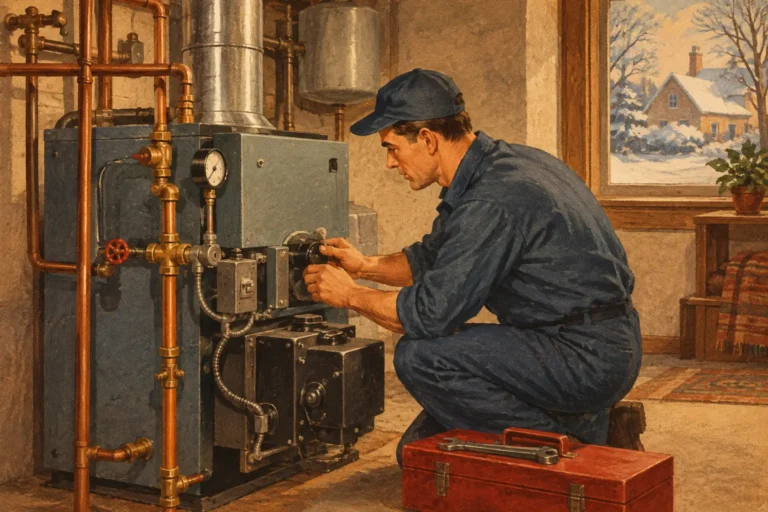
A boiler can appear to be a simple replacement until installation day reveals the details behind dependable heat: the piping layout, radiator capacity, venting path, control settings, water quality, and the building’s actual heat loss. A properly planned boiler installation addresses all of them, so your home or commercial property receives even, efficient warmth when Northeast Illinois temperatures fall.
For homeowners, property managers, and business owners, the goal is not merely to get heat back. It is to choose a system that fits the building, operates safely, and remains practical to maintain for years ahead.
Boiler Installation Starts With the Building, Not the Box
The right boiler is not automatically the largest model or the one with the highest efficiency rating. Capacity must match how much heat the building loses on a cold winter day. That requires a heat-loss calculation that considers square footage, insulation levels, windows, air leakage, ceiling height, and the local climate.
Oversizing is a common and costly mistake. A boiler that is too large may heat the space quickly, then turn off and restart repeatedly. This short cycling can waste fuel, create uneven temperatures, and add wear to components. An undersized boiler can struggle during severe cold, leaving occupants uncomfortable when they need reliable heat most.
The existing distribution system matters just as much. Cast-iron radiators, baseboard heaters, radiant floors, unit heaters, and fan coils each deliver heat differently. A contractor should inspect the piping, circulator pumps, expansion tank, isolation valves, and existing emitters before recommending equipment. Replacing the boiler without evaluating these components can leave performance problems in place.
High-Efficiency Boilers Are Not One-Size-Fits-All
A condensing boiler can deliver excellent fuel savings by recovering heat from exhaust gases that older systems send outdoors. To operate at peak efficiency, however, it generally needs lower return-water temperatures. Radiant-floor systems are often a strong match because they operate at lower water temperatures. Some radiator systems can also work very well with condensing equipment, especially when controls and system sizing are carefully considered.
In other buildings, a conventional boiler may be the more practical choice. Older radiators may require hotter water during the coldest weather, and a building’s venting or drainage conditions can affect the installation approach. The best option depends on the complete system, not a single number on an equipment brochure.
What a Proper Boiler Installation Includes
A quality installation is a process, not a delivery appointment. Before work begins, a qualified technician should verify fuel type, electrical requirements, venting options, and local code requirements. For gas boilers, this includes confirming that the gas line is properly sized for the new unit and any other gas appliances in the property.
Venting deserves close attention. High-efficiency boilers often use direct venting with approved pipe materials, while other equipment may use a chimney or dedicated vent connector. Improper venting can affect safety, reliability, and manufacturer warranty coverage. The installation plan should account for clearances, termination location, condensate drainage, and protection from snow or ice buildup.
The hydronic side of the system also needs to be built correctly. This may involve replacing aging circulators, adding air elimination equipment, confirming expansion-tank sizing, installing service valves, and separating zones where appropriate. Small details such as pipe support, insulation, drain locations, and accessible shutoffs make a meaningful difference when the system needs routine service later.
For a condensing boiler, acidic condensate must be drained appropriately. Depending on the installation, a neutralizer may be needed to protect plumbing. In a finished basement, utility room, or commercial mechanical space, clean routing and thoughtful placement matter. Equipment should remain accessible without making the room difficult to use.
Controls Turn Heat Into Comfort
A boiler produces hot water. Controls determine where that heat goes, when it goes there, and how consistently rooms feel from one end of the building to the other.
A basic thermostat may be sufficient for a compact home with one heating zone. Larger homes, multi-level properties, and commercial spaces often benefit from zoning. Separate thermostats and zone controls can allow different areas to operate based on their individual needs. Bedrooms can be kept cooler than living areas, for example, while a rarely used portion of a business does not receive unnecessary heat.
Outdoor reset controls are another valuable option for many boiler systems. Rather than sending the same high-temperature water through the system every day, these controls adjust water temperature based on outdoor conditions. On a milder winter day, the boiler can provide lower-temperature water that better matches the building’s needs. This can improve comfort, reduce temperature swings, and help a high-efficiency boiler spend more time in its most efficient operating range.
Smart thermostat compatibility depends on the system configuration. It is worth discussing early, especially if you want remote temperature adjustments, schedules, or alerts. A good recommendation should explain what the controls will do for your specific property, not simply add technology for its own sake.
Replacement Is a Good Time to Fix Old Problems
Many boiler replacements happen after a leak, no-heat call, or rising repair costs. While urgency is understandable, replacement also creates an opportunity to correct ongoing comfort issues. Cold rooms, banging pipes, trapped air, uneven radiator heat, and high fuel use may point to problems beyond the boiler itself.
If one room has always lagged behind the rest of the house, the cause could be an undersized radiator, an unbalanced zone, a failing circulator, or poor insulation. If a boiler has needed frequent water additions, a hidden leak or failed component should be identified. Simply installing new equipment without addressing the cause can shorten the life of the replacement system.
For commercial properties, planning is especially important. Businesses may need installation work scheduled around operating hours, tenant needs, and safety requirements. A staged plan can help protect operations while ensuring the heating system is ready before cold weather arrives.
What to Expect on Installation Day
The length of a boiler installation depends on the equipment, condition of the existing piping, permit requirements, and whether upgrades are needed. A direct replacement can sometimes be completed in a day, while a more involved project may take longer. Your contractor should set expectations before work begins, including the anticipated heat interruption and any needed access to utility areas.
Professional workmanship should include protection for floors and work areas, safe removal of old equipment, organized piping and wiring, and cleanup after the project. The job is not complete when the boiler first fires. It must be commissioned.
Commissioning includes checking for proper ignition and combustion, verifying system pressure, purging air from the piping, testing safety controls, confirming venting and condensate drainage, and reviewing thermostat operation. The installer should also explain the basics of operation, including where to find system pressure readings and when to call for service.
Lea Heating & Air Conditioning brings factory-trained, NATE-certified expertise to heating projects across Elgin and surrounding communities, with clear options designed around the property rather than a one-size-fits-all recommendation.
Protecting the Investment After Installation
A new boiler benefits from annual maintenance, even when it seems to be running normally. Service visits can identify developing issues with pumps, valves, controls, pressure, combustion, and venting before they become a no-heat emergency. Maintenance also helps preserve efficiency and supports manufacturer warranty requirements.
Property owners can help between visits by keeping the mechanical area clear, watching for water around the boiler or piping, and reporting unusual sounds or repeated pressure changes. Do not ignore a system that needs frequent resetting or regularly loses pressure. Those are signs worth investigating early.
The right boiler installation should leave you with more than new equipment. It should give you a heating system that responds predictably, uses energy wisely, and is supported by a team you can call when comfort cannot wait. Before the next cold stretch arrives, scheduling a professional evaluation can turn an uncertain replacement decision into a well-planned improvement for your property.