A new sound from the air conditioner often gets your attention at the worst possible time: during a humid Illinois afternoon, when the system is working hardest. This air conditioner noise troubleshooting guide can help you separate a minor issue, such as a loose panel, from a problem that calls for prompt professional repair. The key is to notice what the sound is, where it originates, and whether comfort or system operation has changed.
Before inspecting anything, turn the system off at the thermostat if you smell burning, see smoke, hear loud metal-on-metal grinding, or notice repeated breaker trips. Those symptoms can point to an electrical or mechanical issue that should not be left running.
Start With the Sound and Its Location
Air conditioners make some normal operating sounds. A gentle airflow through supply vents, a soft outdoor fan sound, and an occasional click as the system starts or stops are generally expected. Modern high-efficiency systems may also change their sound slightly as variable-speed components adjust to cooling demand.
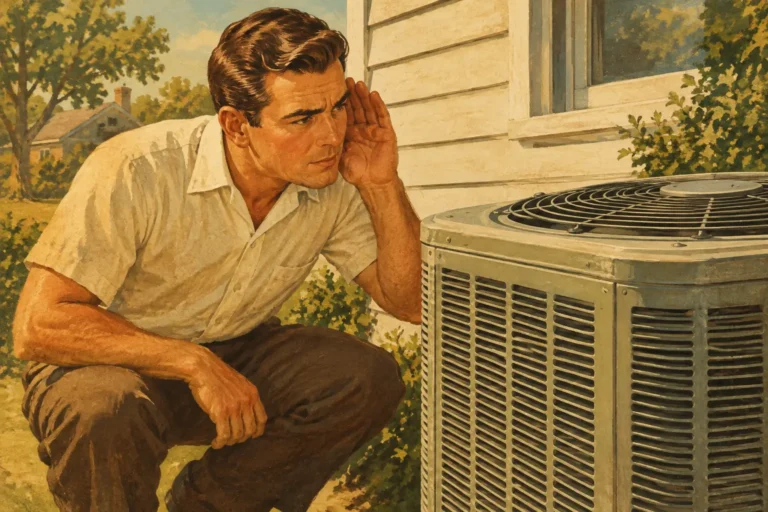
What is not normal is a new, persistent, or rapidly worsening sound. Stand a safe distance from the outdoor unit and listen. Then check whether the sound is coming from the indoor equipment, the vents, or the outdoor condenser. This simple distinction gives a technician useful information and can help you decide how urgently to schedule service.
Do not remove electrical panels or reach into the outdoor unit. Even when the thermostat is off, HVAC equipment can retain electrical hazards.
Air Conditioner Noise Troubleshooting Guide by Sound
Rattling or vibrating
Rattling is often one of the less serious noises, but it still deserves attention. The outdoor unit may have a loose cabinet panel, fastener, fan guard, or debris caught around the condenser. Twigs, leaves, and small stones can create a surprising amount of noise when the fan starts.
From outside the unit, without opening it, look for visible debris and check that the equipment is clear of landscaping. A loose window, vent cover, or duct register can also rattle as air moves through the home. If the rattling becomes louder during every cooling cycle, or if the unit vibrates excessively, shut it down and arrange an inspection. A loose internal component can damage other parts over time.
Buzzing or humming
A quiet electrical hum may occur briefly during normal operation. A pronounced buzzing, especially if it is new or accompanied by weak cooling, can have several causes. Loose wiring, a failing contactor, a struggling capacitor, a compressor issue, or debris interfering with the outdoor fan are all possibilities.
Because buzzing can involve electrical components, this is not a do-it-yourself repair. If the outdoor unit hums but the fan does not turn, turn the air conditioner off. Continuing to call for cooling can place additional strain on the compressor, which is one of the system’s most expensive components.
Squealing or screeching
A high-pitched squeal from indoor equipment can indicate a blower motor problem, a worn belt on an older system, or a bearing beginning to fail. In some cases, restricted airflow contributes to the strain. Check the air filter first. A heavily loaded filter can make the system work harder and reduce comfort throughout the house.
Replace a dirty filter with the correct size and type recommended for your system. If the squealing persists after replacement, schedule service rather than waiting for it to go away. Motor and bearing problems rarely improve on their own.
Grinding, scraping, or metal-on-metal sounds
Grinding and scraping are urgent noises. They can signal worn motor bearings, a loose fan blade, or a damaged compressor component. If a fan blade is contacting a housing or guard, running the equipment can cause further damage quickly.
Turn the thermostat to off and contact a qualified HVAC professional. For businesses, acting early can protect tenant comfort, customer experience, and equipment budgets. For homeowners, it can prevent a repairable issue from becoming an unexpected replacement decision.
Banging, clanking, or knocking
A bang at startup or shutdown can sometimes come from ductwork expanding and contracting, particularly when temperatures are extreme. Repeated clanking from the outdoor unit, however, may indicate a loose or broken component, an imbalanced fan, or a compressor problem.
Listen for timing. Does the noise happen only when cooling begins, throughout the cycle, or as the unit powers down? Make a brief note or record a short video from a safe distance. That information can speed up diagnosis during a service visit.
Clicking that will not stop
One click when the system starts and another when it stops is common. Repeated clicking without the air conditioner starting is different. It may point to a thermostat issue, electrical control problem, or a component that is failing to engage.
Check that the thermostat has fresh batteries if it uses them, is set to cool, and is set below the current indoor temperature. If the system continues clicking or cycles on and off repeatedly, leave it off until it can be evaluated. Short cycling increases wear and can drive up energy use.
Whistling or loud airflow
Whistling near vents often comes down to airflow. A clogged filter, closed supply registers, undersized ductwork, or duct leaks can create noise and uneven temperatures. Start with the filter and make sure supply vents are open and unobstructed by furniture, rugs, or curtains.
Do not close multiple vents in an attempt to force more air into another room. That strategy can increase duct pressure and create other comfort problems. Persistent whistling may call for a professional airflow and ductwork assessment, especially in homes with hot upper floors, recent renovations, or rooms that never seem to cool evenly.
Safe Checks You Can Make Before Calling
A few observations can help without putting you at risk. Confirm that the filter is clean, the thermostat is correctly set, and the outdoor unit has clear space around it. Look for obvious leaves or debris around the exterior, but do not spray inside the cabinet or try to straighten fan blades.
Also pay attention to performance. Is the home cooling normally? Is there water near the indoor unit? Has an energy bill changed sharply? Does the breaker trip when the system starts? Noise paired with poor cooling, ice on refrigerant lines, a burning odor, or water where it should not be is a strong reason to schedule professional service promptly.
When a Repair Cannot Wait
Some sounds are best handled before the next convenient appointment. Shut the system down and seek prompt help for grinding, screeching, persistent electrical buzzing, burning smells, smoke, repeated breaker trips, or a fan that fails to spin. If the equipment is loud enough to disrupt normal conversation or suddenly stops cooling, avoid repeatedly restarting it.
For property managers and business owners, a noisy rooftop unit or split system should be addressed before it interrupts operations or creates a comfort complaint. Documentation of the sound, its timing, and any thermostat alerts can help a technician work efficiently.
Prevent Noise With Seasonal Maintenance
Many air conditioner noises begin with ordinary wear that preventive maintenance can catch early. During a professional tune-up, the technician can inspect electrical connections, test capacitors, examine motors and fan components, verify refrigerant performance, clean applicable components, and identify vibration or airflow concerns.
Maintenance does not eliminate every repair, and older equipment may eventually need more than a tune-up. Still, it gives you clearer information about the system’s condition before a heat wave puts it under maximum demand. For Northeast Illinois homeowners and businesses, that preparation matters when summer humidity arrives quickly.
Lea Heating & Air Conditioning provides responsive repair and maintenance support backed by factory-trained, NATE-certified expertise. If a sound feels wrong, trust that instinct. Turning the system off when necessary and getting a clear diagnosis early is often the most practical way to protect comfort, safety, and the life of your equipment.