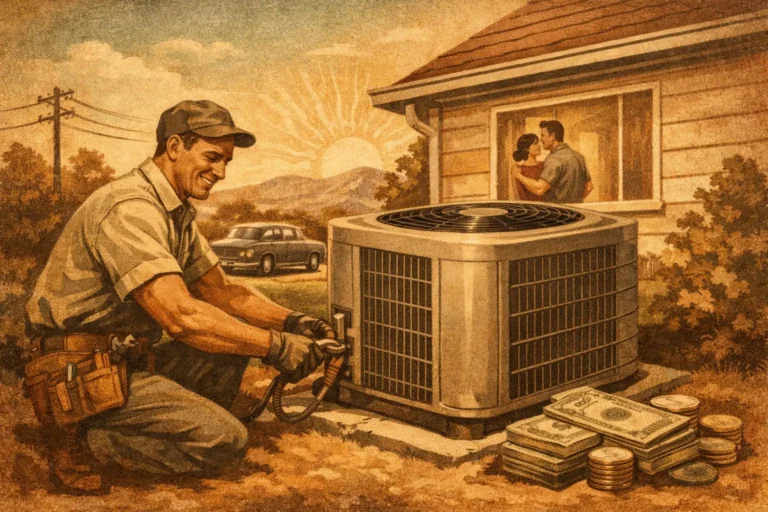
A high efficiency AC installation is not simply a matter of swapping an old condenser for a higher SEER2 model. In a Northeast Illinois home or business, the installation details determine whether new equipment delivers quieter operation, lower energy use, and reliable relief during a humid July heat wave – or falls short of expectations.
The outdoor unit gets much of the attention, but your comfort system also includes the indoor coil, refrigerant lines, ductwork, thermostat, electrical connections, airflow settings, and the people who install them. A properly planned replacement treats those parts as one system. That approach is especially valuable when an older air conditioner has struggled with hot rooms, high bills, excess humidity, or frequent repairs.
What High Efficiency AC Installation Really Means
Efficiency ratings matter. Today’s central air conditioners are measured by SEER2, or Seasonal Energy Efficiency Ratio 2. In general, a higher SEER2 rating indicates less electricity is needed to provide the same seasonal cooling. But the rating on the equipment label reflects laboratory conditions. Your real-world results depend on correct sizing, careful setup, and the condition of the home or building.
A high-efficiency system commonly uses features such as a variable-speed or two-stage compressor, a variable-speed indoor blower, and communicating or smart controls. Rather than repeatedly turning fully on and off, these systems can run at lower output for longer periods when conditions allow. That can produce steadier temperatures, better humidity removal, and less noticeable noise.
There is a trade-off. More sophisticated equipment costs more upfront and may require compatible controls or electrical upgrades. It is not automatically the right choice for every property. A clear recommendation should account for your budget, how long you expect to remain in the property, cooling habits, duct condition, comfort concerns, and available financing.
Start With Load Calculations, Not the Old Unit
Replacing a three-ton unit with another three-ton unit may be appropriate, but it should never be an assumption. The previous system could have been oversized from the day it was installed. It also may no longer match the property after window replacements, attic insulation improvements, an addition, or changes in how rooms are used.
A qualified contractor evaluates the cooling load using factors such as square footage, insulation, windows, orientation, ceiling height, occupancy, duct design, and heat-producing appliances. For commercial spaces, internal loads from equipment, lighting, customer traffic, and operating hours also matter.
Oversizing is a common comfort problem. An oversized AC can cool the thermostat area quickly and shut down before it removes enough moisture from the air. The house may feel cold but clammy, and temperatures can vary from room to room. Undersizing has the opposite problem: it may run continuously on the hottest days without maintaining the desired indoor temperature.
The goal is not the largest system. It is a system that can meet the cooling load efficiently while running long enough to manage humidity and maintain even comfort.
Match the Indoor and Outdoor Equipment
The condenser outside and evaporator coil inside must be an approved match. A new outdoor unit connected to an incompatible or aging indoor coil can limit efficiency, reduce reliability, and affect manufacturer warranty coverage. The furnace or air handler also deserves attention because its blower delivers cooled air throughout the property.
For example, pairing a variable-capacity air conditioner with an older single-speed blower may leave comfort benefits on the table. In other cases, an existing furnace may be in good condition and compatible with the new coil and controls. The right answer depends on the equipment, its age, and the manufacturer’s approved combinations.
Ductwork and Airflow Make or Break Performance
Even excellent equipment cannot overcome major airflow problems. Leaky ducts can send conditioned air into attics, crawl spaces, or wall cavities. Undersized return ducts can restrict airflow and make rooms feel stuffy. Poorly placed or closed supply registers can leave bedrooms warm while other areas become too cold.
Before installation, a thorough evaluation should look for visible duct leakage, damaged insulation, restrictive filters, dirty coils, inadequate returns, and signs of uneven air distribution. Duct repairs, sealing, insulation, or modifications may add to the initial project cost, but they can protect the efficiency investment for years.
Airflow is also measured and adjusted during commissioning. Refrigerant charge, static pressure, temperature split, electrical performance, condensate drainage, and blower settings all need verification. These steps are not extras. They are part of installing an air conditioner to operate as designed.
Choose Features Based on How You Live or Work
High-efficiency air conditioning offers useful options, but not every feature serves every customer equally. A thoughtful consultation connects equipment capabilities to daily comfort needs.
A variable-speed system can be a strong fit for households bothered by humidity, temperature swings, or noise. Because it can operate at lower capacity for longer intervals, it often delivers more consistent comfort. It may also suit businesses where steady temperatures support employees, customers, or sensitive equipment.
A two-stage unit offers a middle ground. It typically costs less than a fully variable system while providing better comfort control than a single-stage model. For properties with straightforward cooling needs and sound ductwork, this can be a practical value.
Smart thermostats are another consideration. They can simplify scheduling, provide remote access, and help track energy use. However, the thermostat should be selected for compatibility with the equipment and installed in a location that accurately reflects indoor conditions. A thermostat near a sunny window, kitchen, or supply register can cause misleading temperature readings.
Zoning can help when different areas have truly different cooling needs, such as a second floor, a room over a garage, or sections of a commercial building with separate hours. It requires proper design. Adding dampers without addressing equipment capacity and airflow can create new problems, so zoning should be planned as part of the overall system.
Installation Day Should Be Organized and Clean
A professional installation begins with protecting the work area and confirming the scope before equipment is removed. The team should safely recover refrigerant from the old system, inspect the pad or mounting location, verify electrical requirements, and review the refrigerant line set. Sometimes existing lines can be reused after proper inspection and preparation; in other cases, replacement is the safer choice.
The new system should be leveled, securely positioned, and connected using manufacturer-approved methods. The condensate drain requires special attention because a poorly routed or unprotected drain can lead to water damage, shutdowns, or mold concerns. Technicians should pressure-test and evacuate refrigerant lines before charging the system to the specified conditions.
At the end of the visit, the installer should test operation, explain filter requirements, show you how to use the thermostat, and answer questions about maintenance. Clear documentation and warranty registration are also worth confirming. These details make future service simpler and help preserve equipment coverage.
Protect the Investment After Installation
A high-efficiency air conditioner needs routine care to stay efficient. Homeowners can replace or clean filters on the recommended schedule, keep the outdoor unit clear of leaves and landscaping, and make sure supply and return registers are not blocked. Avoid closing too many registers in an effort to force more air into one room, as this can disrupt system airflow.
Professional maintenance remains essential. Seasonal service helps identify loose electrical connections, drainage issues, refrigerant concerns, coil buildup, and airflow changes before they become a mid-summer breakdown. For businesses, preventive maintenance also supports predictable operating costs and reduces disruption during busy periods.
Lea Heating & Air Conditioning brings factory-trained, NATE-certified expertise to system recommendations and installation work in Elgin and surrounding communities. A National Award Winning Company should do more than install new equipment: it should help customers understand the choices, verify performance, and remain available when service is needed.
The best time to plan a replacement is before an aging system fails on the hottest day of the year. If your current AC is increasingly noisy, uneven, expensive to operate, or nearing the end of its service life, a professional evaluation can turn a rushed emergency decision into a comfort plan that fits your property and priorities.