
A furnace or air conditioner can be in good working order and still leave parts of a building too hot, too cold, dusty, or expensive to heat and cool. That is why ductwork replacement warning signs deserve attention. The ducts hidden behind walls, ceilings, and floors are the delivery system for conditioned air. When that system is leaking, undersized, damaged, or poorly designed, equipment has to work harder to deliver less comfort.
For homeowners and property managers in Northeast Illinois, duct problems can become especially noticeable during a humid summer stretch or a prolonged winter cold snap. Some issues can be repaired with sealing or insulation. Others point to ductwork that has reached the end of its useful life or was never properly sized for the building in the first place.
Why Ductwork Condition Affects the Whole HVAC System
Your HVAC equipment creates heated or cooled air, but the duct system determines whether that air reaches each room at the right volume and temperature. Leaks can send conditioned air into attics, crawl spaces, wall cavities, or unoccupied areas. Restrictions, crushed sections, and poor layout can reduce airflow before it reaches the rooms people use.
The result is often mistaken for an equipment problem. A homeowner may assume an aging air conditioner is the reason for a warm upstairs bedroom, for example, when the actual problem is a disconnected run, insufficient return air, or ductwork that is too small for the system. A qualified evaluation should look at both the equipment and the air-distribution system before recommending a major replacement.
9 Ductwork Replacement Warning Signs
1. Rooms Stay Uneven Despite Normal Thermostat Settings
A noticeable temperature difference from one room to another is one of the clearest warning signs. If a bedroom is consistently warmer in summer, a family room is cold in winter, or a business has uncomfortable zones away from the thermostat, airflow may not be reaching those spaces properly.
Uneven temperatures do not automatically mean full replacement is necessary. Closed dampers, blocked registers, inadequate insulation, or a thermostat location can also contribute. But when the pattern has persisted for years, particularly after an HVAC upgrade or remodeling project, the duct design itself may need correction.
2. Energy Bills Rise Without a Clear Explanation
Utility costs move with weather and energy rates, but a steady increase that cannot be explained by usage deserves investigation. Leaky ducts force the furnace, heat pump, or air conditioner to run longer to satisfy the thermostat. Supply leaks waste conditioned air, while return leaks can pull unconditioned and dusty air into the system.
Older duct systems can lose a meaningful amount of heated and cooled air through gaps, loose connections, and deteriorated materials. Sealing accessible leaks may help. If the ductwork is extensively damaged, inaccessible, or poorly routed, replacement can offer a more lasting improvement.
3. Airflow From Registers Is Weak or Inconsistent
Hold your hand near several supply registers while the system is running. One room may naturally receive less air than another, but a dramatic difference can indicate a restriction, disconnected duct, crushed flex duct, or undersized branch line.
Weak airflow can also be caused by a clogged filter, a failing blower motor, or an improperly configured system. That is why this symptom calls for professional diagnosis rather than a quick assumption. Airflow measurements help identify whether the issue is equipment-related, duct-related, or a combination of both.
4. You Hear Whistling, Rattling, or Banging in the Walls
Ductwork should not be a constant source of noise. A brief sound when a system starts or stops can be normal, especially in older homes. Persistent whistling often suggests air being forced through an opening or an overly restrictive duct. Rattling may point to loose metal sections, while loud popping or banging can signal pressure problems or poorly supported ducts.
Noise alone does not determine whether replacement is needed. However, when it accompanies poor comfort and high operating costs, it is a strong reason to inspect the duct system closely.
5. Dust Builds Up Quickly After Cleaning
A small amount of household dust is unavoidable. If surfaces seem dusty again shortly after cleaning, return-side duct leaks may be drawing air from attics, basements, crawl spaces, or wall cavities. Gaps near returns can bring particles into the system before the air reaches the filter.
Dirty ducts are not always the root cause of indoor-air concerns. Filter quality, housekeeping, pets, renovation work, and outdoor conditions all matter. Still, a duct inspection can reveal leaks, damaged insulation, or contamination that supports a targeted repair or replacement plan.
6. There Are Visible Rust, Tears, or Failing Connections
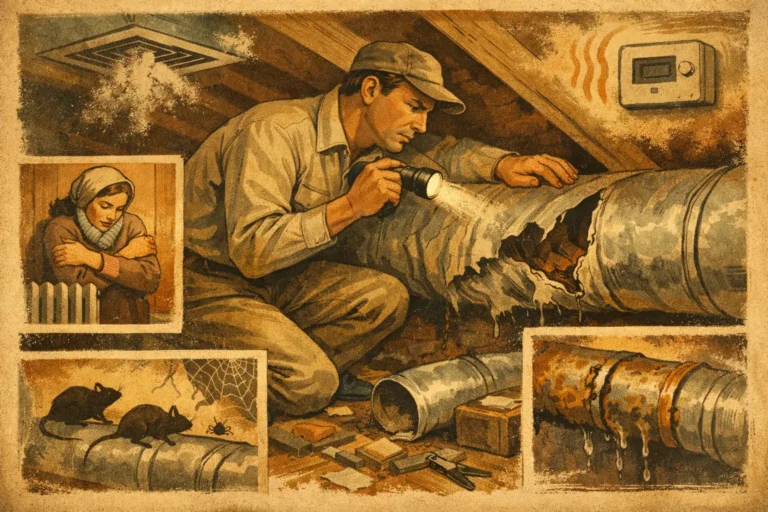
Accessible ducts in basements, utility rooms, attics, and mechanical spaces can reveal a great deal. Rusted sheet metal, torn flex duct, sagging runs, missing insulation, taped joints that have come loose, and visible gaps at connections are all signs that the system needs attention.
Moisture-related damage deserves prompt action. Condensation, roof leaks, plumbing leaks, or high humidity can deteriorate duct materials and insulation over time. Before installing new ductwork, the moisture source must be addressed so the same damage does not return.
7. The Duct System Is Original to an Older Building
Age is not a verdict by itself. Well-installed metal ducts can last for decades when they remain dry, supported, and properly sealed. Yet older systems may have insulation that no longer performs well, aging duct board, deteriorated flex duct, or layouts designed for equipment and comfort expectations from another era.
A building addition is a common turning point. If an extra bedroom, finished basement, office, or retail area was added without a carefully planned duct extension, the original system may no longer have the capacity or distribution needed for the space.
8. HVAC Equipment Has Been Replaced but Comfort Did Not Improve
Installing high-efficiency equipment can reduce energy use and improve comfort, but it cannot overcome a duct system that is severely leaking or improperly sized. In fact, a new variable-speed system may expose airflow problems that the old equipment masked with longer, louder cycles.
Before or during equipment replacement, duct sizing and return-air capacity should be considered. The right solution may involve replacing selected trunk lines, adding returns, correcting transitions, or redesigning portions of the distribution system rather than replacing every duct in the building.
9. You Notice Musty Odors or Signs of Mold Around Ducts
Musty odors when the HVAC system runs, visible growth near registers, or wet insulation around ductwork require timely attention. These conditions can be related to moisture, drainage, humidity control, or air leaks that allow warm humid air to meet cold duct surfaces.
Do not assume duct replacement alone will solve an odor or mold concern. The underlying moisture source must be identified and corrected. Depending on the condition of the materials, cleaning, sealing, insulation replacement, or full duct replacement may be appropriate.
When Repair Makes Sense and When Replacement Is the Better Value
Duct sealing and minor repairs are often worthwhile when the system is generally sound and the problems are limited to accessible joints, a small damaged section, missing insulation, or a disconnected run. These measures can improve comfort without the cost and disruption of a larger project.
Replacement becomes more compelling when damage is widespread, materials are deteriorating, ducts are badly undersized, or the layout prevents the HVAC system from performing as designed. It may also be the practical choice during a renovation, conversion from an older heating system, or installation of new equipment with different airflow requirements.
The best recommendation should be based on an inspection, not guesswork. A thorough assessment considers duct condition, airflow, static pressure, equipment capacity, return-air pathways, insulation, and the comfort concerns specific to the building. For a commercial property, it should also account for occupancy changes, operating hours, and areas that affect customer or employee comfort.
What to Expect From a Professional Ductwork Evaluation
A qualified technician begins by listening to the problem: which rooms are uncomfortable, when the issue occurs, how long it has been present, and whether renovations or equipment changes have taken place. They should inspect accessible ducts and connections, check filter and blower conditions, and evaluate airflow rather than relying only on a visual estimate.
At Lea Heating & Air Conditioning, factory-trained, NATE-certified technicians can help identify whether a duct concern calls for sealing, repair, redesign, or replacement. Clear options matter because ductwork is not a one-size-fits-all project. The right approach should protect comfort, efficiency, and indoor air quality without recommending more work than the building needs.
If your home or business has several of these warning signs, schedule an evaluation before the next period of extreme heat or cold puts additional strain on the system. Addressing the air path now can make every season feel more comfortable.