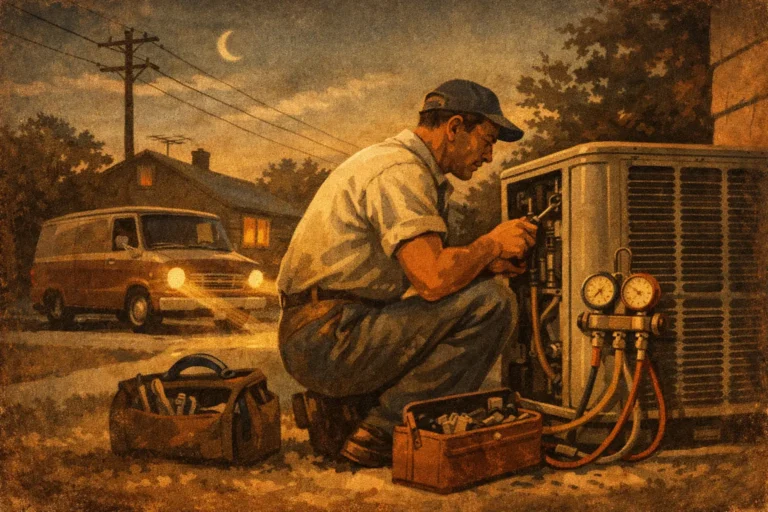
A July night in Northeast Illinois can turn uncomfortable fast when the air conditioner stops cooling, especially when young children, older adults, pets, or sensitive electronics are in the building. 24 hour air conditioner repair gives homeowners and business owners a way to address urgent cooling problems without waiting for regular business hours.
Not every AC issue requires an overnight service call. But a system that will not run during extreme heat, a burning odor, water near electrical equipment, or an office that is becoming unsafe for staff and customers deserves prompt professional attention. Knowing what to do in the first few minutes can protect your equipment, your property, and the people relying on your space.
When Is an AC Problem an Emergency?
An air conditioner that is running but not keeping up may be able to wait until the next available appointment, depending on outdoor temperatures and who occupies the property. Start by checking the thermostat setting, replacing a visibly clogged filter, and making sure the outdoor unit has not been blocked by leaves, grass clippings, or stored items. If the system resumes normal operation, schedule maintenance rather than assuming the problem is solved for good.
Other symptoms call for faster action. Shut the system off and request emergency service if you notice electrical burning smells, smoke, sparking, a repeatedly tripped breaker, loud grinding or banging, or water pooling near the furnace, air handler, or electrical components. These conditions can point to a failing motor, damaged wiring, a blocked condensate drain, or another problem that should not be ignored.
Loss of cooling is also more urgent when indoor temperatures are climbing quickly. Homes with infants, seniors, people with medical needs, or pets may need immediate help even if the equipment failure is not hazardous. For restaurants, retail spaces, medical offices, server rooms, and other commercial properties, a cooling failure can affect inventory, equipment, employees, and customer comfort within hours.
What to Do Before 24 Hour Air Conditioner Repair Arrives
A few practical steps can make the visit safer and help a technician diagnose the issue efficiently. First, turn the thermostat to Off if the unit is making unusual noises, emitting an odor, leaking heavily, or tripping the breaker. Do not continue resetting the breaker or forcing the equipment to run. Repeated resets can worsen electrical damage.
Next, keep the area around the indoor and outdoor equipment clear. If there is a water leak, protect nearby belongings and use towels or a shallow container only if it is safe to do so. Avoid opening electrical panels or attempting to add refrigerant. Air conditioning systems contain high-voltage components and refrigerant circuits that require trained handling.
While you wait, close blinds and curtains on sunny windows, limit use of ovens and dryers, and keep interior doors open where appropriate to encourage air circulation. Portable fans can improve comfort, but they do not correct the underlying problem. If the indoor temperature is becoming unsafe, make alternate arrangements for vulnerable occupants.
What an Emergency AC Technician Checks
A reliable emergency repair visit should be more than a quick restart. Air conditioners often stop cooling because of an electrical, airflow, drainage, refrigerant, or control issue. The visible symptom may be the same, but the solution is not.
A trained technician typically begins by confirming the thermostat call for cooling and checking the electrical supply, disconnect, breaker, capacitor, contactor, and safety controls. A failed capacitor or contactor can prevent the outdoor unit from starting. A tripped float switch may shut down cooling to prevent condensate overflow. These are common issues, but they should be tested rather than guessed at.
The technician will also inspect airflow through the filter, blower, evaporator coil, supply vents, and return ducts. Restricted airflow can cause the evaporator coil to freeze, leaving the system running with little or no cool air coming through the vents. Simply thawing the coil may restore cooling temporarily, but the real cause could be a dirty filter, blower problem, duct restriction, or low refrigerant charge.
Refrigerant concerns require particular care. Refrigerant does not get “used up” like fuel. If the charge is low, there is generally a leak or an installation-related issue that needs to be identified. Adding refrigerant without evaluating the system may provide short-term relief while allowing a larger problem to continue.
For commercial systems, the diagnostic process may also include checking rooftop units, economizer controls, multiple thermostats, zoning equipment, drain lines, and the effects of building occupancy or heat-generating equipment. A repair strategy should account for how the building is actually used, not just whether the unit turns on.
Repair Now or Plan for Replacement?
When an air conditioner fails after hours, the immediate goal is usually to restore safe cooling. Still, an emergency visit can reveal that the equipment is nearing the end of its practical service life. The right choice depends on more than the repair price alone.
Age matters. Many well-maintained central air conditioners can operate for 12 to 15 years or longer, though performance and repair needs vary by equipment quality, installation, maintenance history, and usage. If a newer system needs a straightforward part replacement, repair is often the sensible path. If an older system has a major compressor failure, repeated refrigerant leaks, or frequent breakdowns, replacement may offer better long-term value.
Efficiency and comfort matter, too. An undersized, oversized, or poorly installed unit can create uneven temperatures, high humidity, excess energy use, and short cycling. A replacement consultation should look at the home or building as a whole, including ductwork, insulation, thermostat controls, zoning needs, and indoor-air-quality goals. The lowest upfront cost is not always the lowest cost of ownership.
A trustworthy contractor should explain the diagnosis in clear language, present realistic repair and replacement options, and let you understand the trade-offs. Emergency conditions can create pressure, but you should never feel rushed into a decision that has not been properly explained.
Why Local Experience Matters After Hours
After-hours service is about more than answering the phone. It requires stocked service vehicles, trained technicians, accurate diagnostics, and a process for communicating what happens next. A repair that is completed neatly and correctly helps prevent a second disruption the following day.
For homeowners and businesses in Elgin and surrounding Northeast Illinois communities, Lea Heating & Air Conditioning brings more than 48 years of local experience to urgent HVAC needs. As a Bryant Factory Authorized Dealer and Bryant National Award Winning Company, the team combines factory training and NATE-certified technical knowledge with respectful, customer-focused service. That experience matters when a modern variable-speed system, smart thermostat, ductless unit, or commercial setup needs a careful diagnosis rather than a one-size-fits-all fix.
Prevent the Next After-Hours Breakdown
Some AC failures are unpredictable, but preventive maintenance lowers the odds of a surprise shutdown during the hottest stretch of summer. A seasonal tune-up gives a technician the opportunity to inspect electrical connections, test capacitors, clean critical components, verify drainage, evaluate refrigerant performance, and catch wear before it becomes a no-cooling call.
Homeowners can help between visits by changing filters on schedule, keeping the outdoor condenser clear, watching for unusual sounds, and addressing weak airflow or humidity changes early. Property managers and business owners benefit from a maintenance plan that accounts for operating hours, occupant needs, multiple systems, and the cost of downtime.
When your air conditioner quits at the worst possible time, focus first on safety and comfort. Turn off equipment that appears unsafe, avoid do-it-yourself electrical or refrigerant work, and seek qualified help before a small fault turns into a larger repair. A prompt, well-diagnosed service call can restore cooling now and provide a clearer path to dependable comfort through the rest of the season.